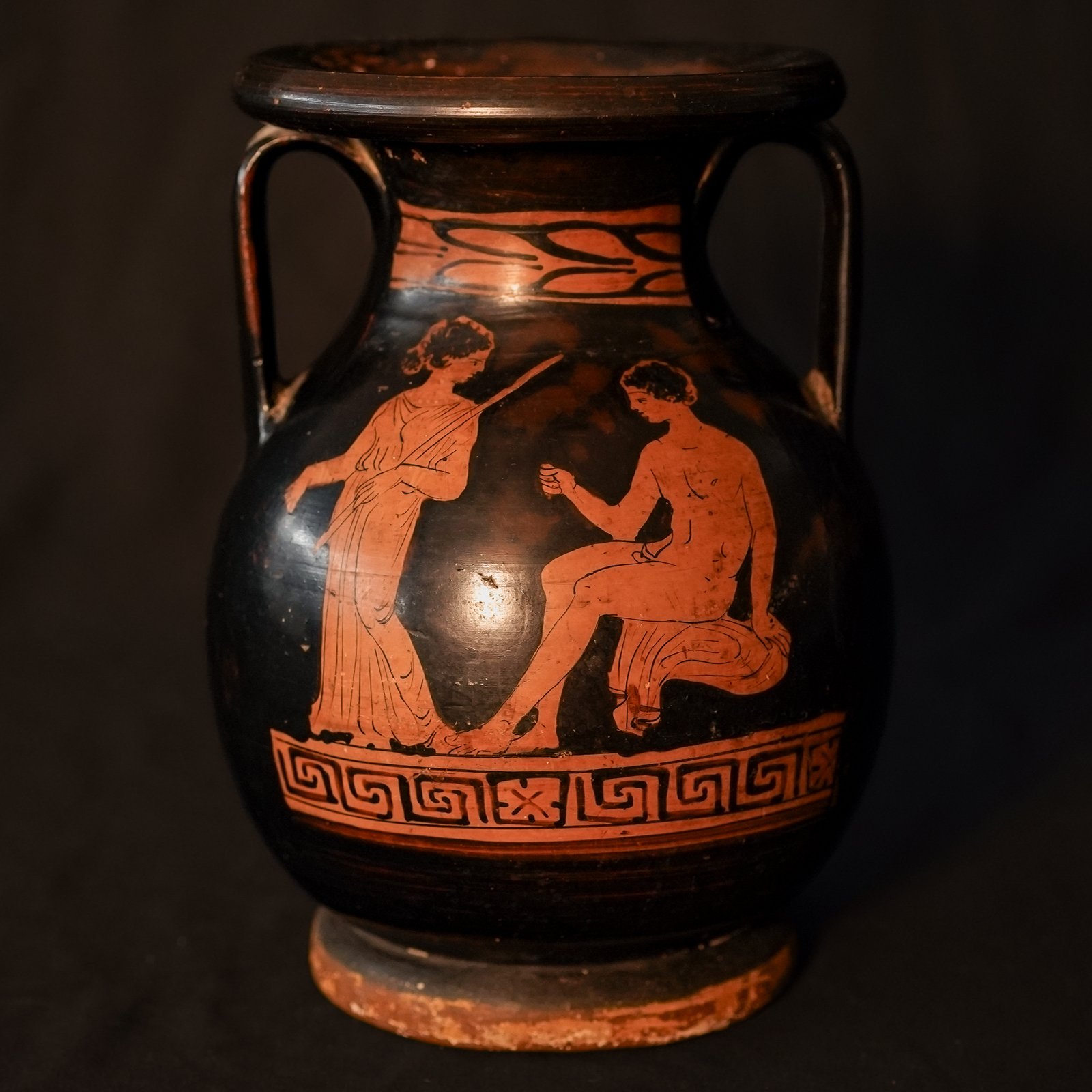
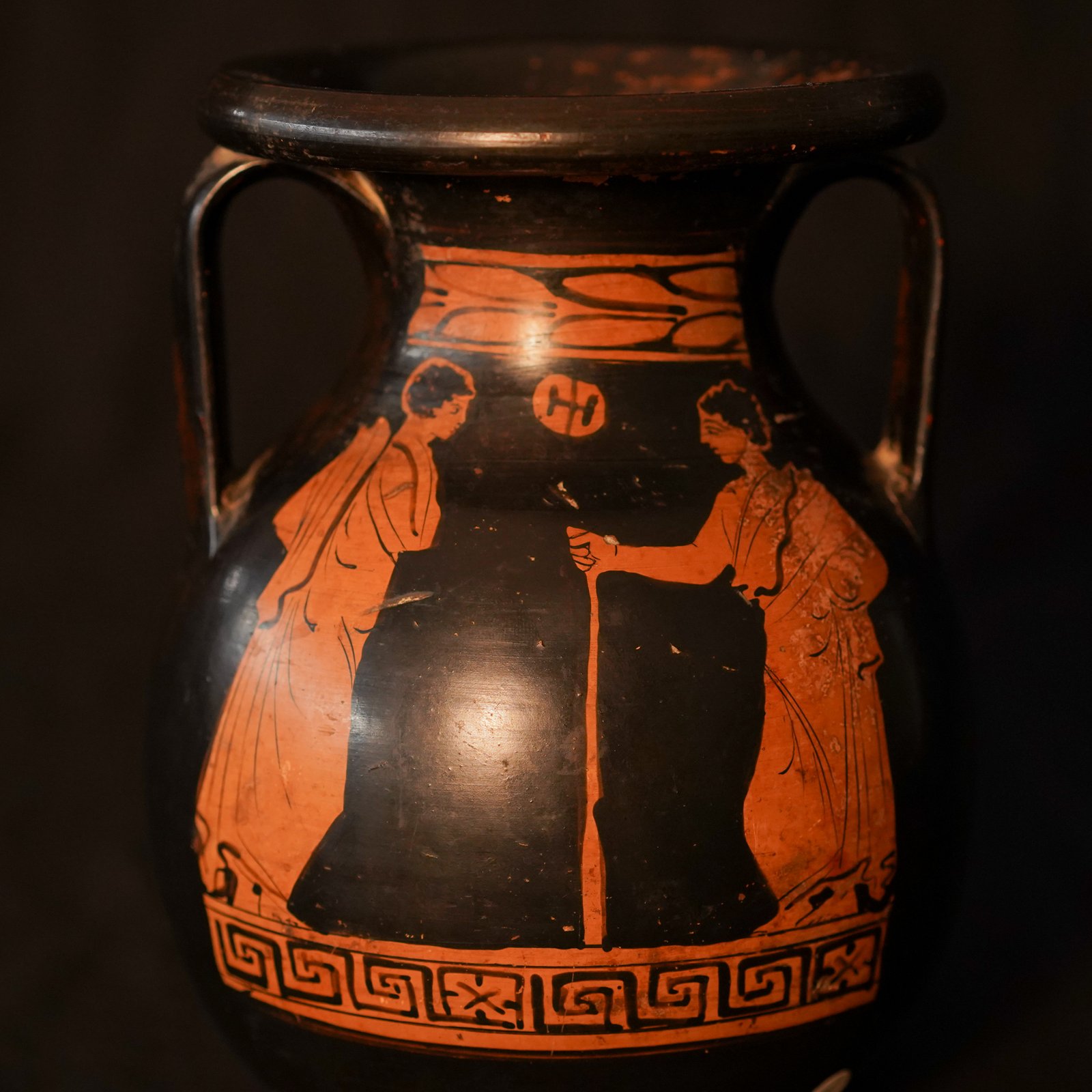
Apulian Red-figured Pelike, Magna Graecia, 4th Century B.C
Conservation: Repaired on the handles; otherwise inctact. In excellent state of preservation.
Material: Pottery
Dimensions: 23,5 cm
Provenance: Acquired at a public auction in Grenoble in 1991. Acquired at an auction house in France in 2026; the piece was examined and authenticated by Antoine Tarantino, a renowned archaeology expert, member of the European Chamber of Art Experts (CEEA) and owner of a gallery in Paris specialising in classical antiquities and Italian masters.
Documents: Attached is the original catalogue from the 1991 auction and the sales invoice from the same year.
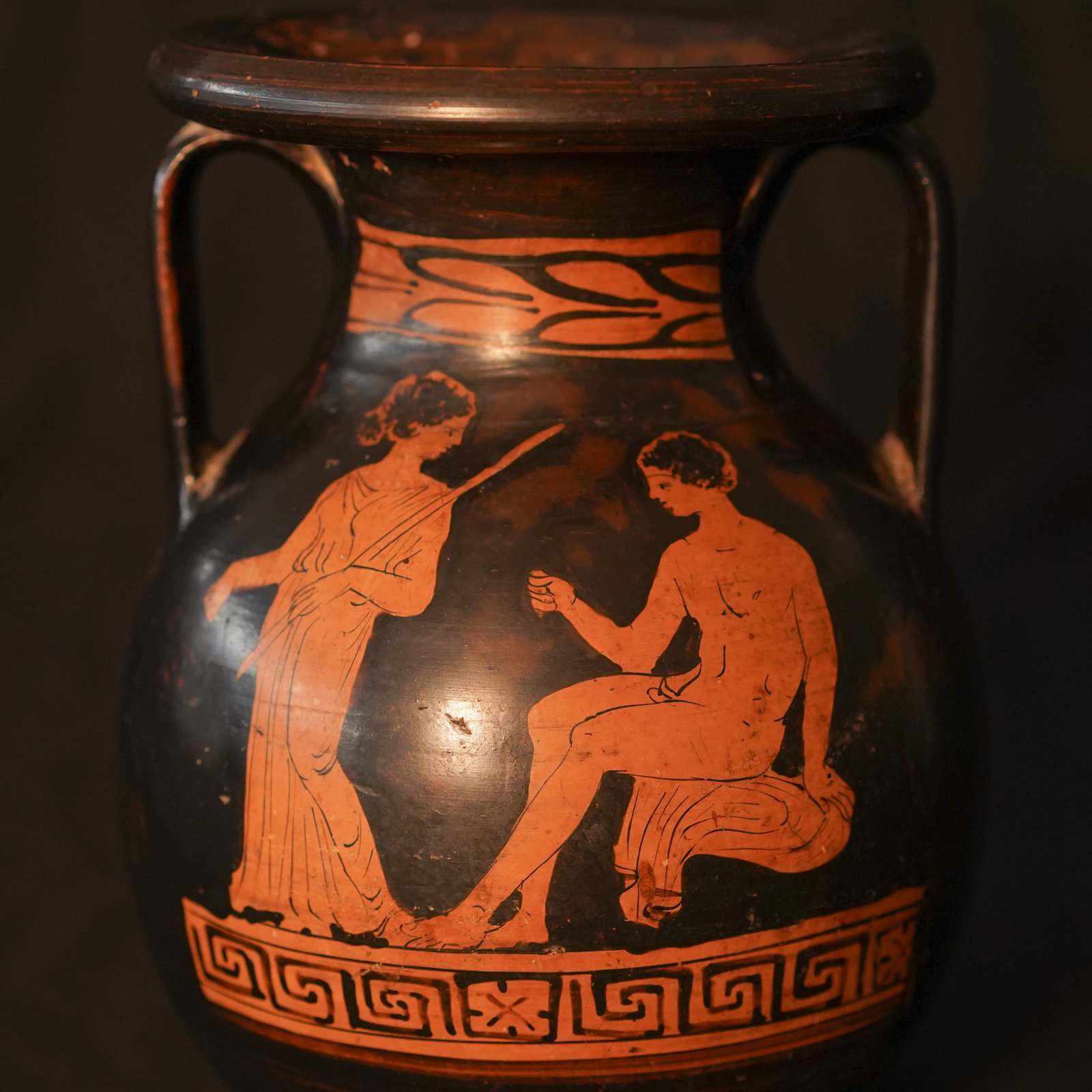
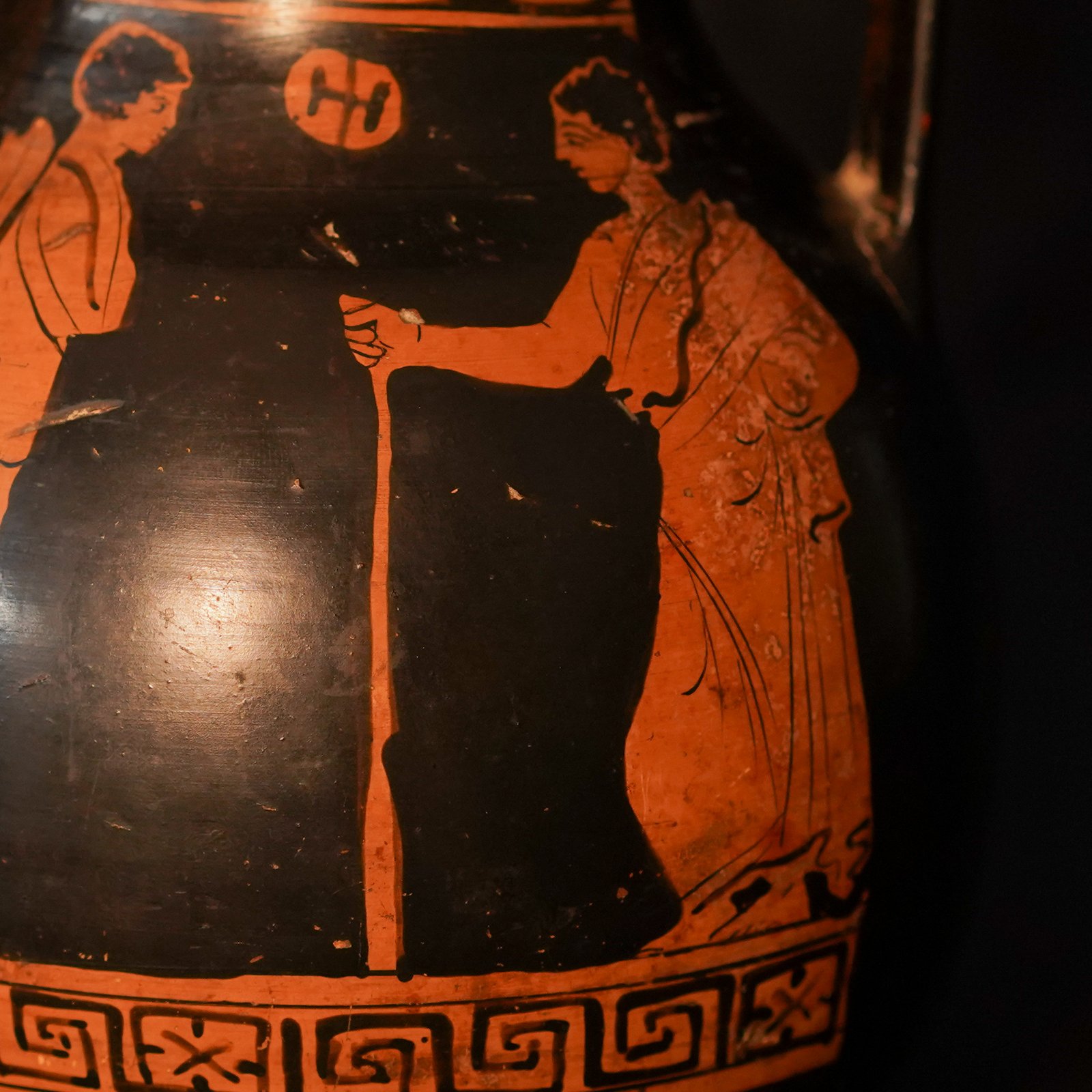
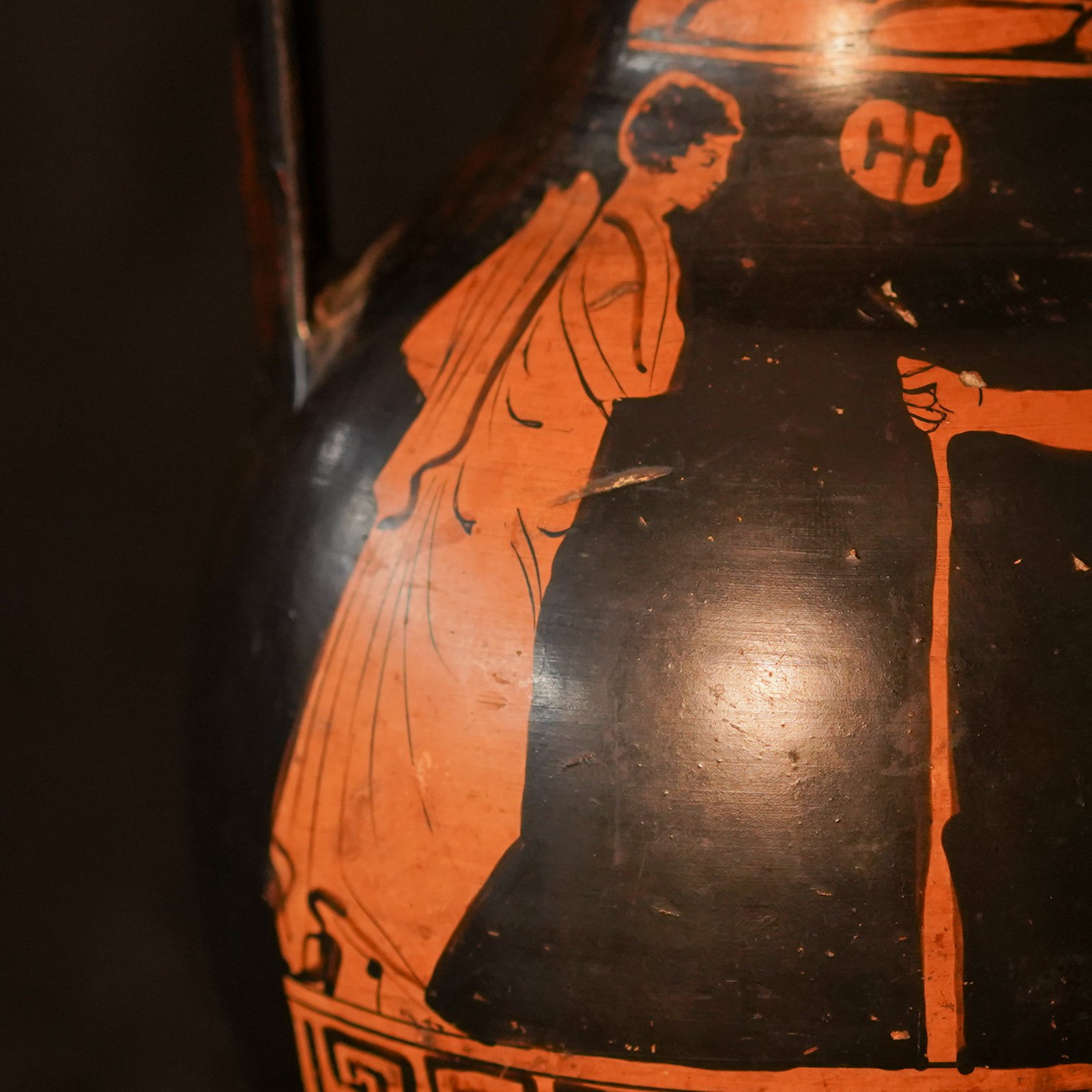
A red-figure pelike featuring characteristic decorative bands, such as the meander pattern at the base of the scene and plant motifs (such as olive or laurel leaves) around the neck.
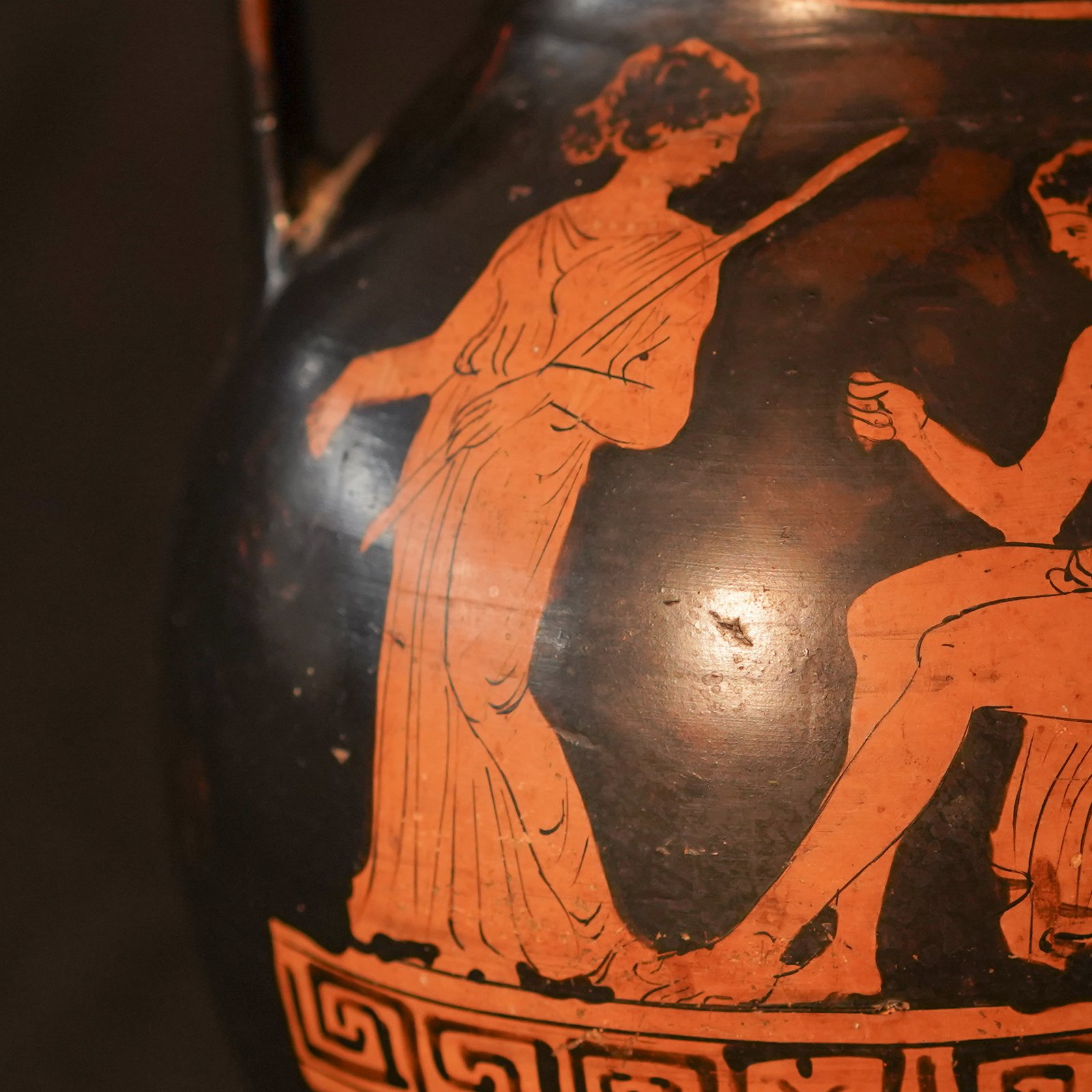
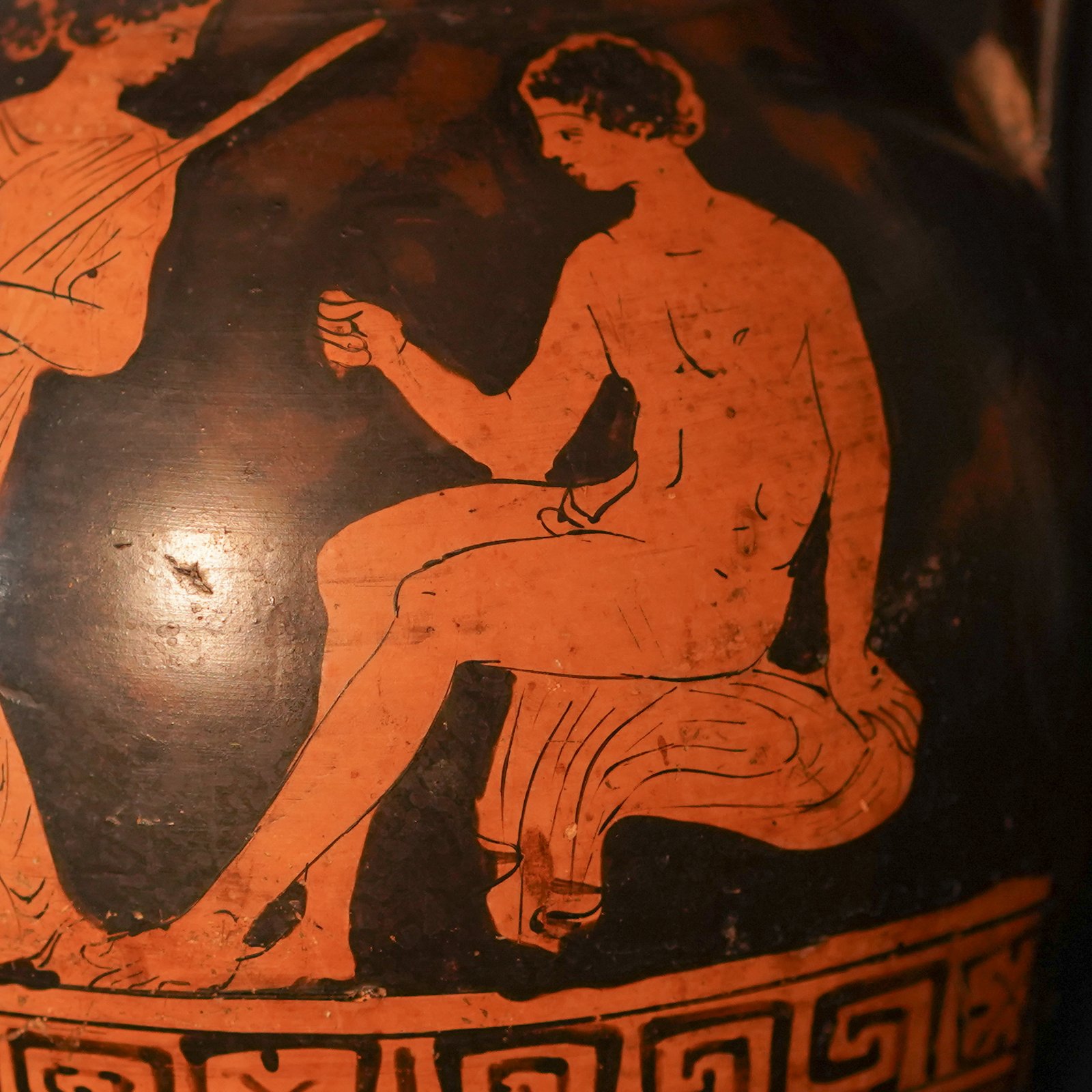
Side A depicts a scene featuring a standing female figure, clad in a himation with folds finely rendered through fluid lines that enhance the elegance of the drapery. Her demeanour exudes serene authority, as she holds an elongated attribute—identified as a staff or sceptre—pointed towards a seated ephebe. The youth, with idealised anatomy, adopts a receptive posture suggesting a context of initiation or ritual instruction.
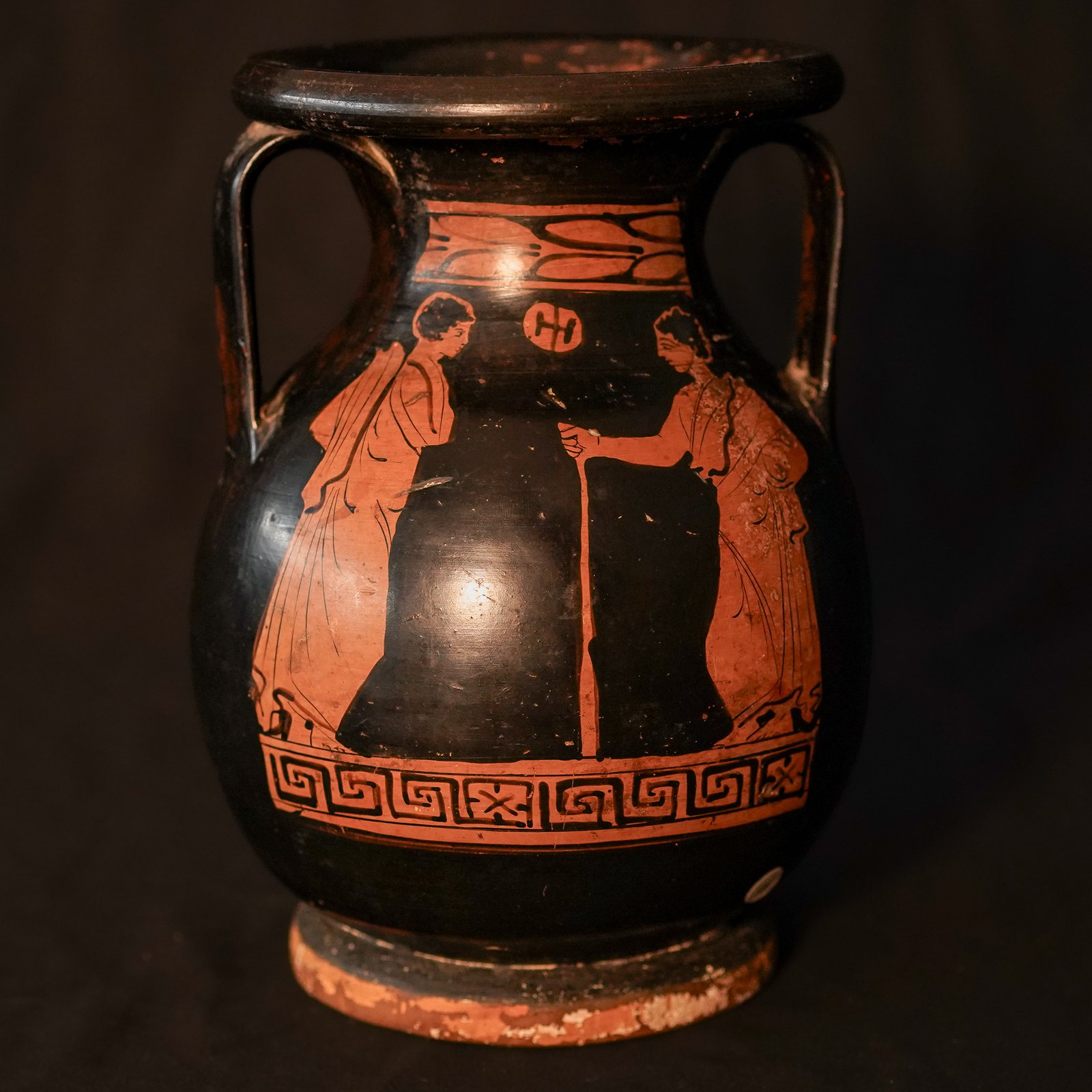
On the reverse, following the decorative tradition of southern Italy, it depicts two young men in conversation. The figure on the left displays ‘sling’ drapery, an iconographic motif characteristic of the region. The decorative scheme is completed by a meander frieze at the base and a laurel wreath around the neck.
During the 4th century BC, pottery workshops in Magna Graecia (particularly in regions such as Apulia, Lucania and Campania) developed a style of their own which, although inspired by Attic pottery from Athens, incorporated more elaborate decorations and a distinctive use of figures and accessories.