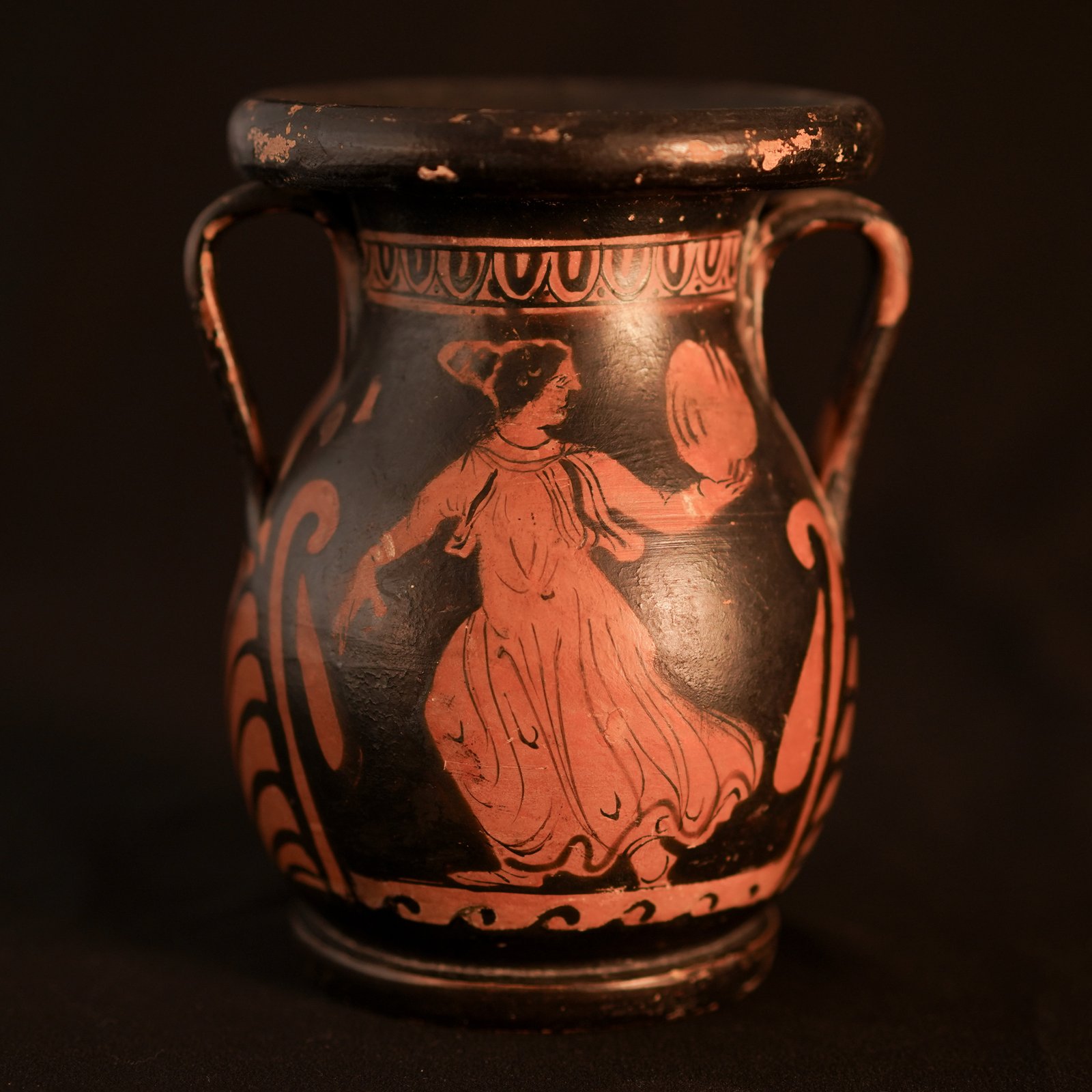
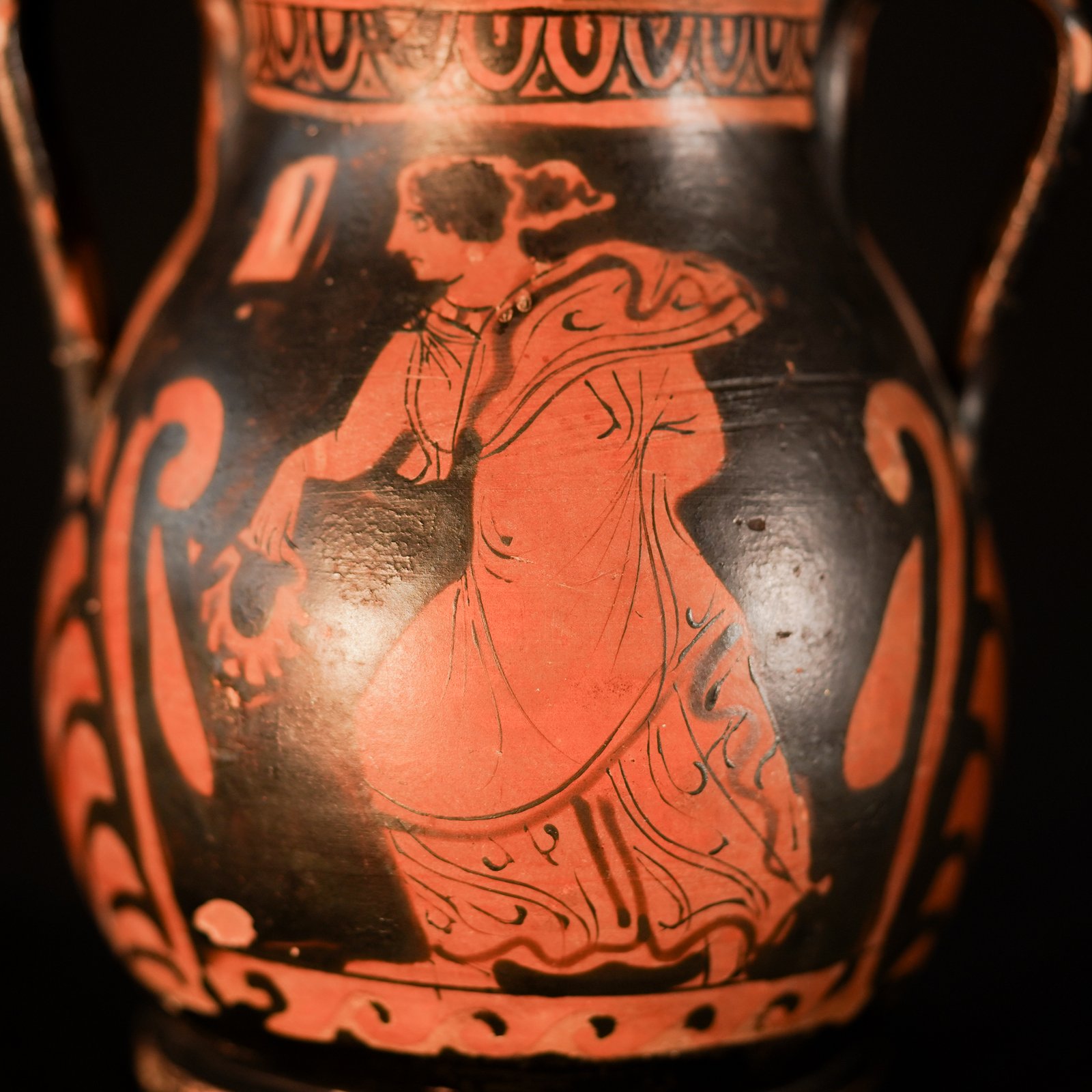
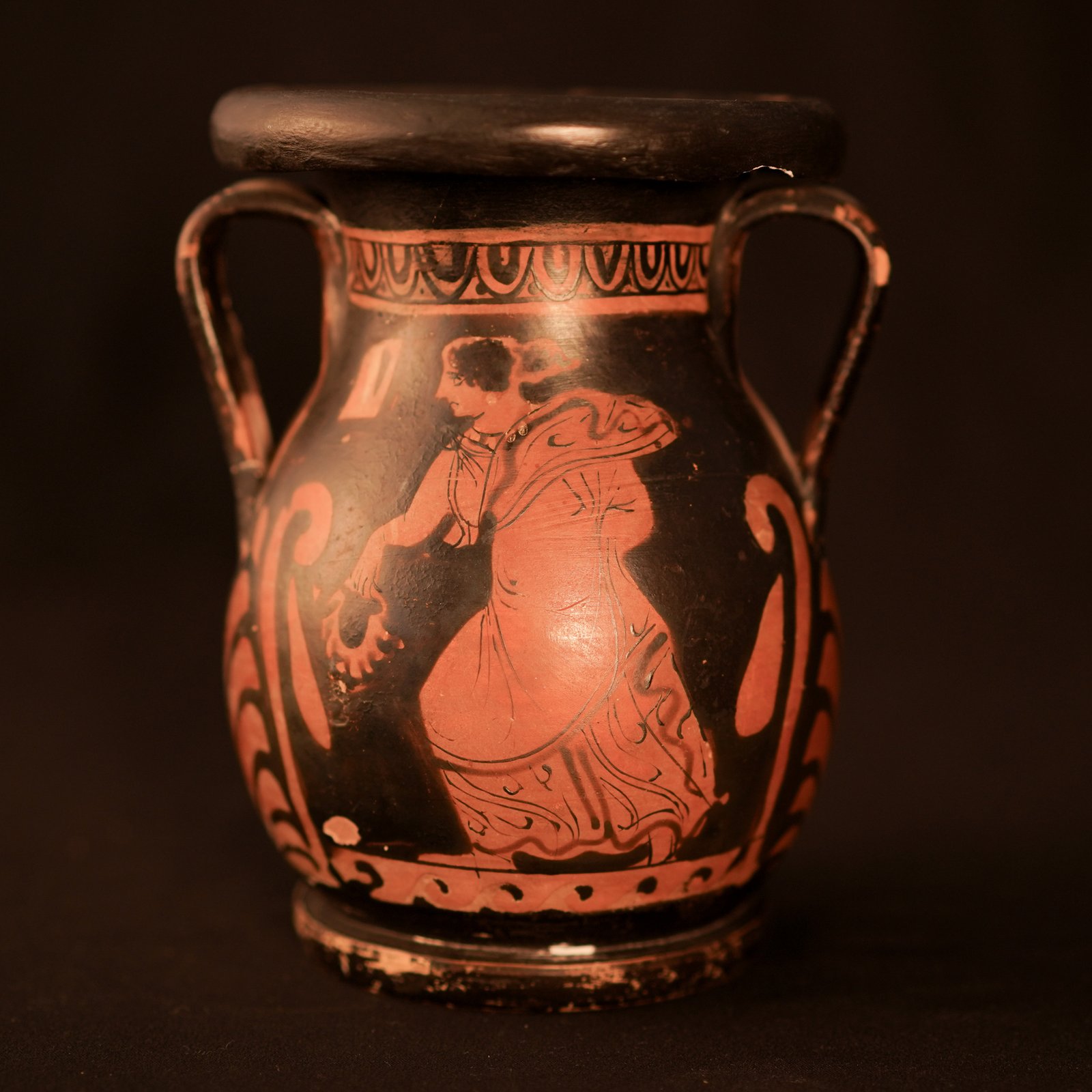
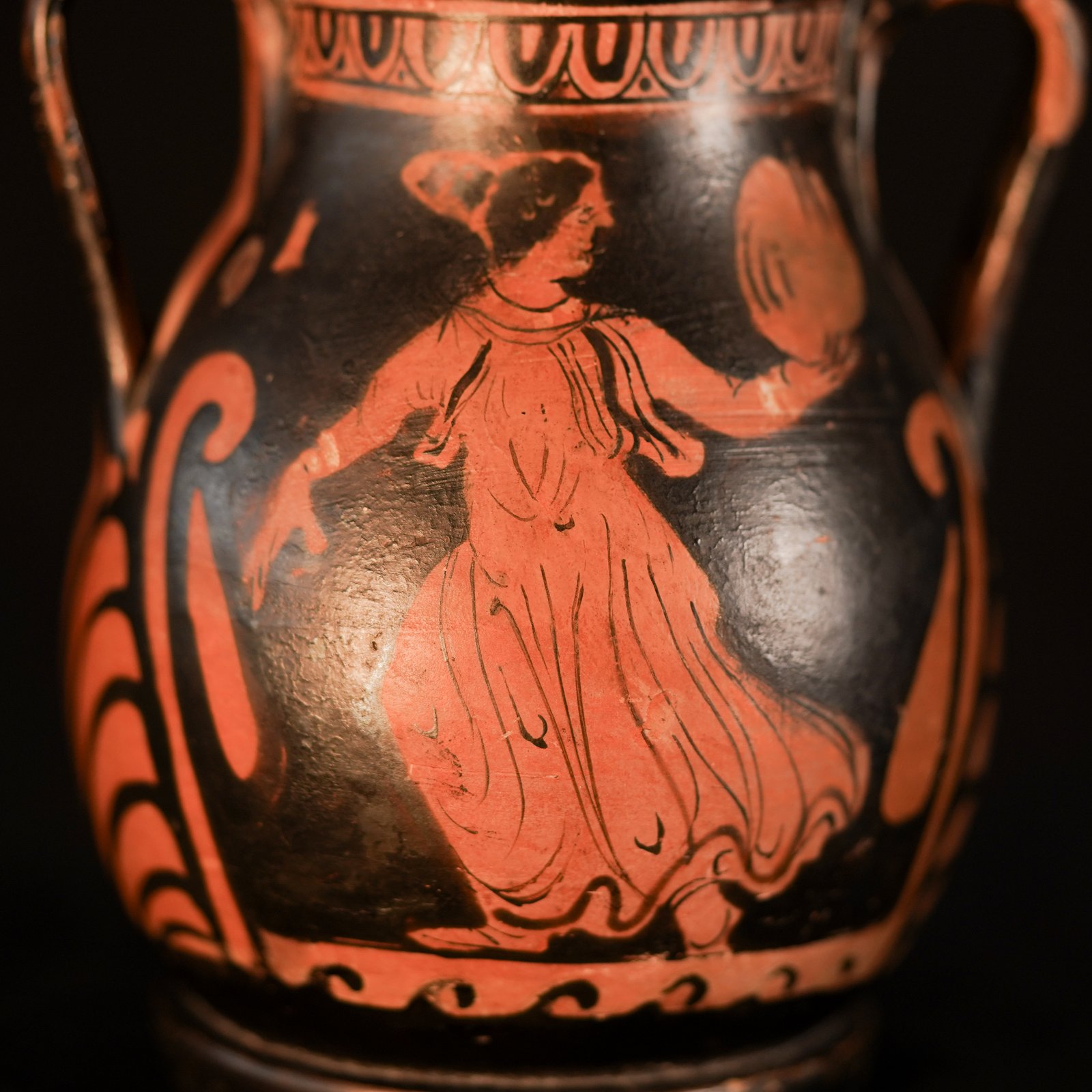
The main scene depicts a maenad, a follower of the god Dionysus, in a state of calm or ritual. In Apulian pottery of this period, it is common to depict maenads or female figures carrying ritual objects such as crowns, mirrors or cosmetic boxes (cista). The figure holds a crown (a symbol of victory or festivity) and what appears to be a bundle of linen (possibly related to Dionysian or domestic rituals).
The scene on the obverse shows a maenad or female figure in motion (possibly dancing), which is characteristic of the Dionysian repertoire. She wears a long chiton with pronounced folds that suggest dynamism. Her hair is gathered in a sakkos (decorated headdress). In her left hand she holds a tympanon (tambourine), a central instrument in the rites of Dionysus [5]. In her right hand (extended backwards) she appears to be holding a crown or garland.
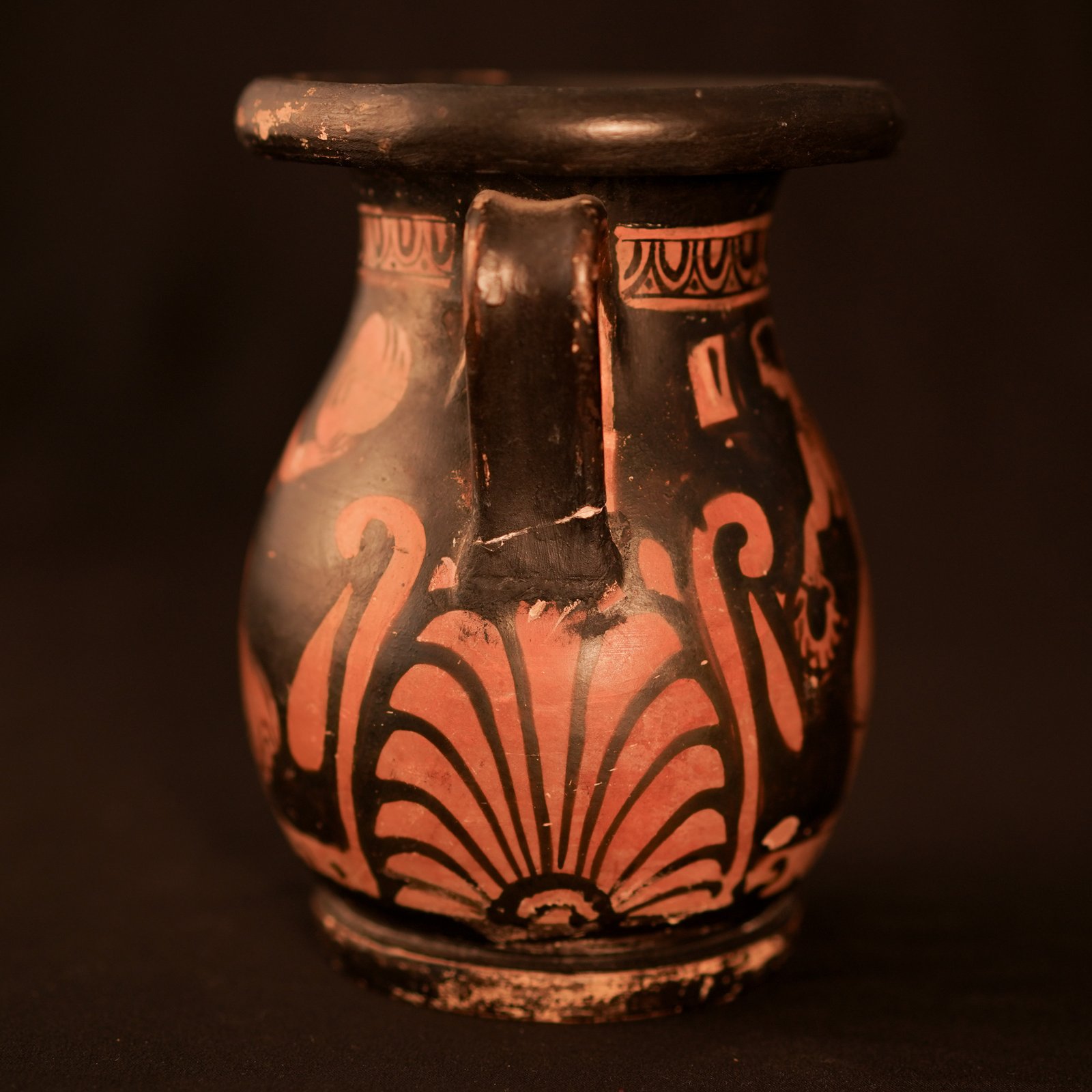
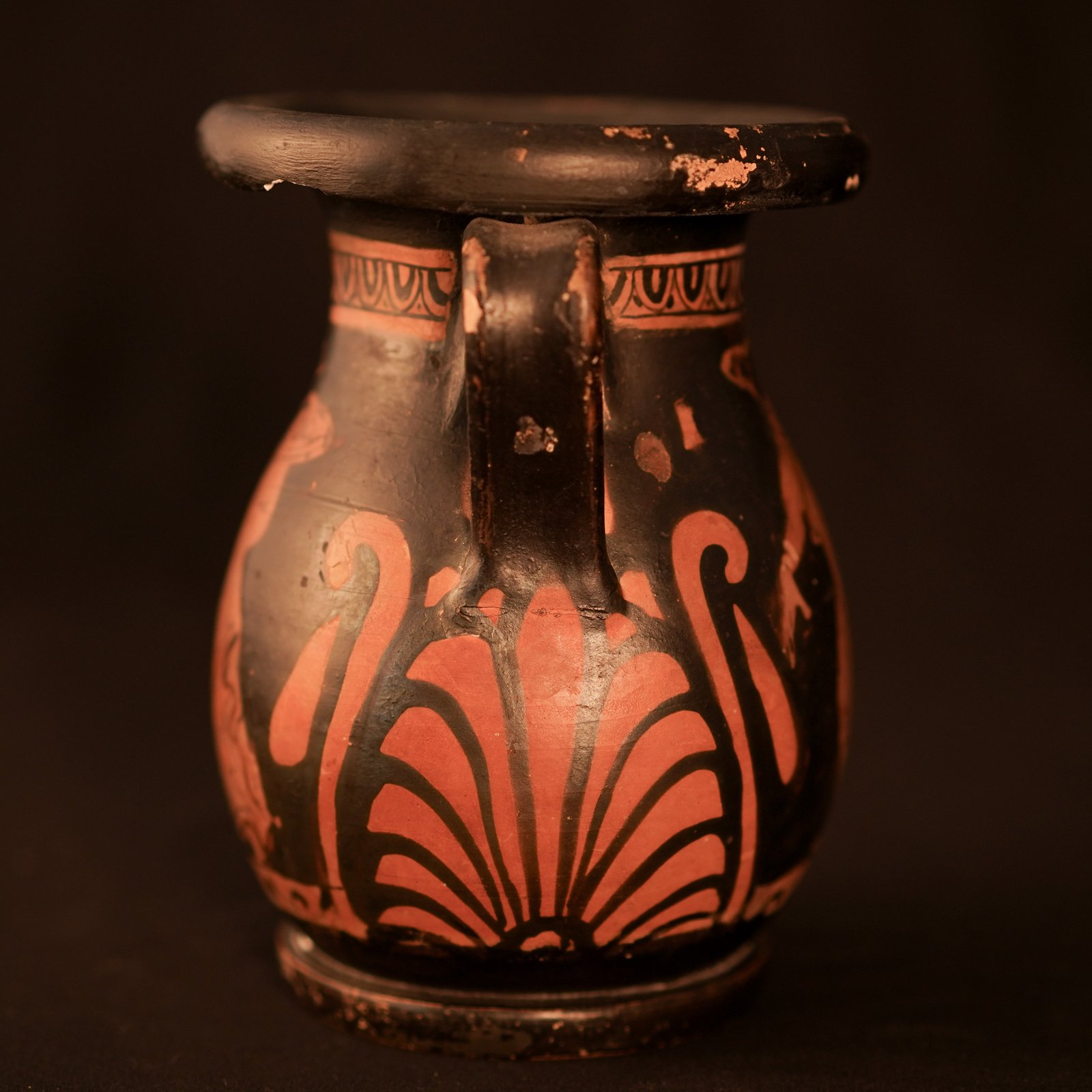
The neck features an ovolo band or fluting, a classic ornamental motif on the rims of Greek pottery. Beneath the handles, it is common to find large palmettes that serve to separate the scenes on either side of the vase.
Originally designed to store liquids such as oil or wine, such elaborately crafted Apulian pelikes often served a funerary purpose, being placed in tombs as part of the grave goods to accompany the deceased into the afterlife.
The pelike is a type of ceramic vessel that reached its peak in the workshops of Magna Graecia, specifically in the region of Apulia, during the 4th century BC. Unlike large amphorae, the pelike is characterised by its wide, stable base, which made it ideal for everyday use in storing liquids such as oil or wine. However, in the Apulian context, these pieces transcended their utilitarian function to become votive and funerary objects. Their red-figure decoration, often depicting maenads and Dionysian motifs, symbolised the connection with the cycle of life, rebirth and ritual, serving as grave goods to accompany the deceased.