



Apulian pottery Red-figured pelike depicting Eros in a funerary context, Circa 4th Century BC
Price:
Description
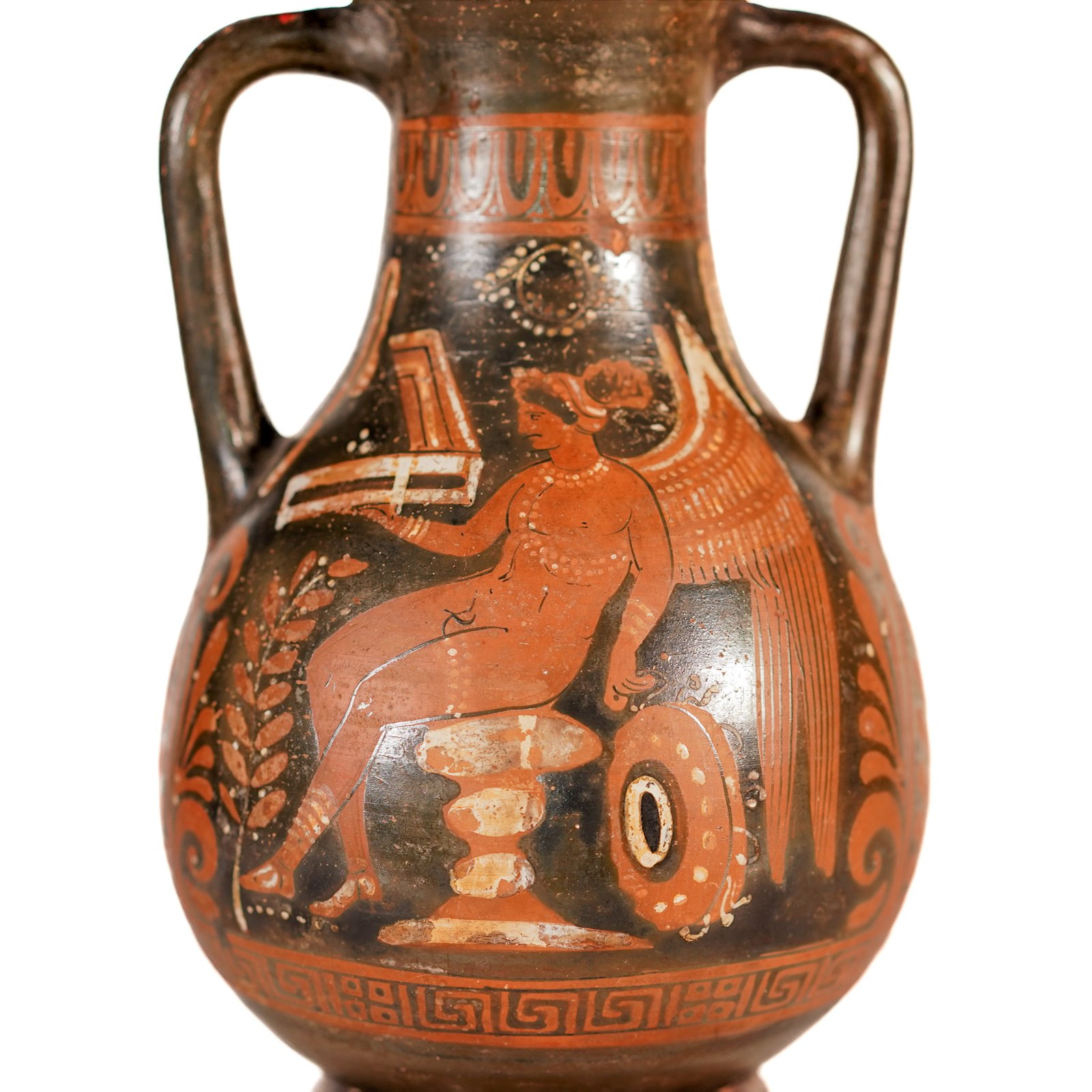
A scene featuring Dionysian elements and a symbolic interpretation linked to the relationship between life and death (the Eros-Thanatos interpretation)
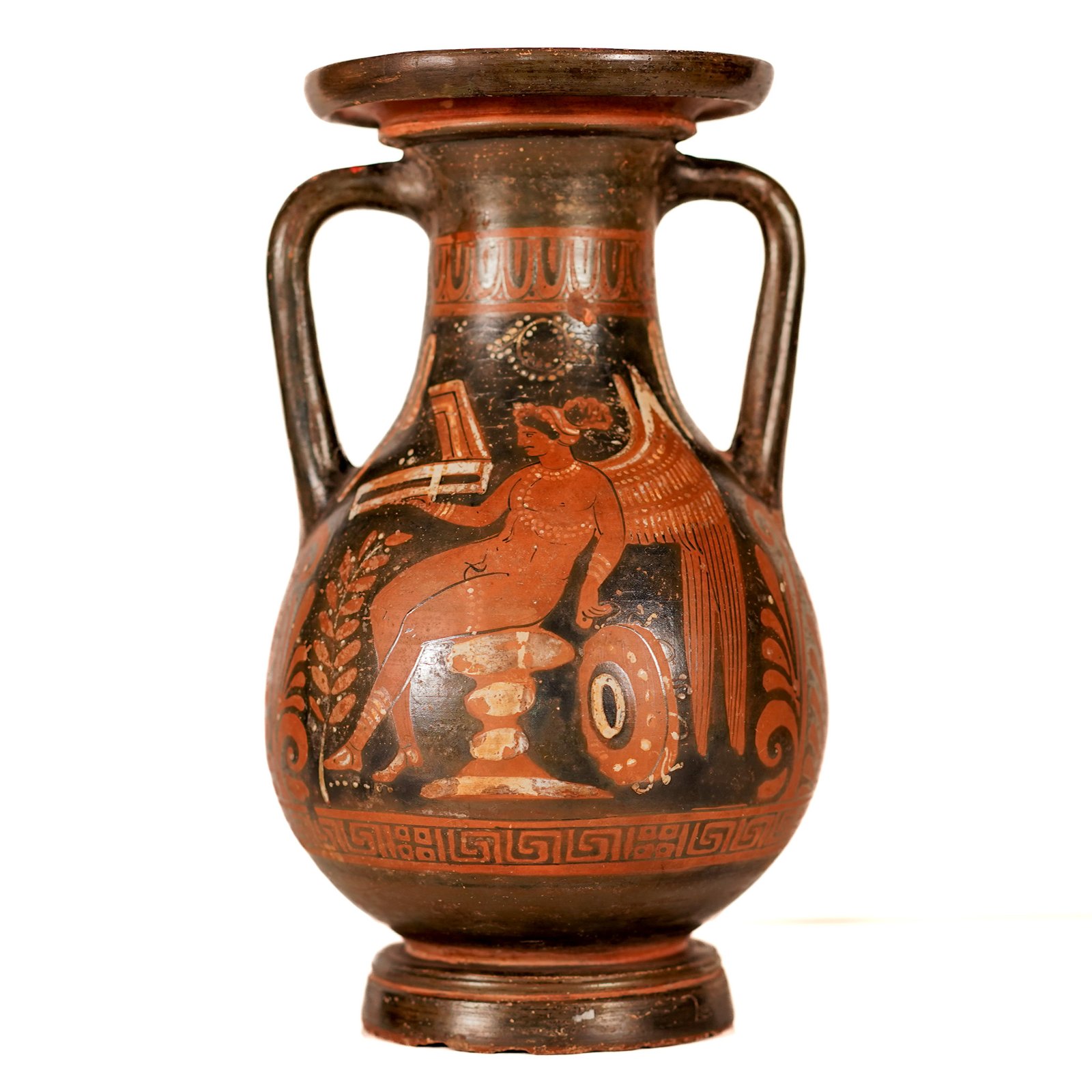
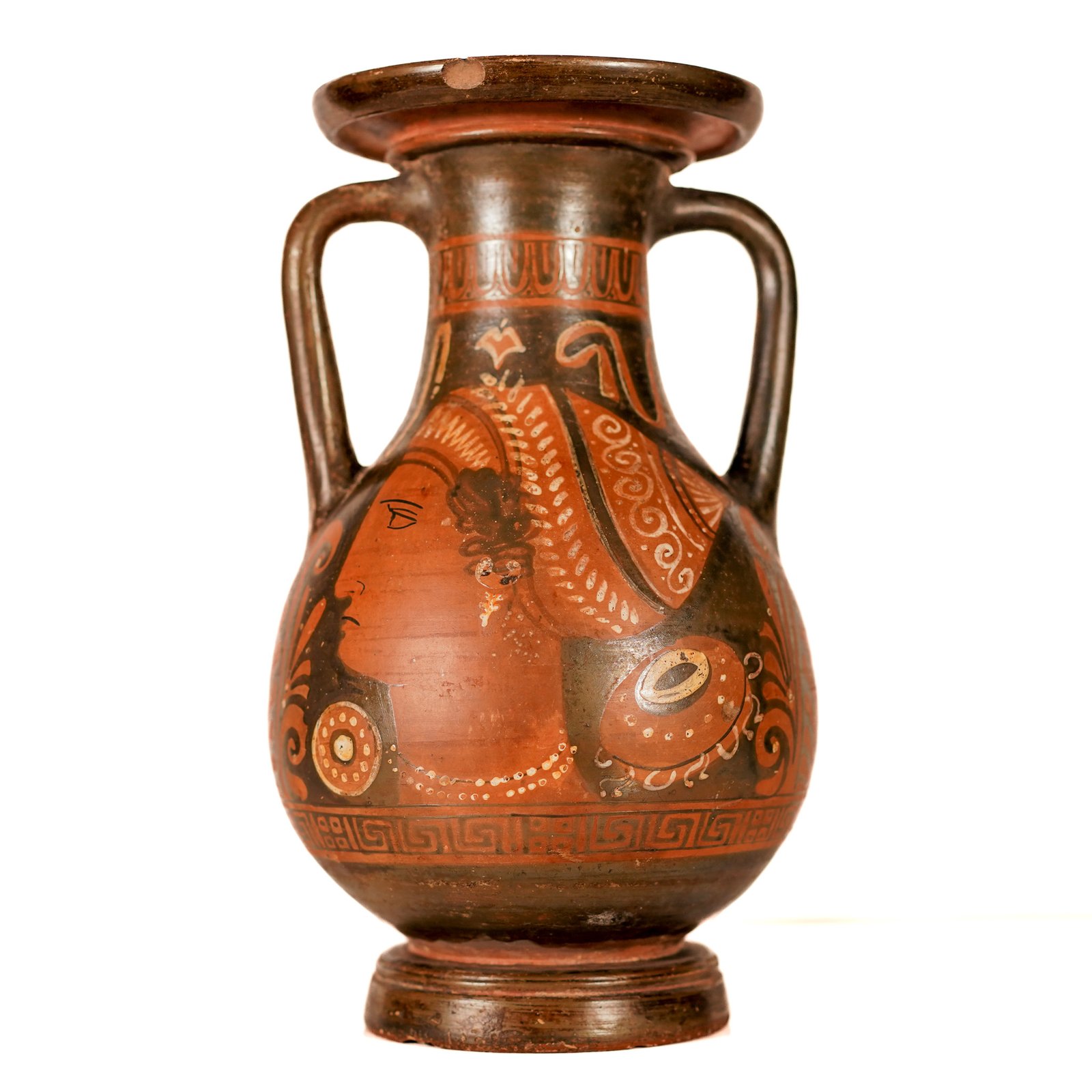
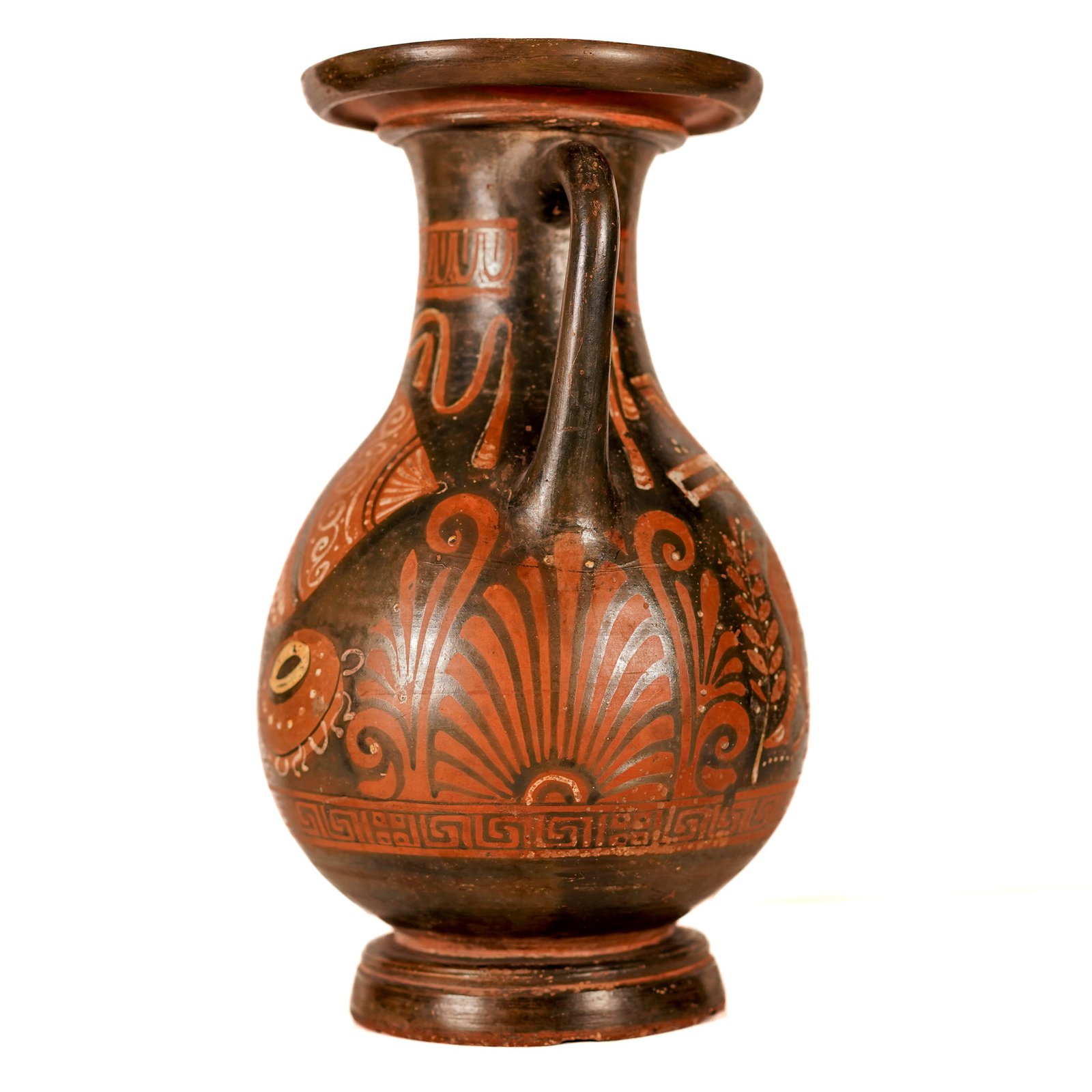
A pelike-type vase, characterised by a globular body, a wide base and a short neck with two vertical handles. Made of ochre-coloured terracotta, covered with a glossy black slip that serves as a background for the red-figure technique.
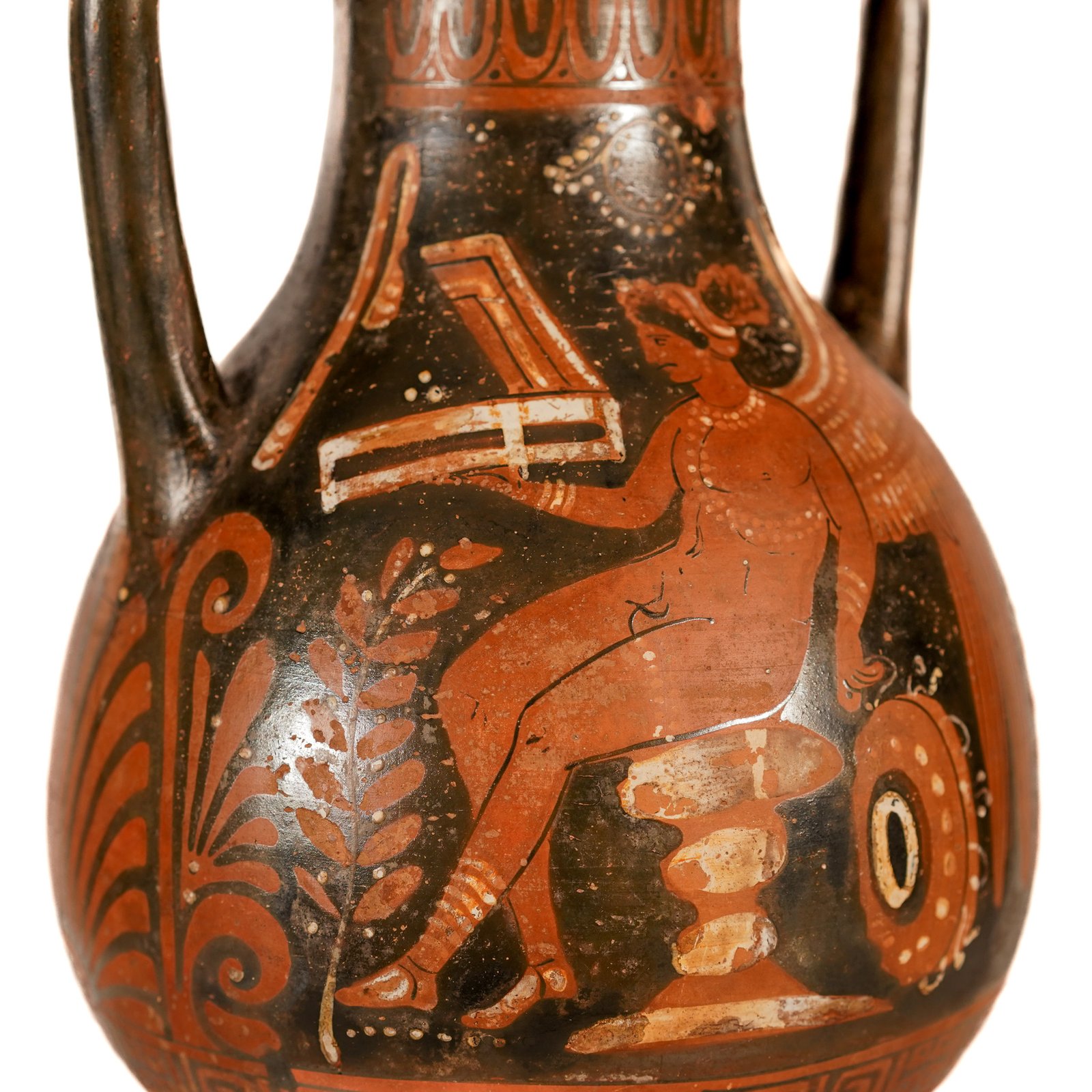
On side A, a winged youth, identifiable as Eros, is depicted sitting on a rocky outcrop. The anatomy is defined by fine lines of diluted glaze, with a delicate rendering of volume. He holds an open cista or box, whilst a tympanum (drum) rests beside him. The wings feature detailed featherwork, highlighted by white strokes that create a sense of relief.
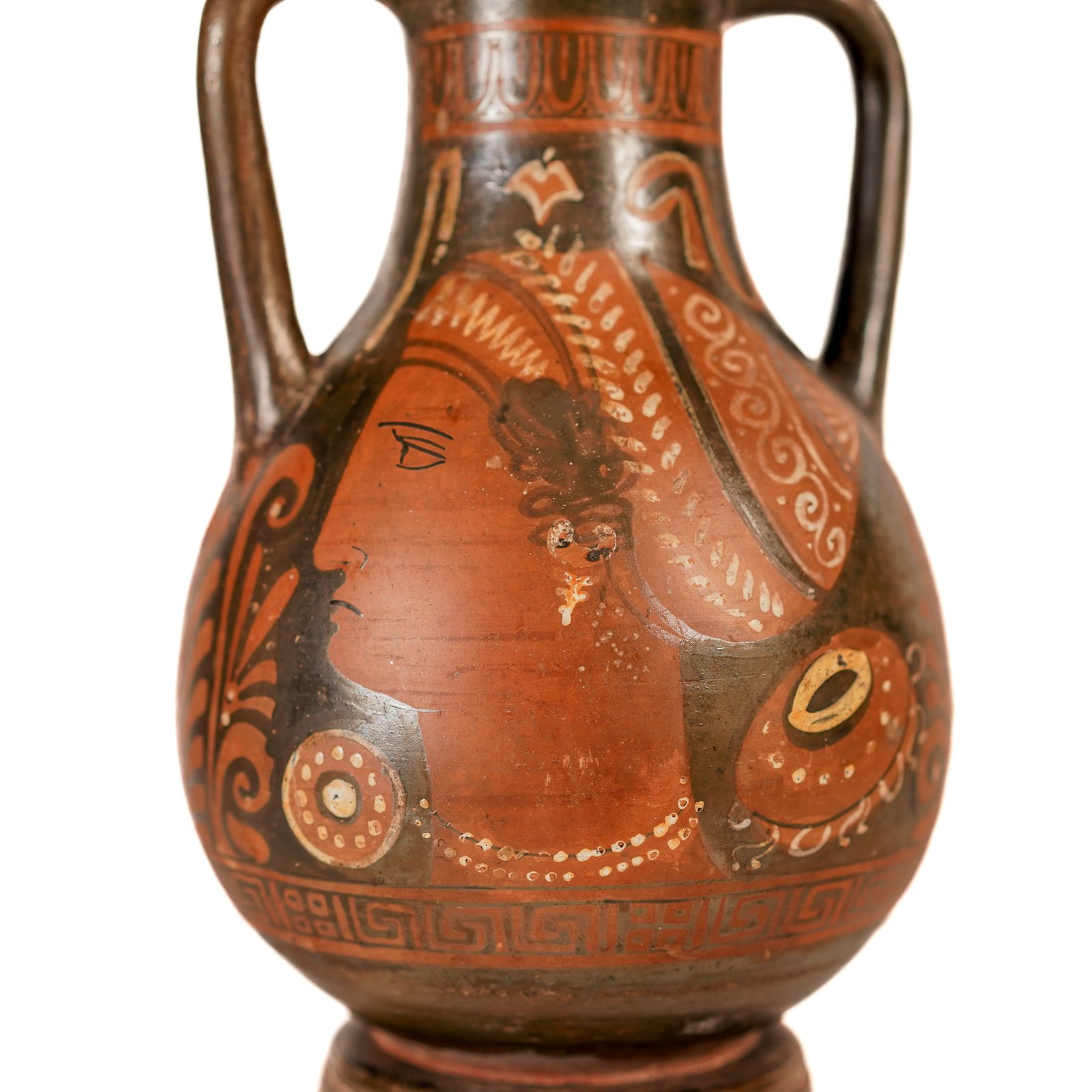
On side B, a female head in profile facing left appears, richly attired in a sakkos decorated with geometric motifs and white dots evoking textile embroidery. She wears a necklace and earrings, also indicated with white pigment. A second tympanum is placed next to her neck, establishing an iconographic link with the main scene.
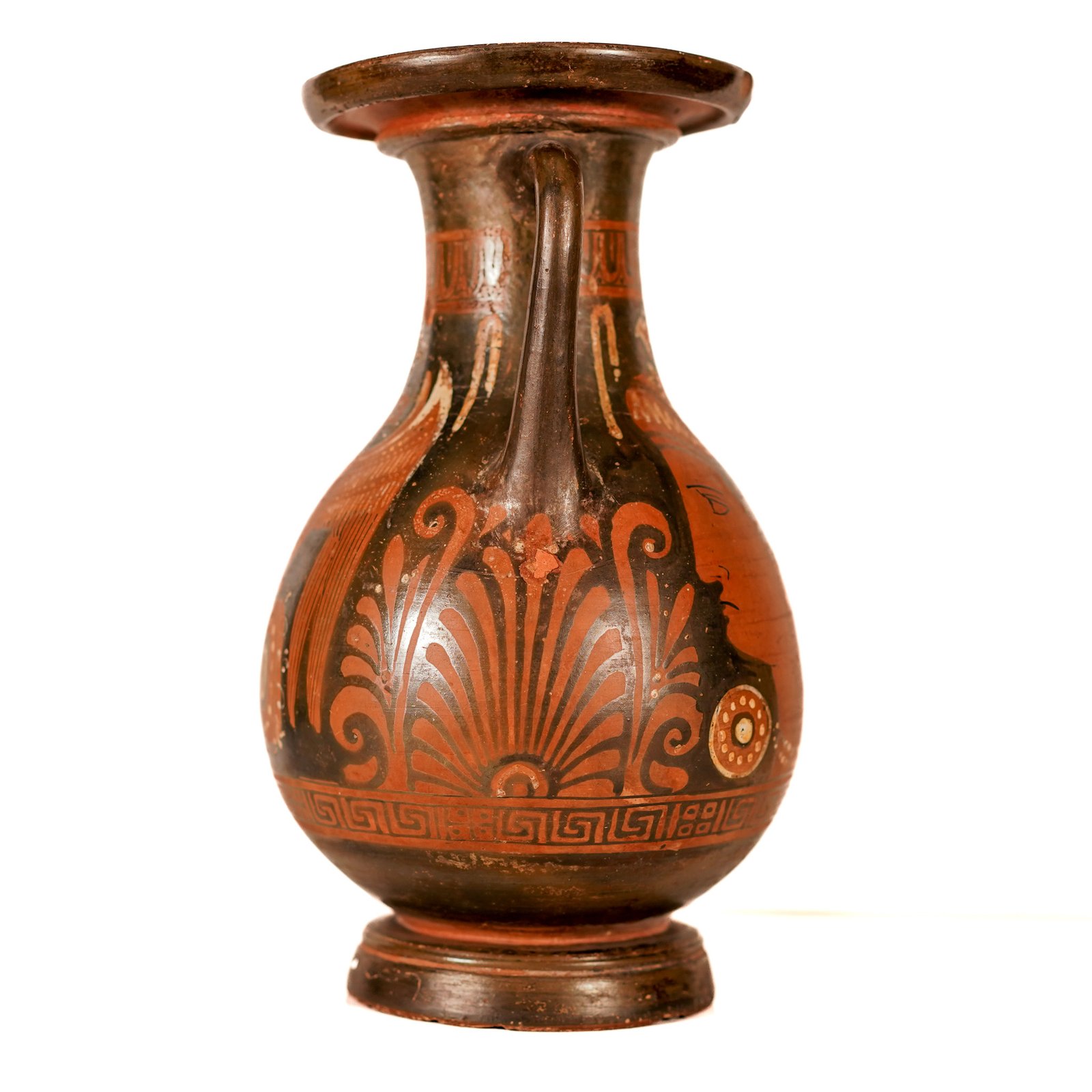
Beneath the wings, symmetrical palmettes extend, connecting both sides. The neck is decorated with a band of ovals, whilst the base of the scene rests on a continuous meander, a classical device that structures and stabilises the composition.
Iconography and interpretation
The figure depicted on side A is Eros, identifiable by his winged form and youthful appearance. However, his seated and restrained posture, together with the presence of objects such as the cista and the tympanum, place the scene within a symbolic context that differs from the usual depictions of the god as a dynamic or playful figure.
In 4th-century BC Apulian red-figure pottery, Eros frequently appears in funerary contexts or in connection with the transition to the afterlife. In these instances, his presence takes on a different dimension, associated not so much with desire as with a mediating force between the world of the living and that of the dead.
The tympanum, an instrument associated with the Dionysian cults, reinforces this interpretation. Within the context of these cults, music and ritual ecstasy served as channels of connection with the divine and offered a promise of continuity beyond death. The inclusion of this element suggests a possible reference to eschatological beliefs characteristic of southern Italy in the Classical period.
From a modern interpretative perspective, this type of representation has been linked to the symbolic relationship between Eros (love, the life force) and Thanatos (death), understood not as opposing entities but as complementary forces within the cycle of existence. In this sense, the figure of Eros can be interpreted as an agent of transition, linking memory, affection and transcendence.
The idealised female head on the reverse could be linked to the funerary context or to the evocation of an absent figure, reinforcing the introspective tone of the piece.
This work belongs to the tradition of late Apulian pottery, characterised by increasing iconographic complexity and a tendency towards introspection in the figurative scenes. The combination of Dionysian and funerary elements, together with the restrained depiction of Eros, lends the piece a remarkable symbolic density.
Beyond its technical quality, the work’s significance lies in its ability to visually articulate fundamental concepts of ancient thought, such as the relationship between life, death and continuity.


