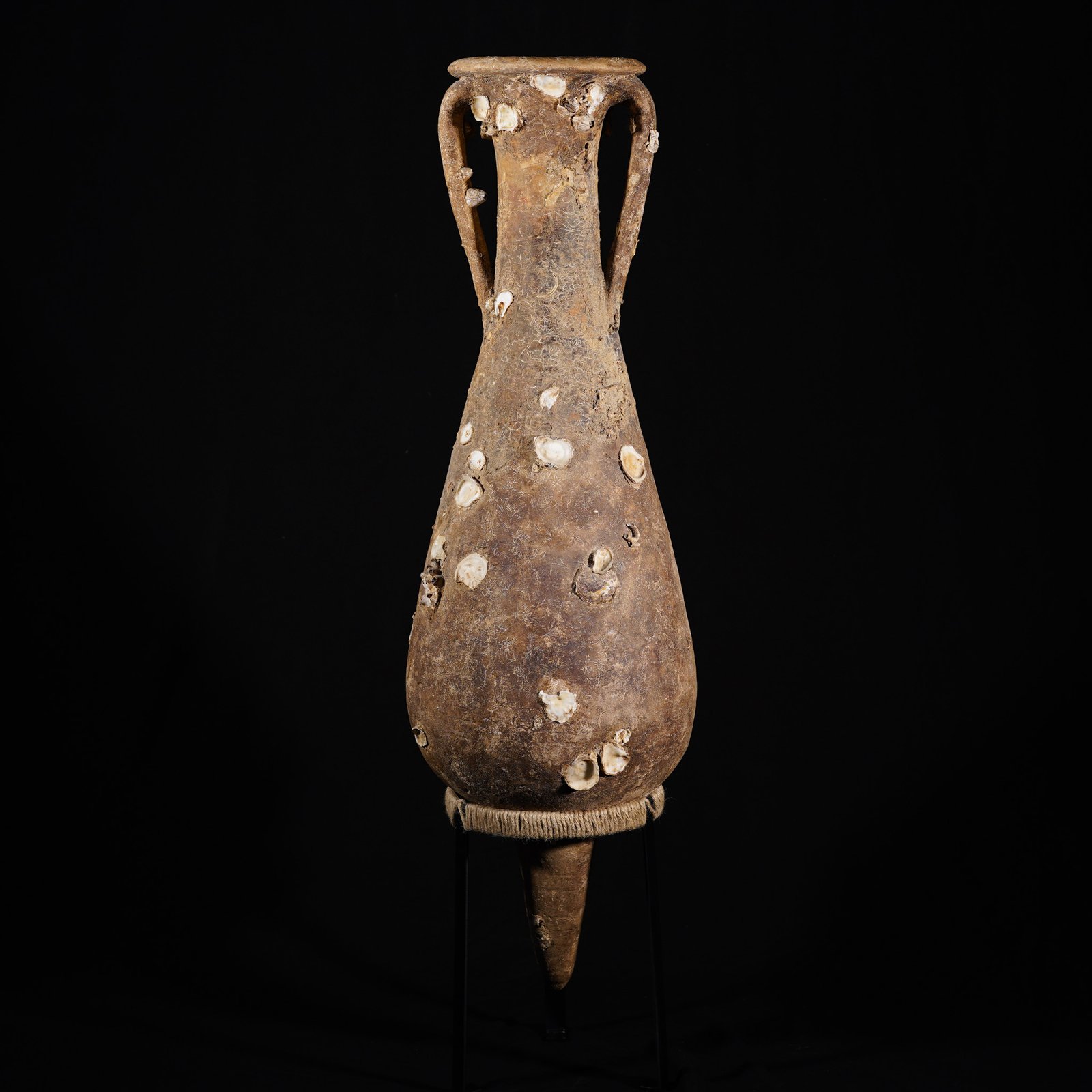
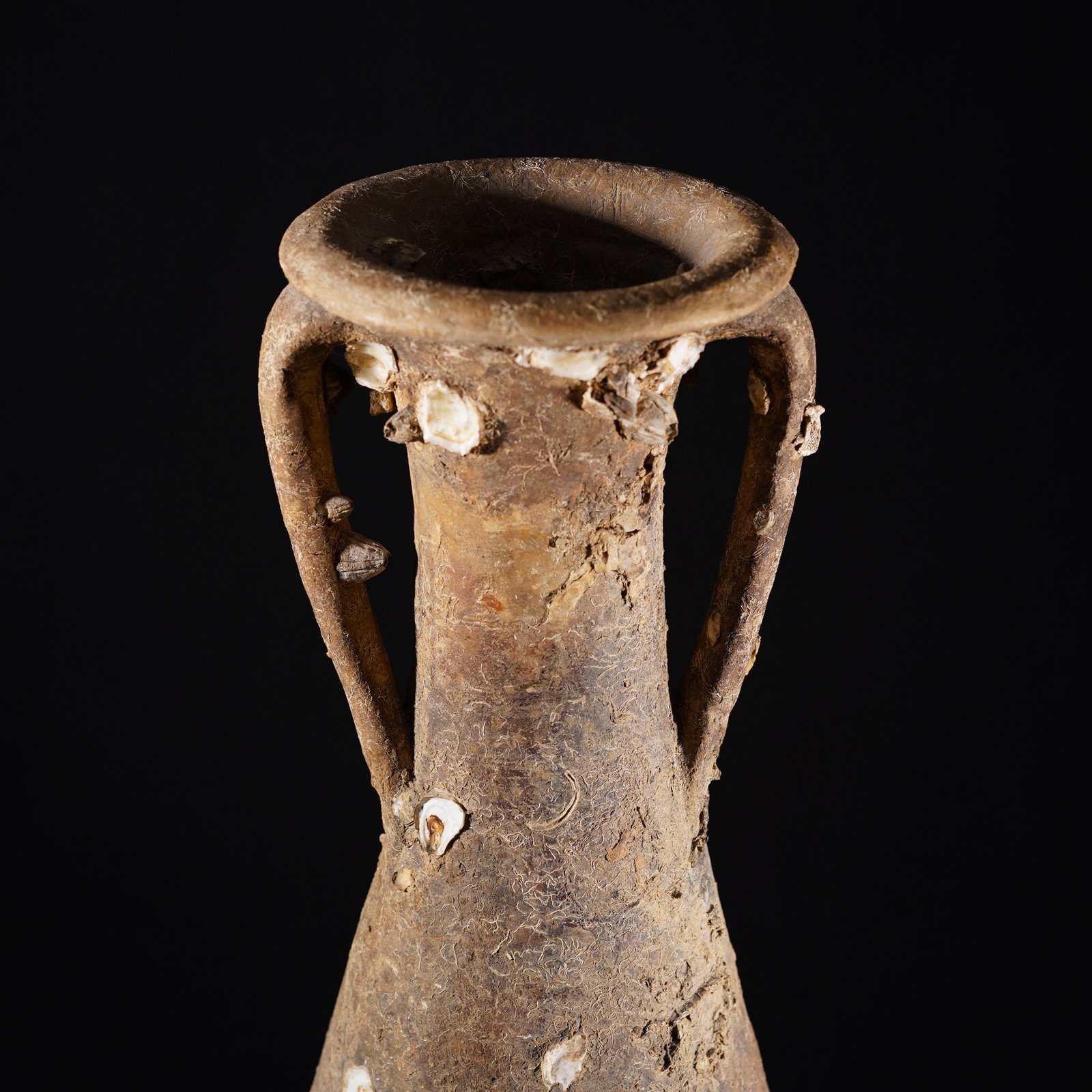
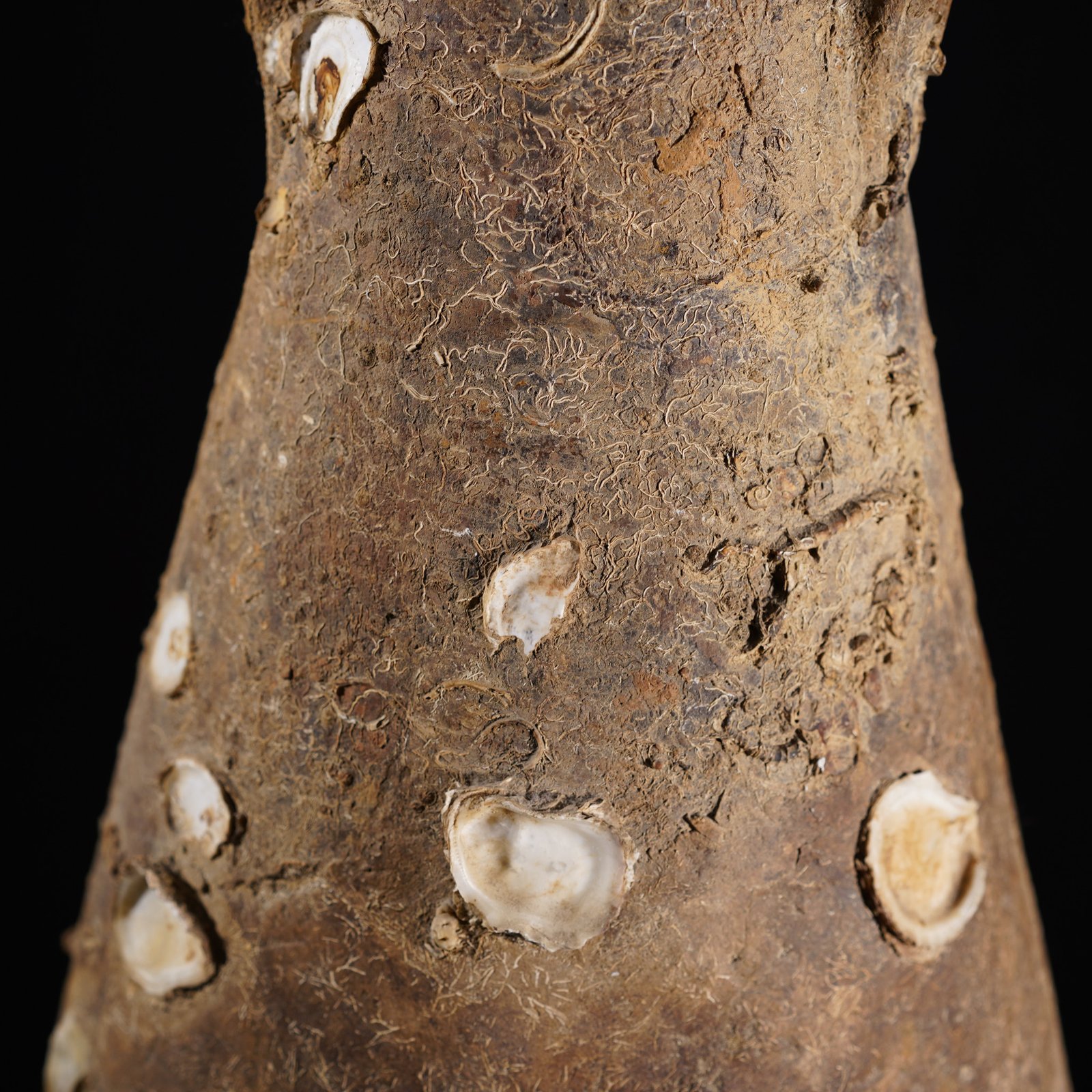
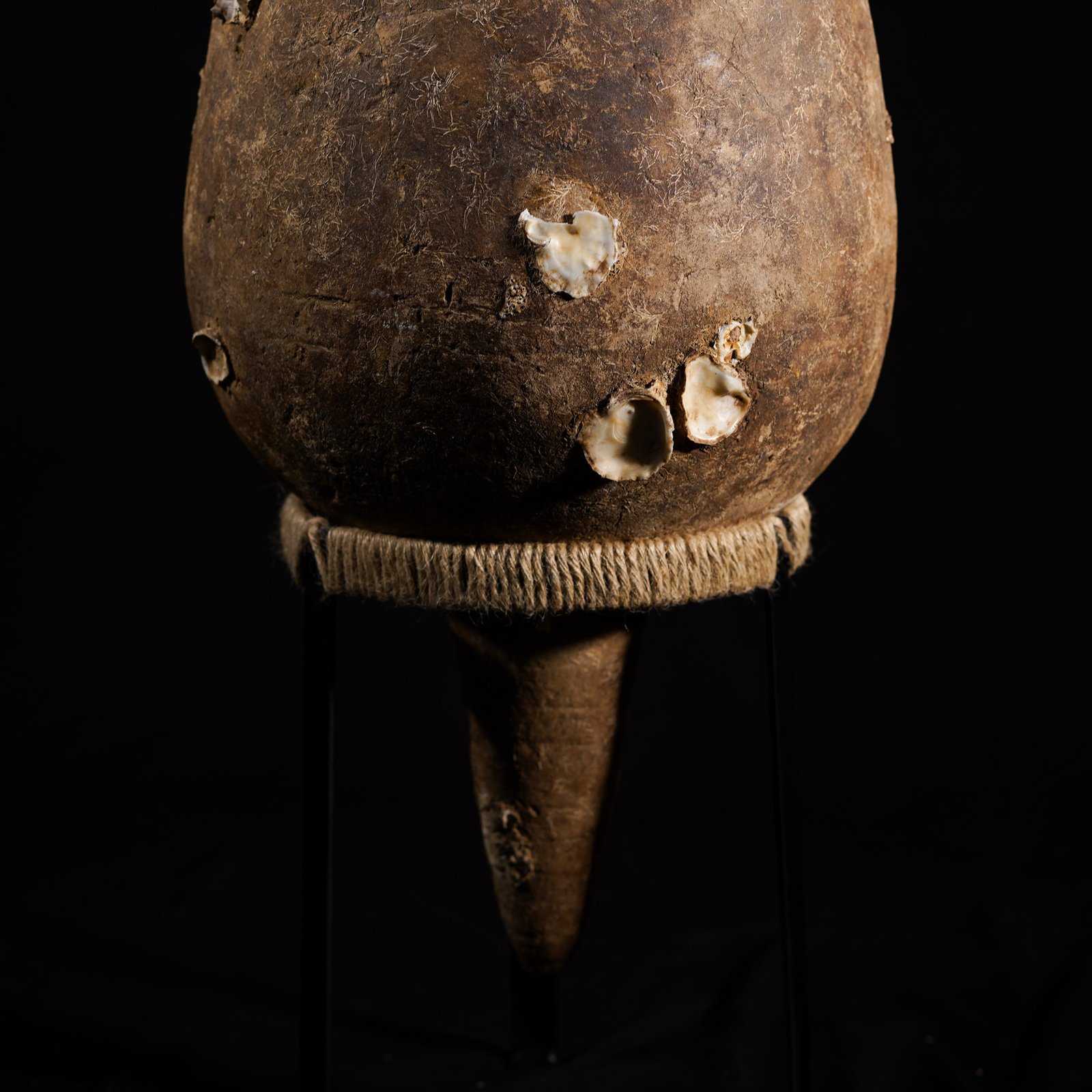
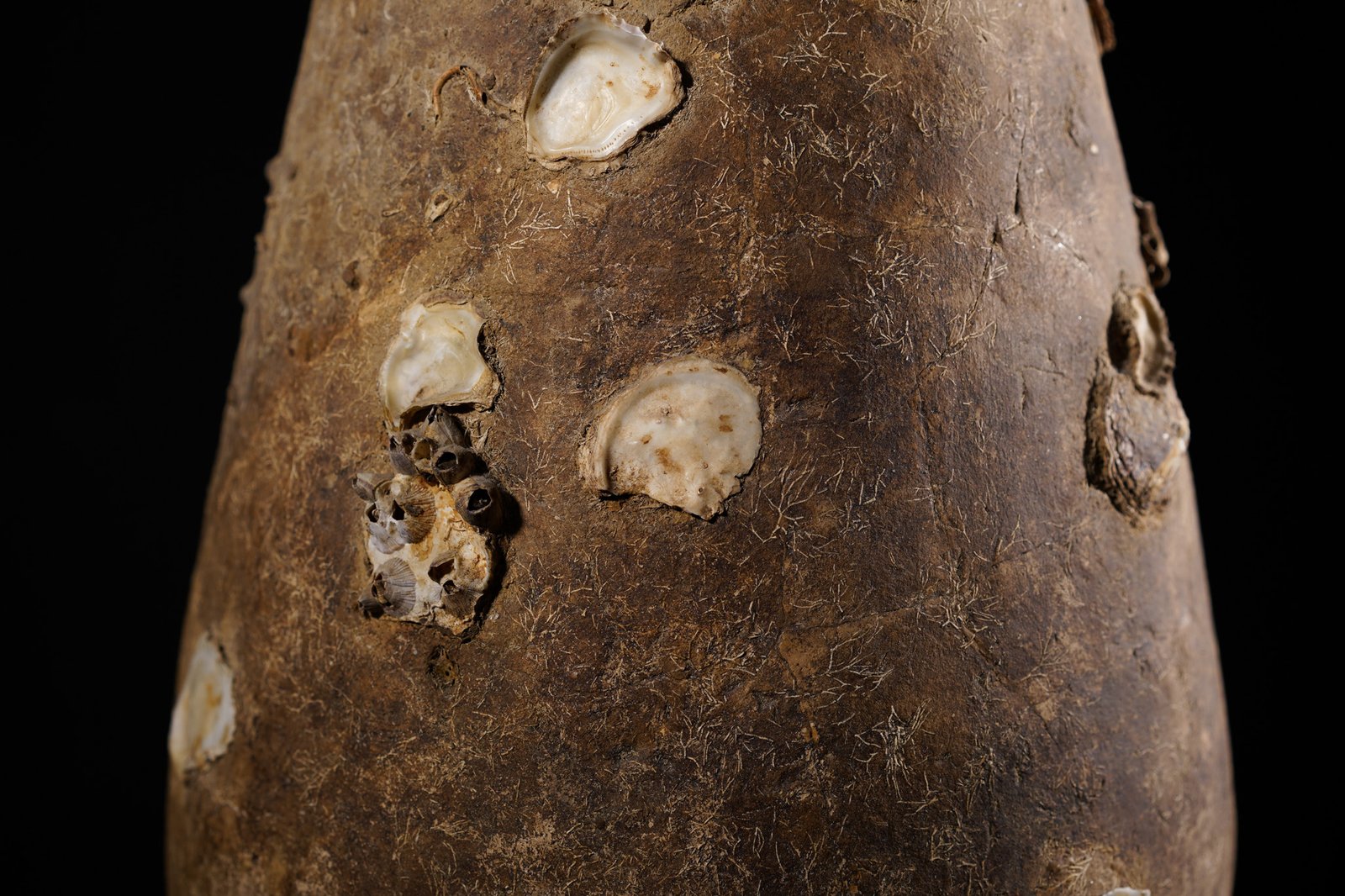
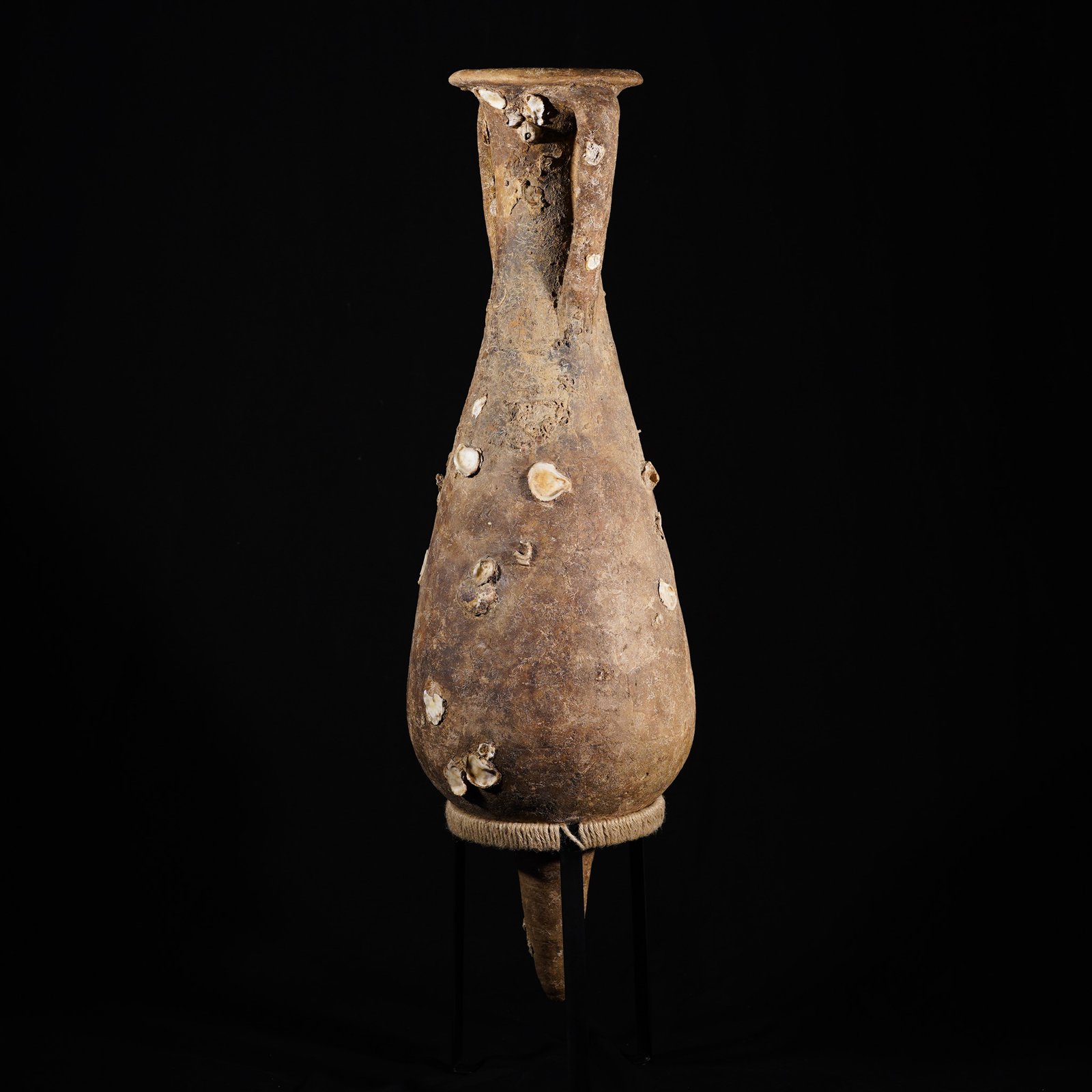
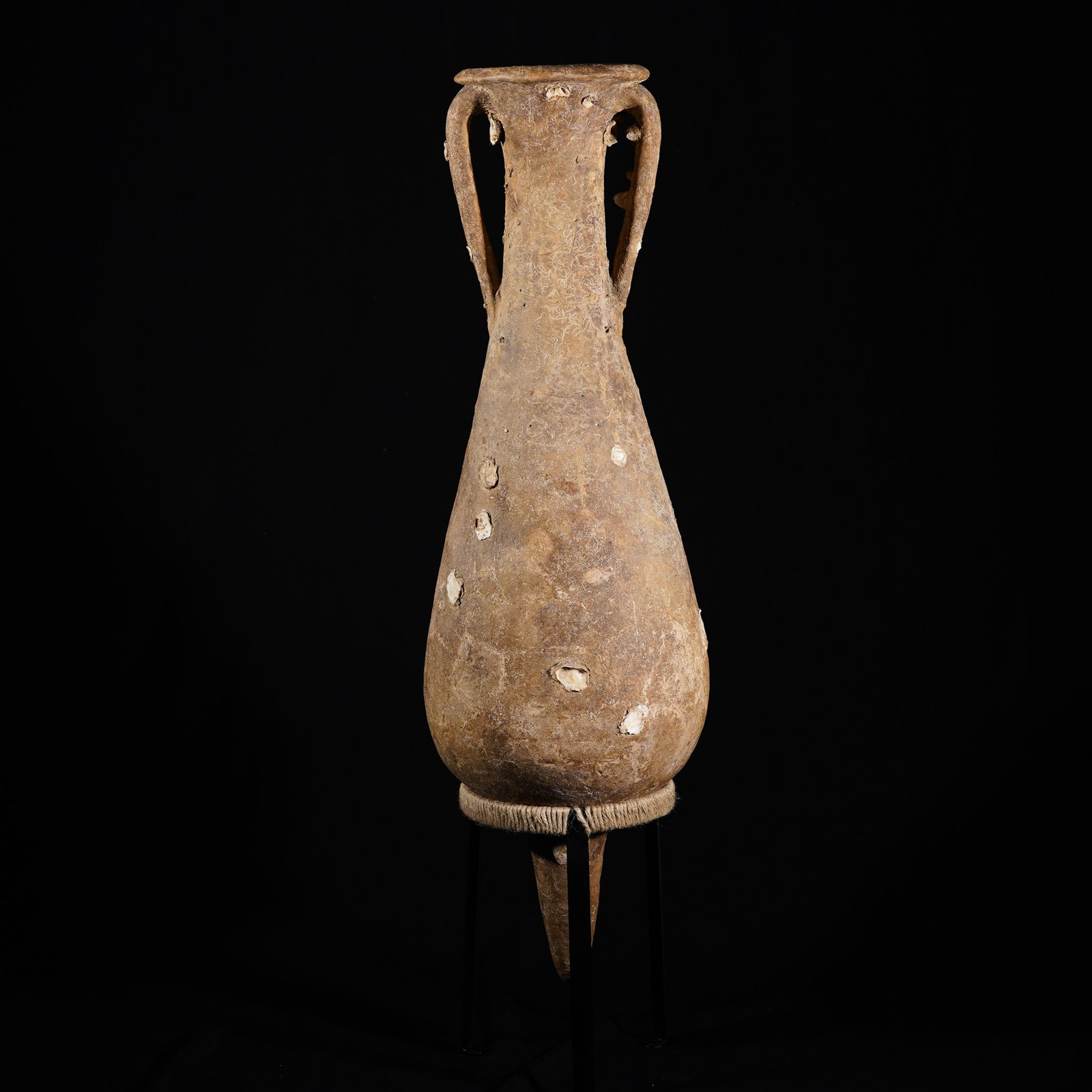
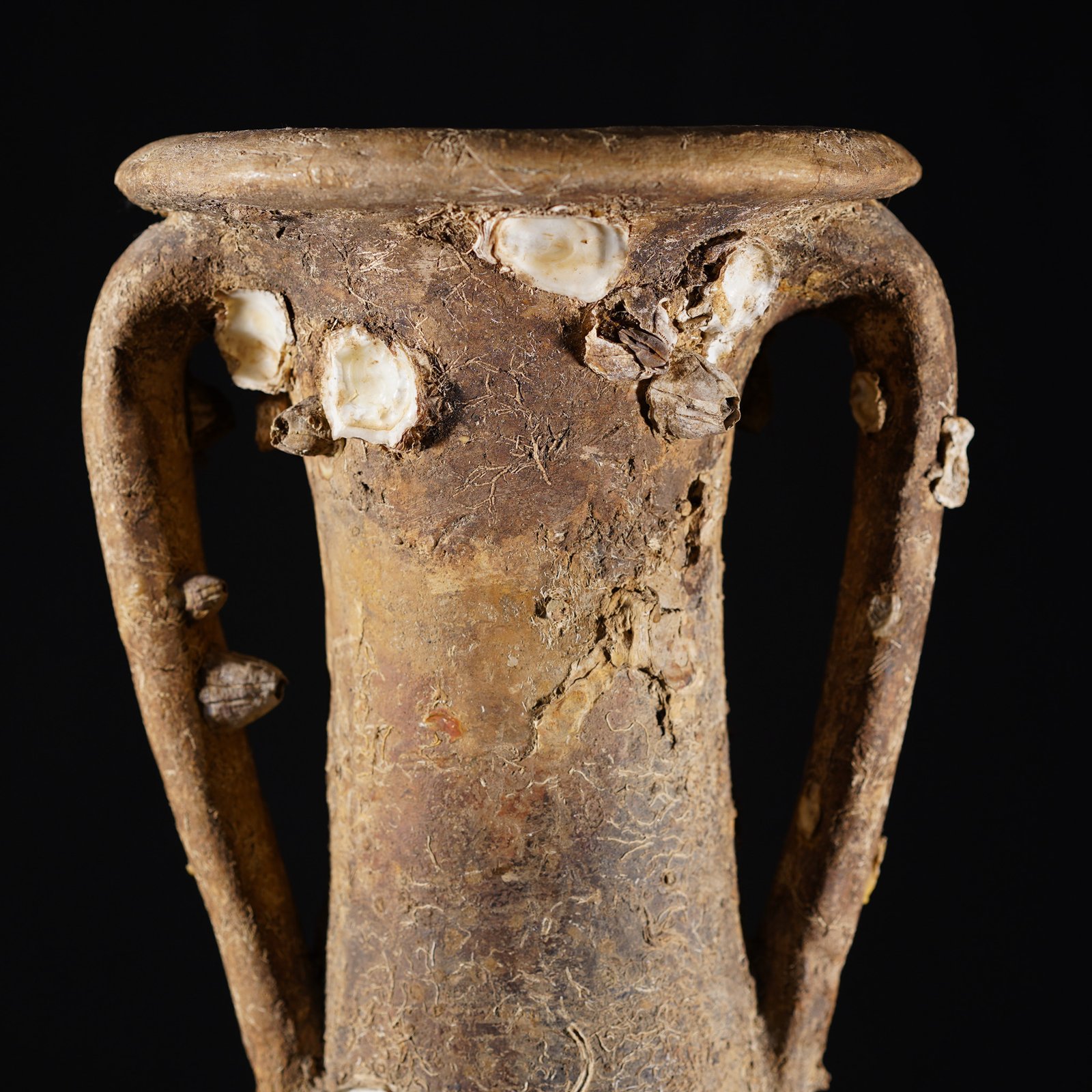
This amphora has an elongated body in the shape of an inverted pear (piriform), which gradually widens towards the base before narrowing at the pivot. Unlike variant IIA, IIB has a narrower, more elongated neck, often with a slightly hyperbolic profile that gives it a more elegant silhouette. The rim is flared (outwards) and usually has a triangular or rounded section, designed to facilitate sealing with ceramic or lime plugs. It has two oval-shaped handles that curve from the top of the neck to the shoulder of the piece. It ends in a solid point or ‘pivot’ that allowed the amphora to be stuck into the sand in the holds of ships or into the floor of warehouses to keep it upright.
The Beltrán IIB derives directly from the Dressel 7/11 forms of the High Empire. These, in turn, are heirs to the late Punic containers that were used in southern Hispania for the salted fish trade long before the arrival of Rome. Throughout the coast of Baetica (Andalusia), the Romans did not invent a new industry, but rather adopted and standardised the existing Phoenician production centres. The ‘egg’ or pear-shaped form with a pivot, characteristic of the Beltrán IIB, responds to a centuries-old tradition of design for the maritime transport of fish products, a Phoenician speciality. Although the Malaka variant is famous, the Beltrán IIB was produced in other parts of the Baetica coast, such as the Bay of Cadiz and the Algeciras area, always maintaining that Semitic-influenced design DNA adapted to the commercial needs of the Roman Empire.