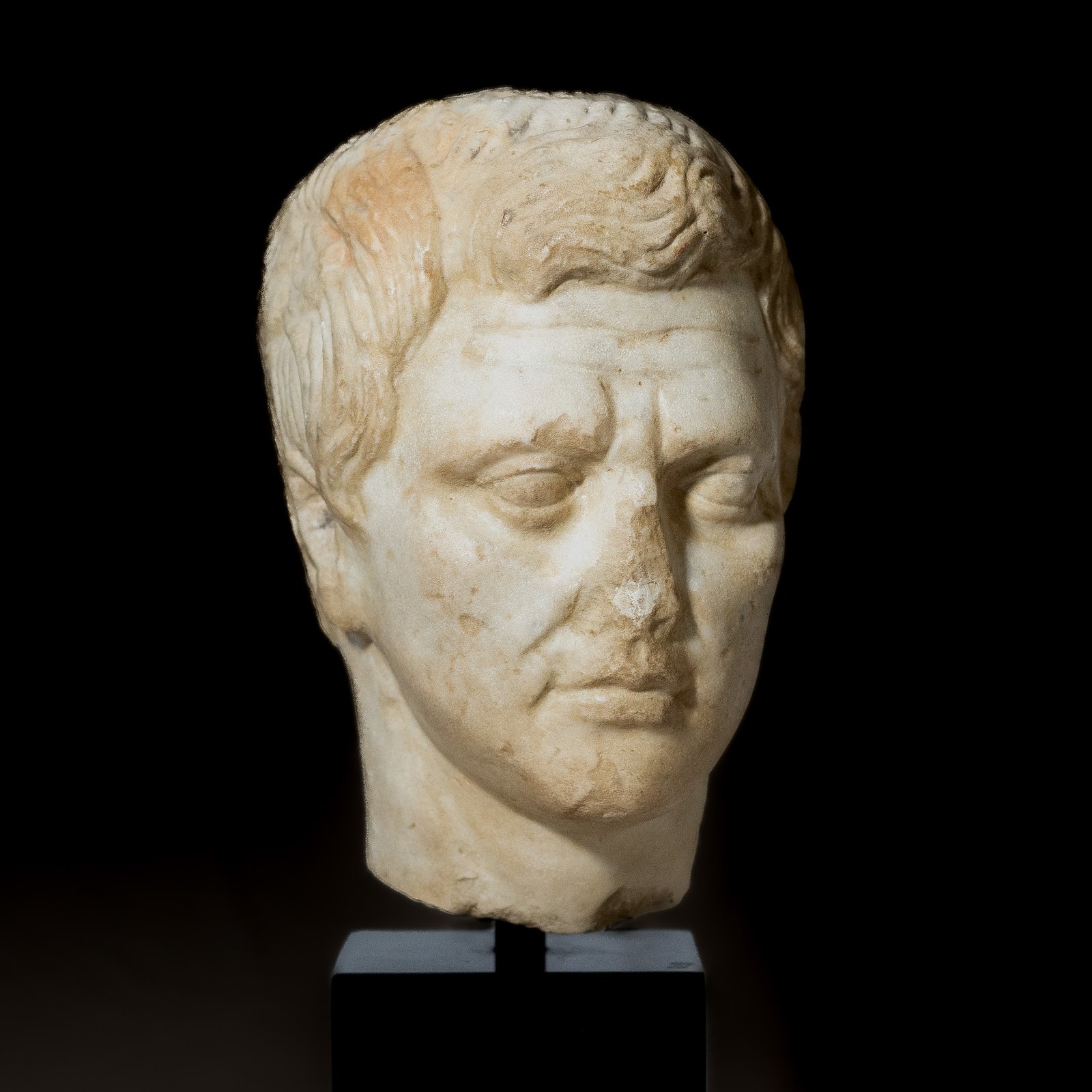
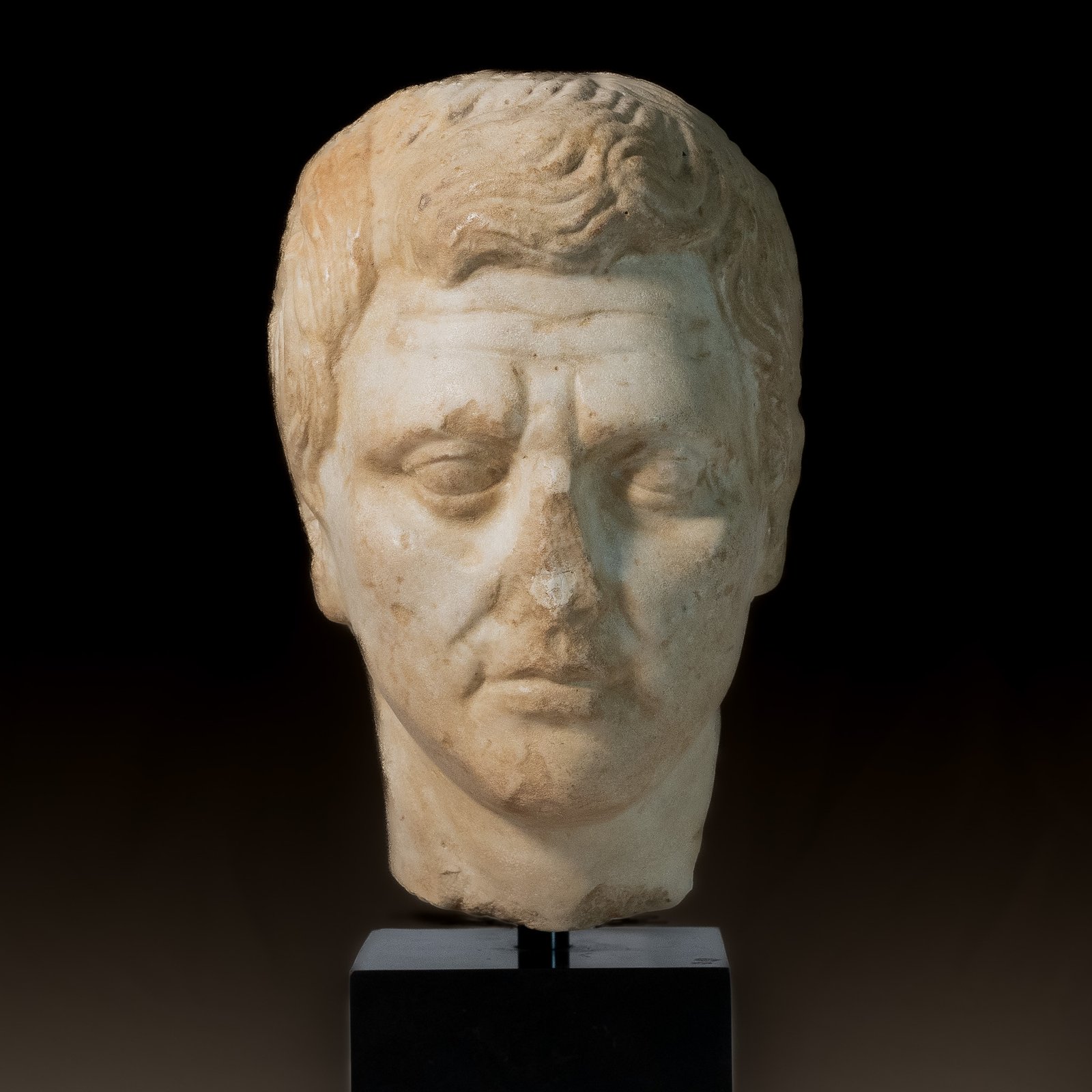
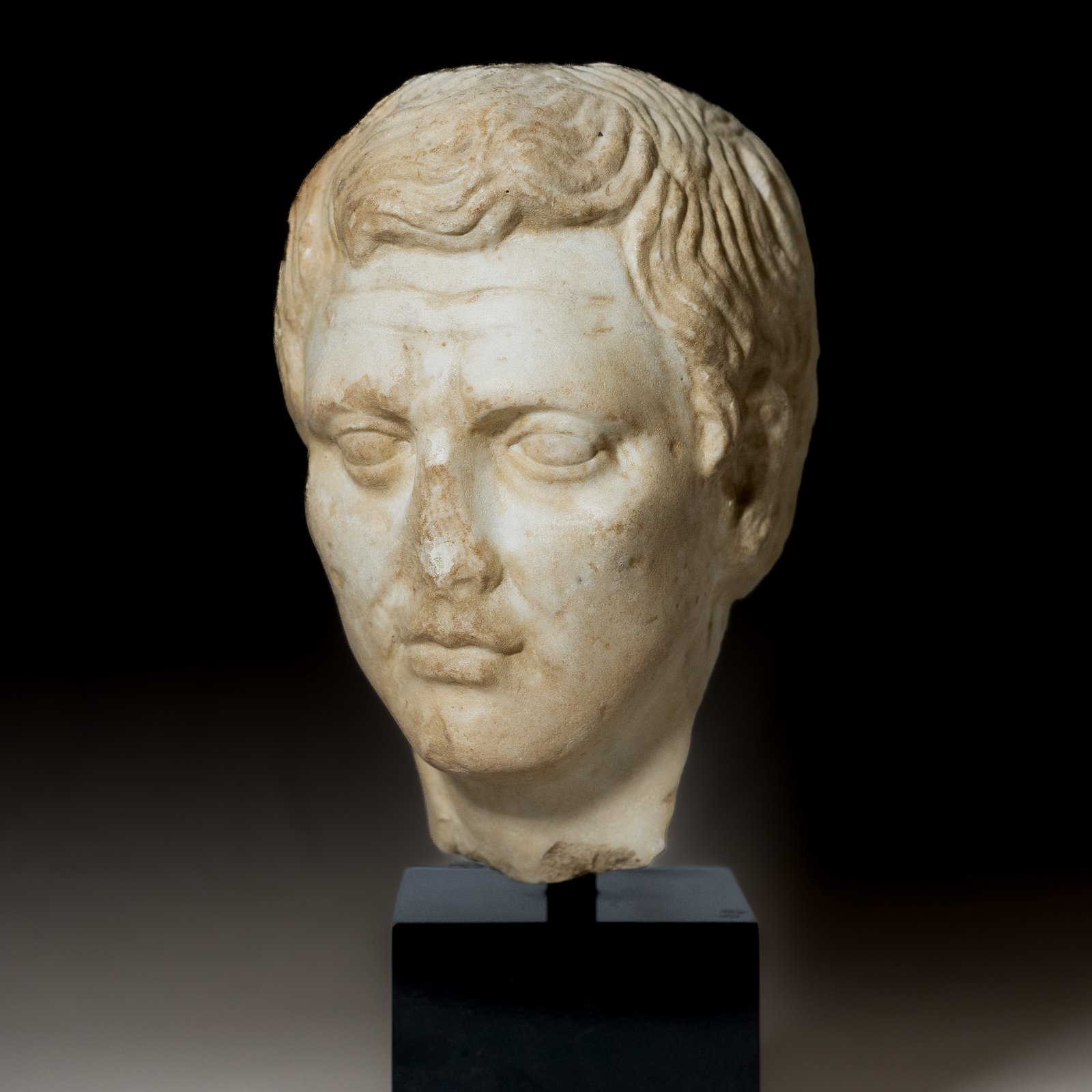
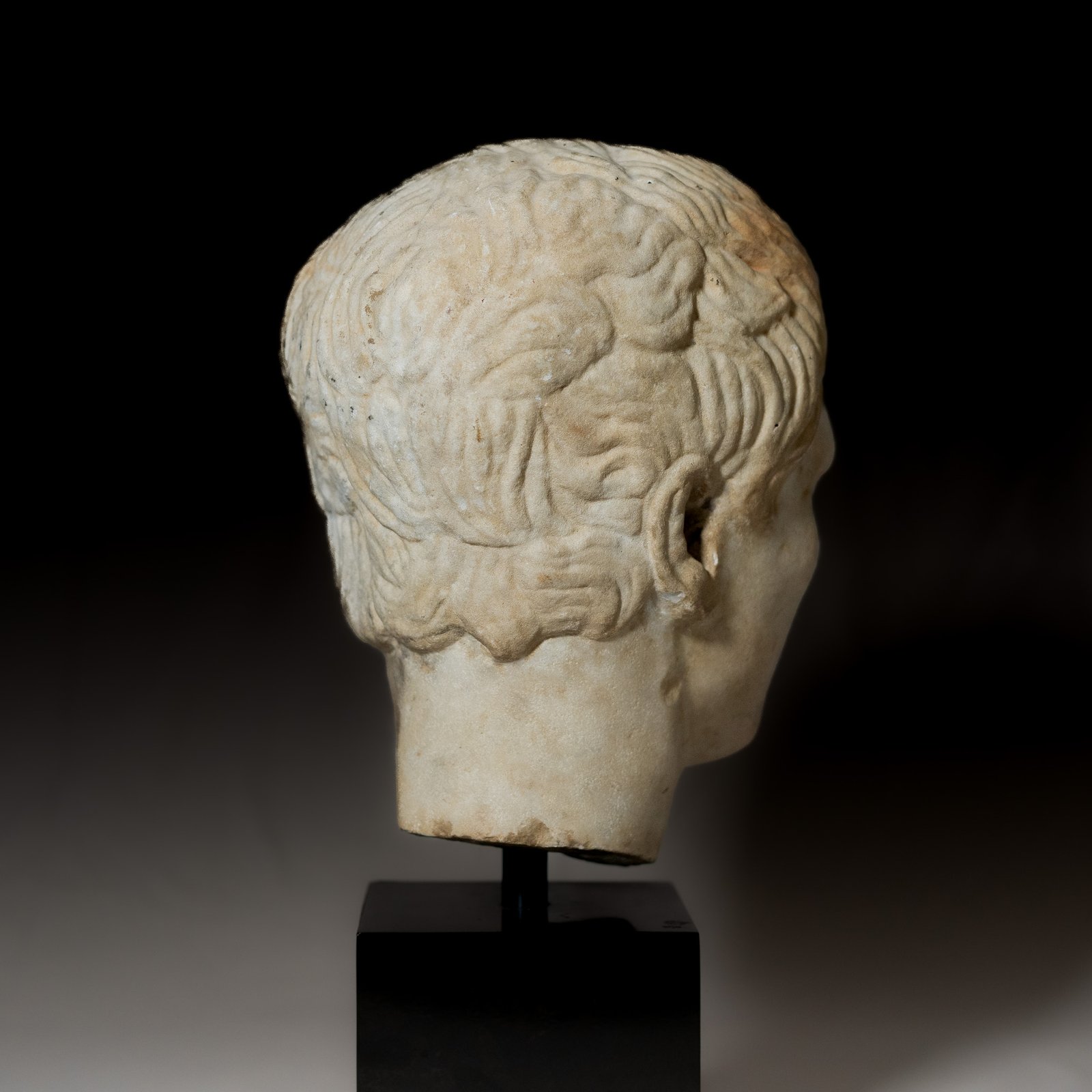
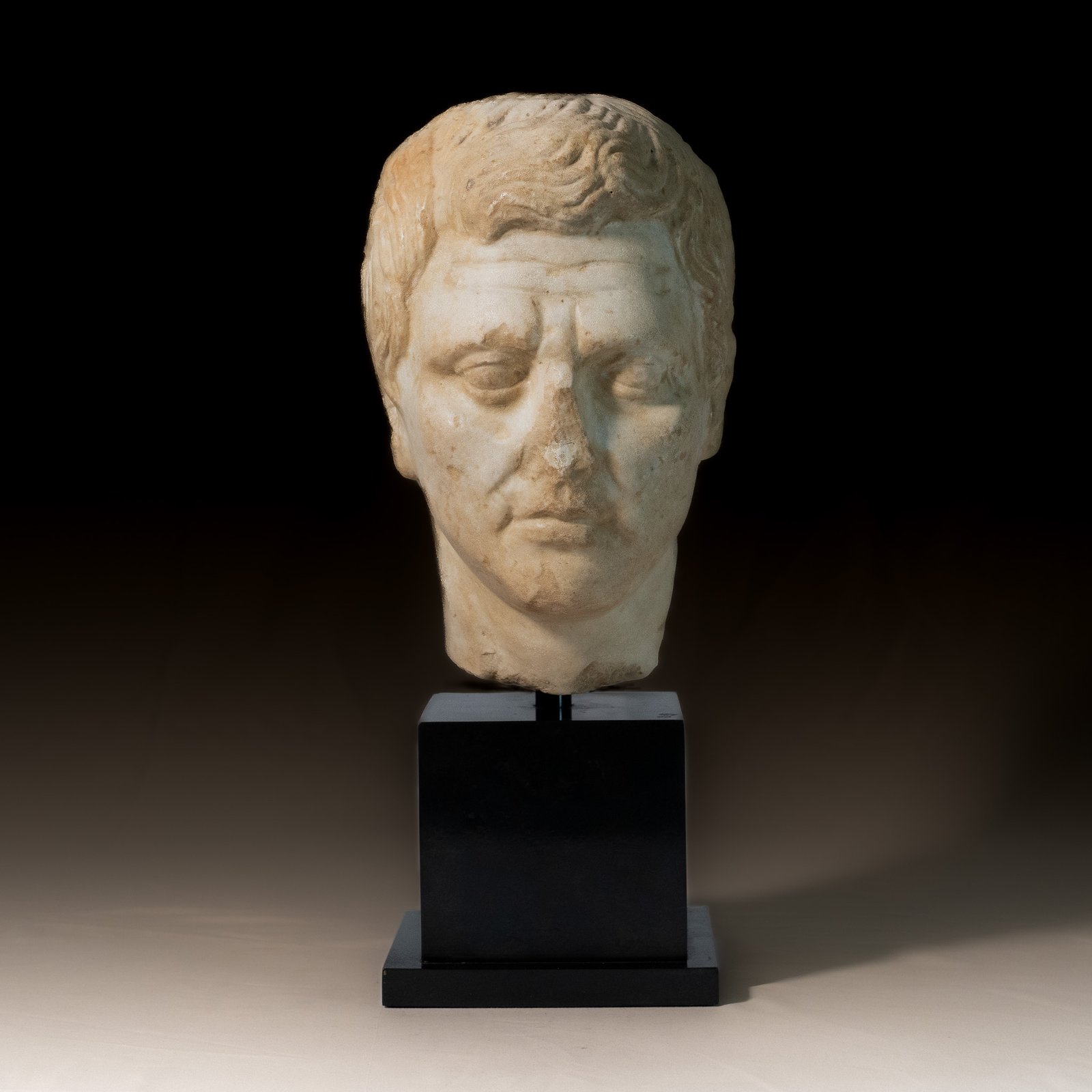
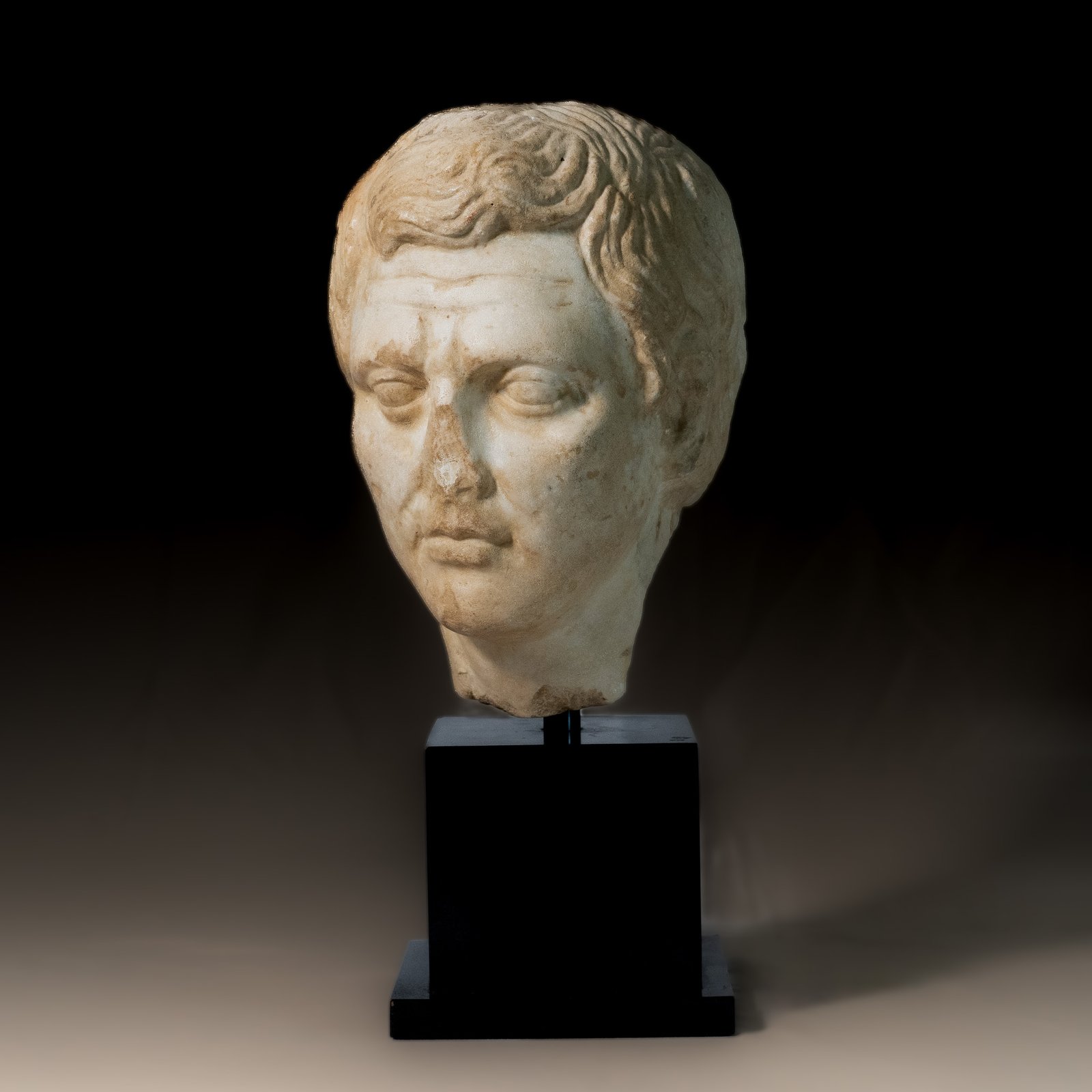
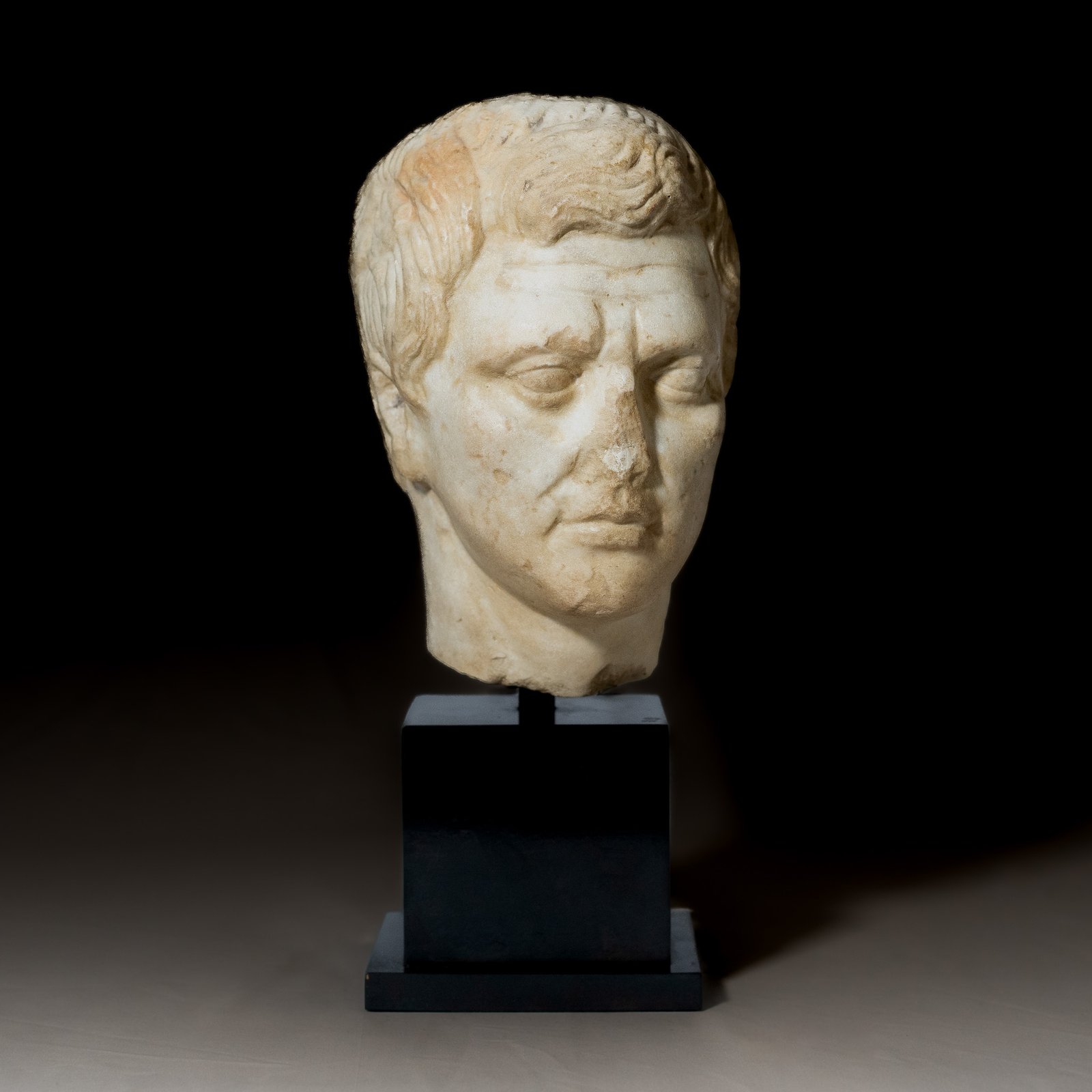
Ancient Roman Marble male head of Menander, Circa 1st-2nd Century A.D.
Conservation: Well-preserved piece. It shows superficial erosion on the facial features (nose, eyebrows and cheekbones) which does not affect the integrity of the piece as a whole.
Material: Marble
Dimensions: 30 cm
Provenance: European private collection, 1980s / D. Aaron, London/ Archaeological Gallery, Spain, 2014
This is a portrait head of Menander after a Greek original of circa 300 B.C. His lips curving at the corners, with high cheekbones, the large almond eyes set beneath a frowning browline, the forehead creased, the hair falling in thick characteristic curls to the left of the forehead.
Menander was a renowned ancient Greek playwright who lived during the Hellenistic period, around the 4th and 3rd centuries BCE. Born in Athens, Menander became one of the most celebrated dramatists of his time and left a lasting impact on the world of theater.
In 49 BCE, Caesar stood at the Rubicon River, contemplating whether to cross with his army, a direct violation of Roman law. With great resolve, he exclaimed, “Alea iacta est,” meaning “the die is cast.” This phrase symbolized that a definitive and irreversible choice had been made, sparking a civil war and altering the course of Roman history.
But one of the most famous quote in the world was not originally from Julius Caesar, according to Plutarch, the actual phrase used by him at the crossing of the Rubicon was a quote in Greek from Menander’s play Arrhephoros, with the different meaning “Let the die be cast!”
Menander’s importance lies not only in his theatrical achievements. His realistic and relatable characters, coupled with his skillful storytelling, have made him an enduring figure in the history of theater. His works remain a testament to the timeless power of comedy and its ability to illuminate the human condition.