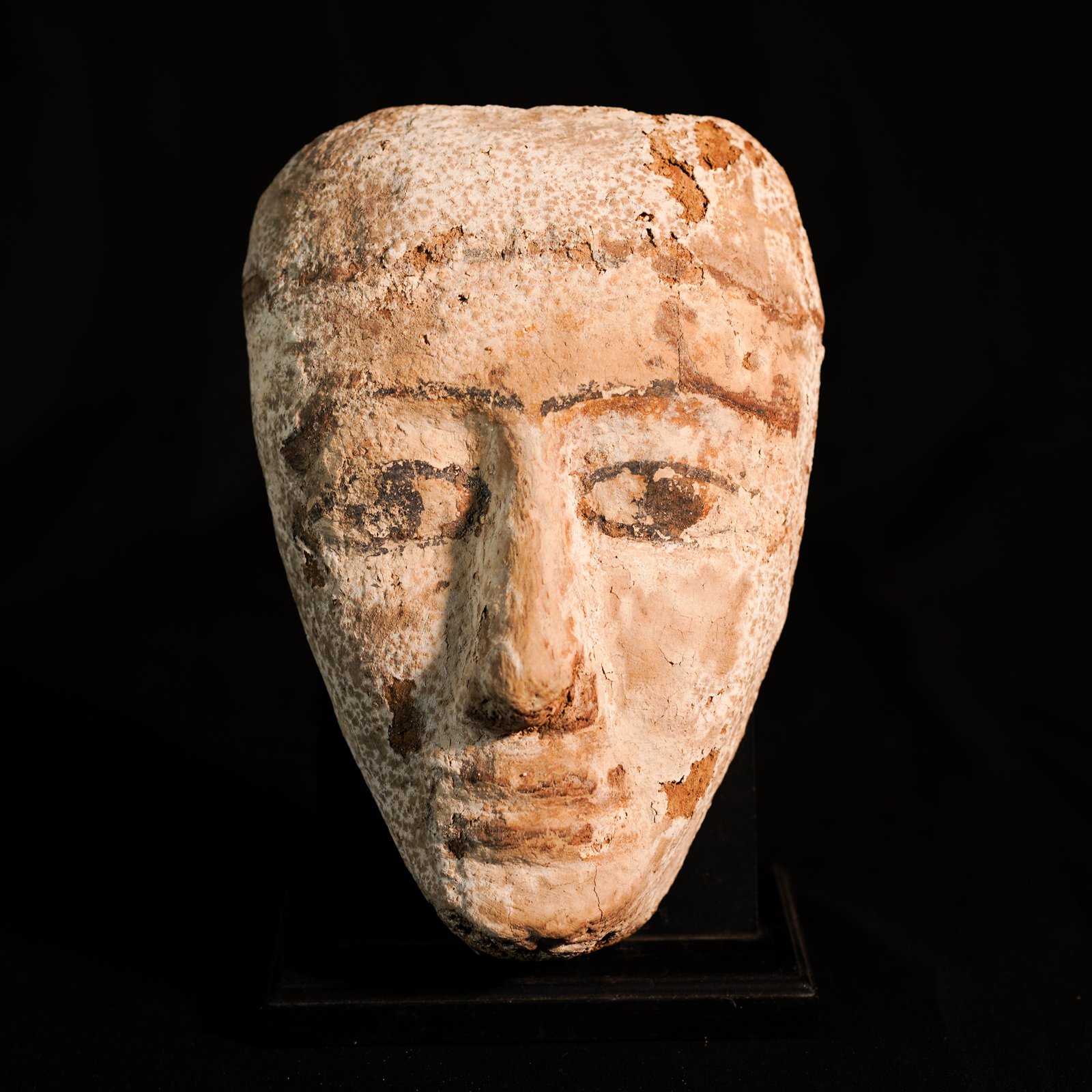
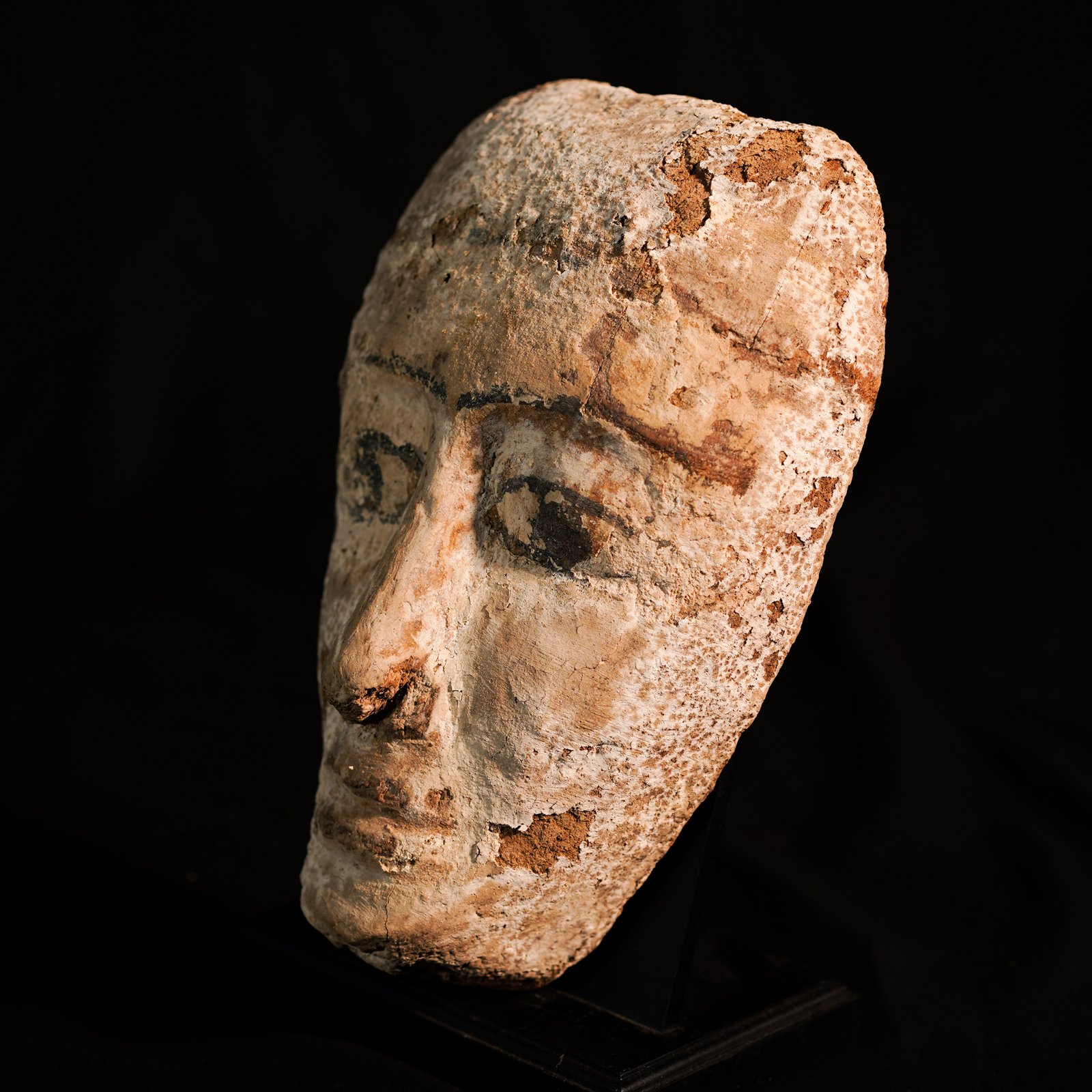
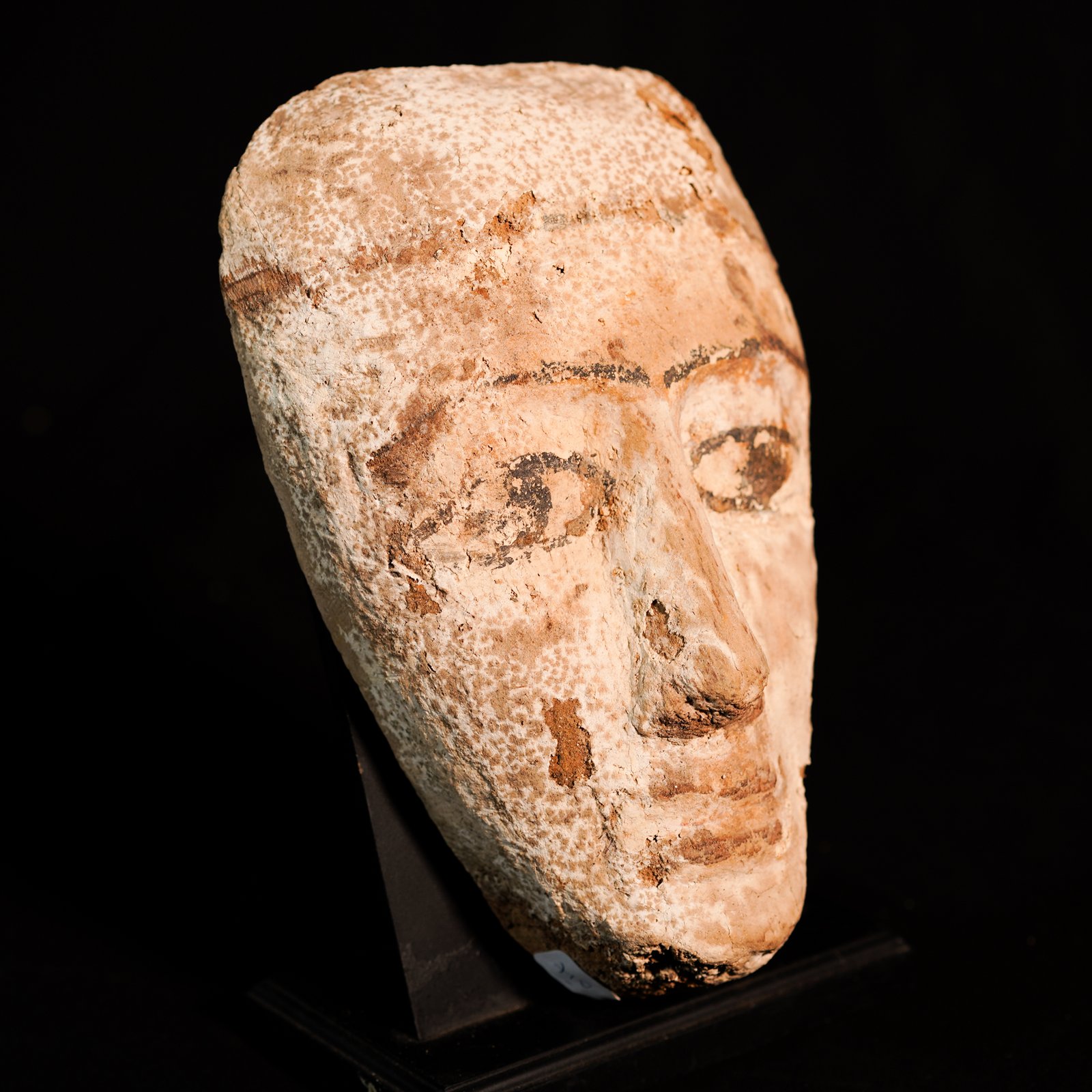
The mask features an idealised stylisation of the human face, characteristic of Egyptian funerary art, where the aim was not to create a faithful portrait but rather a divine and youthful image of the deceased. The eyes are large and almond-shaped, outlined with thick black lines imitating kohl. The eyebrows are marked by a simplified horizontal line. The nose is straight and prominent, carved from the same block of wood. The closed, thin lips convey a serene and eternal expression. Traces of natural pigments remain on a layer of white ground. The earthy tones on the forehead suggest the bands of a wig or the start of a headdress.
During the Late Period, these wooden masks were essential elements of the funerary equipment of the middle and upper classes. They were placed directly over the mummy’s face or incorporated into the structure of the sarcophagus.
The mask served as a ‘substitute’ for the physical face. According to Egyptian belief, the Ka (the life force) and the Ba (the soul) had to recognise the body of the deceased in order to return to it. Without an identifiable face, existence in the afterlife was in jeopardy.
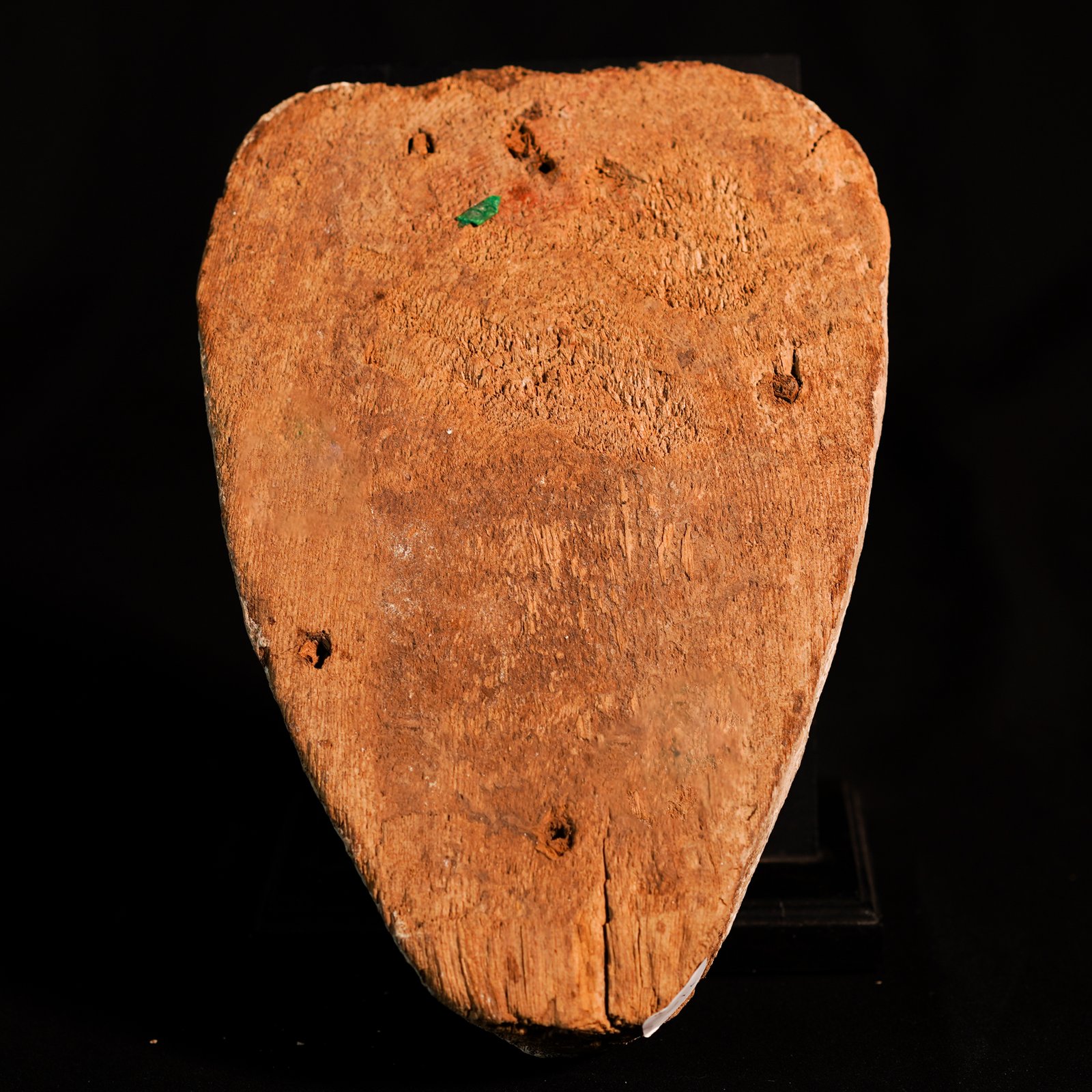
Wood, being an organic yet durable material, symbolised regeneration. It was often covered with a thin layer of plaster to allow for more detailed painting that imitated more expensive materials such as gold.
The 26th Dynasty, also known as the Saite Period, marked a phase of intense cultural nationalism and a revival of traditions following centuries of foreign rule. During this period, Egyptian craftsmen deliberately looked to the past—particularly to the Old and Middle Kingdoms—to revive a more sober and disciplined artistic style. In the production of funerary masks such as this one, a transition towards more naturalistic yet idealised forms can be observed, where polychrome wood replaced precious metals in many contexts due to the empire’s economic reorganisation. This ‘renaissance’ sought not only aesthetic beauty, but also aimed to reaffirm Egyptian identity and ensure, through ritual rigour, the continuity of the cosmic order (Maat) in the face of political instability along the borders.