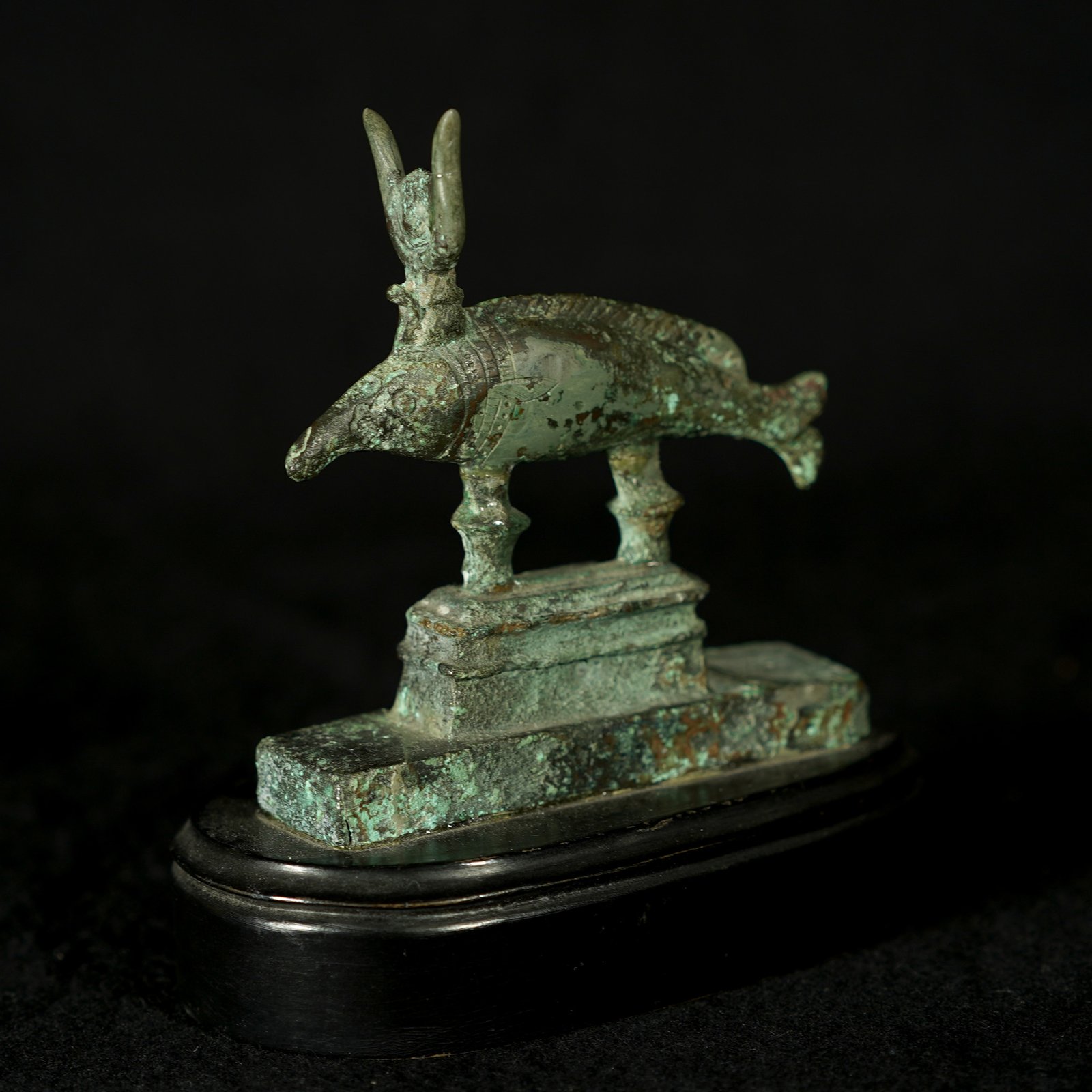
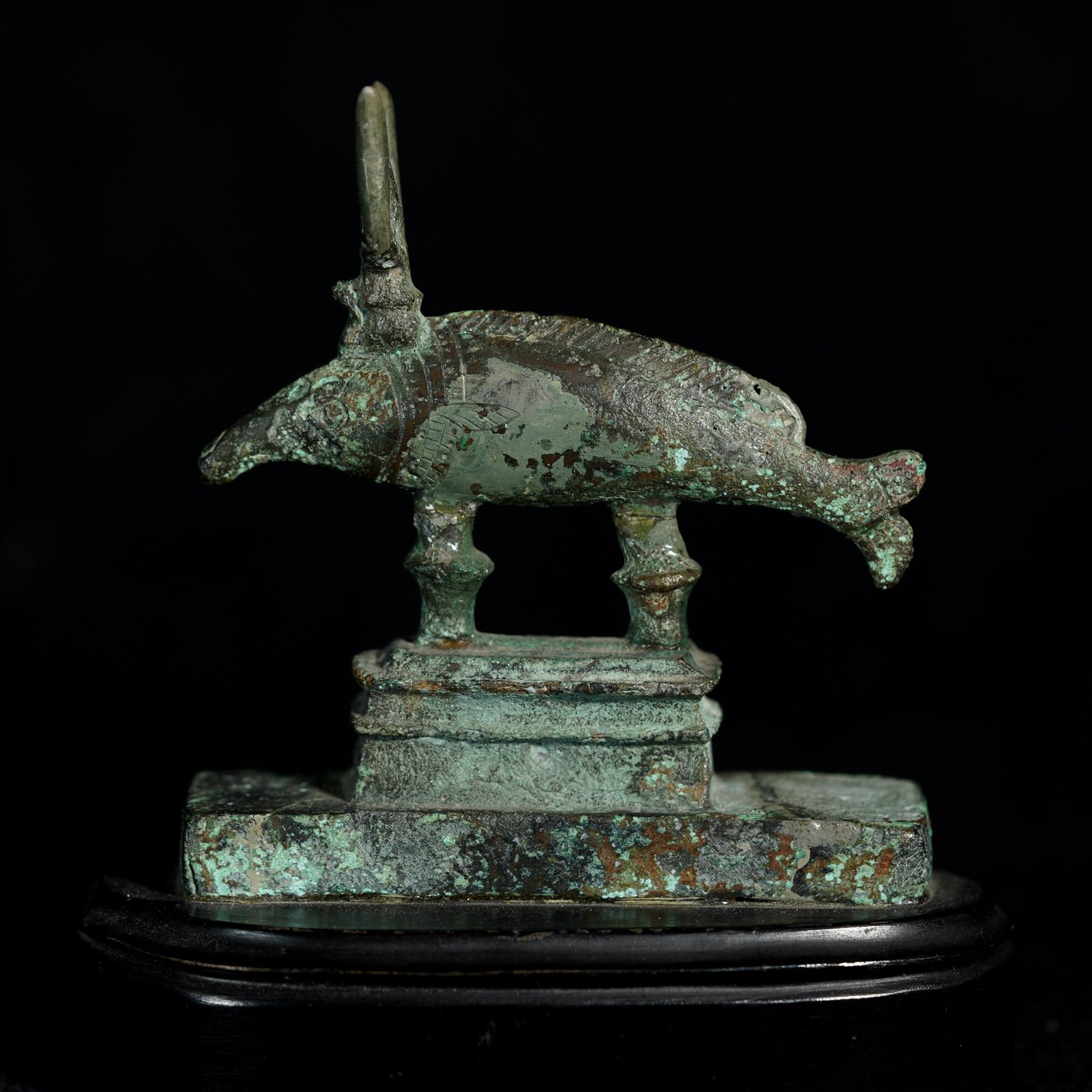
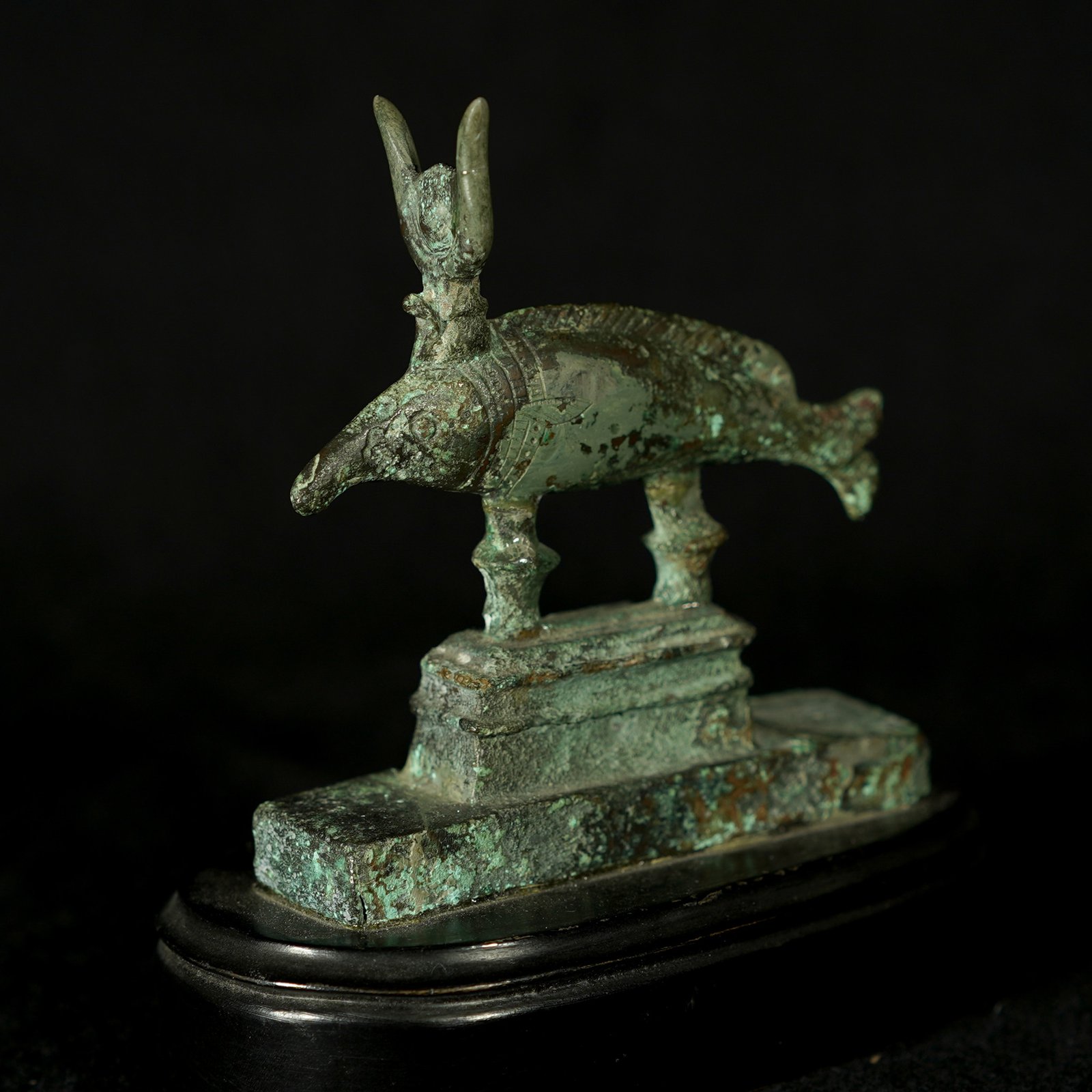
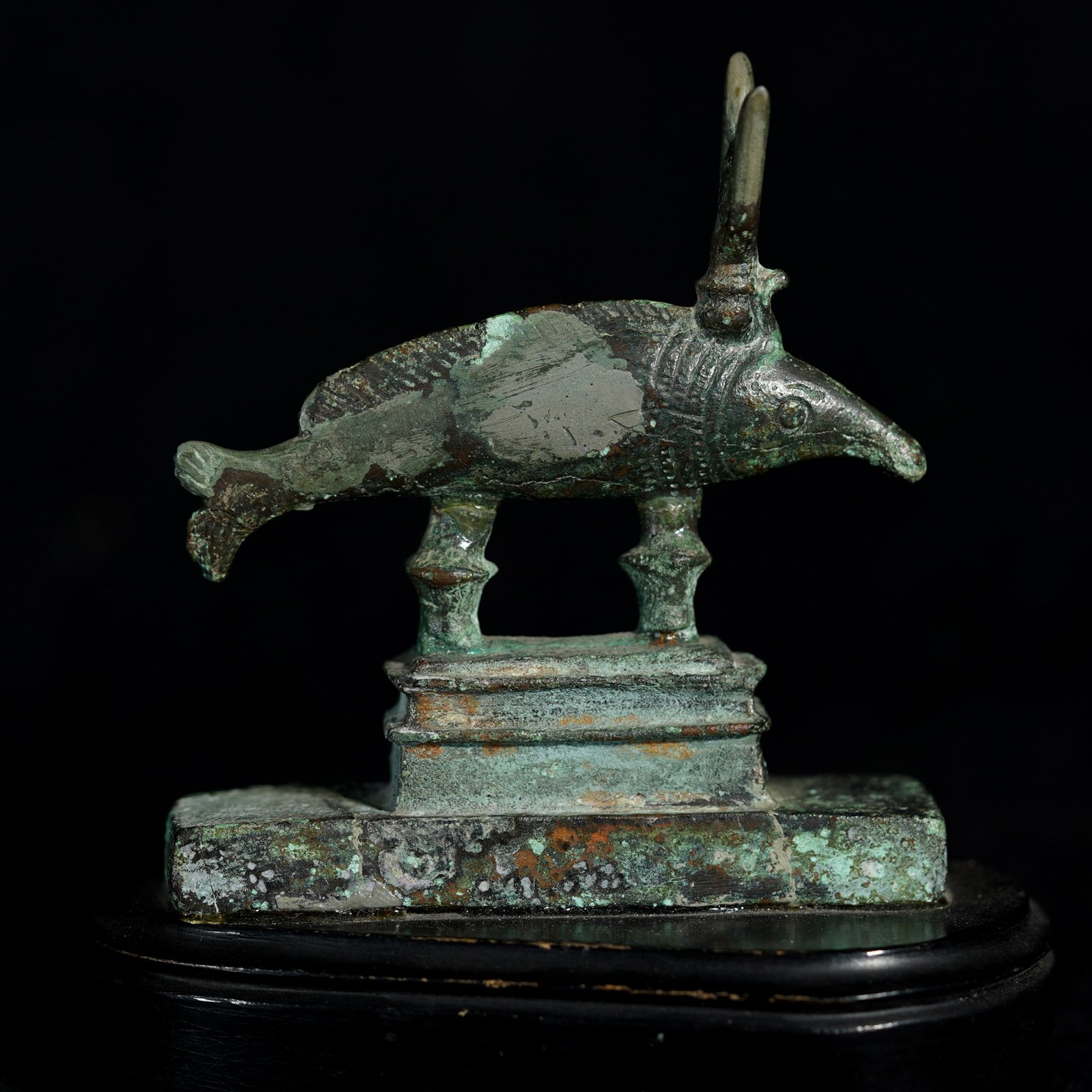
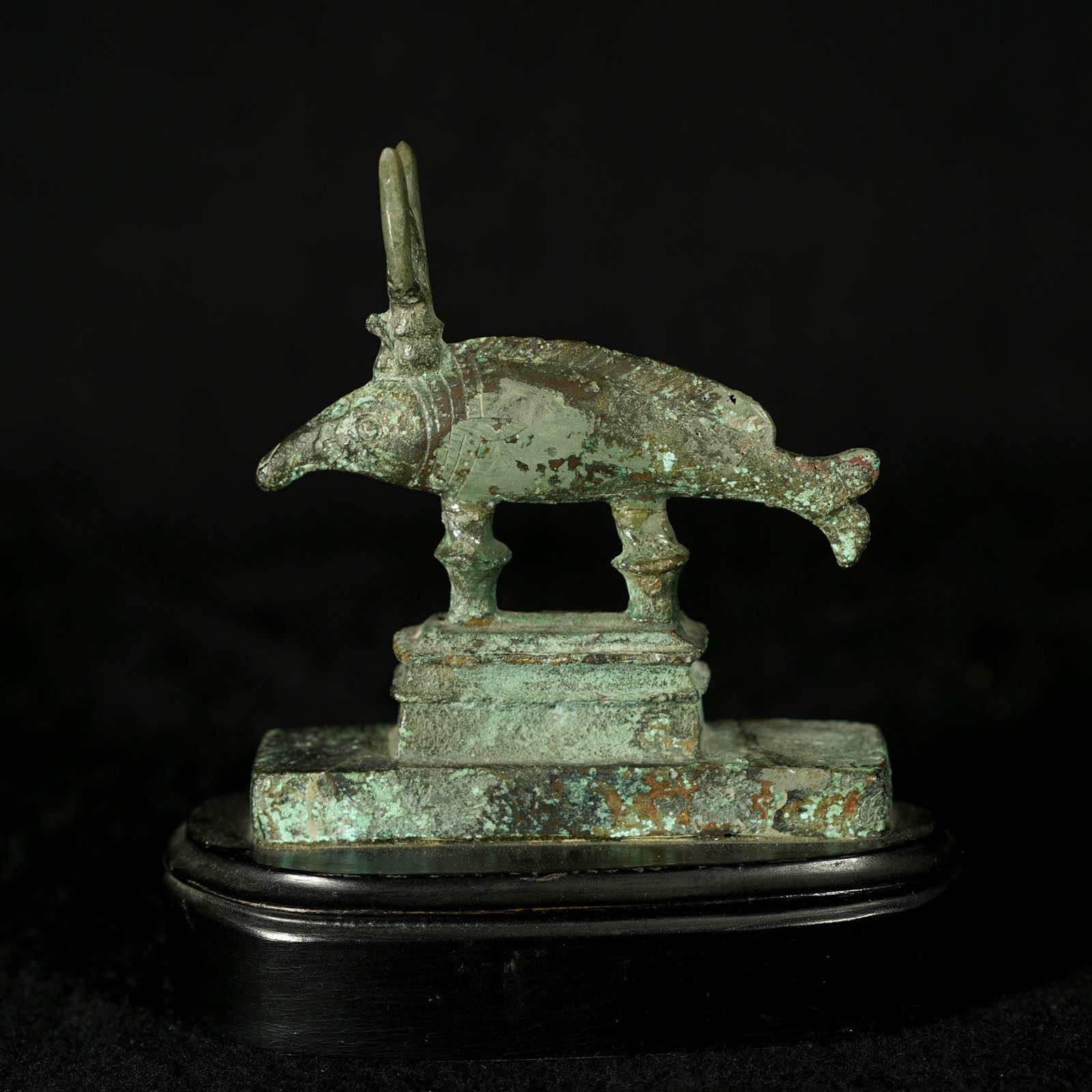
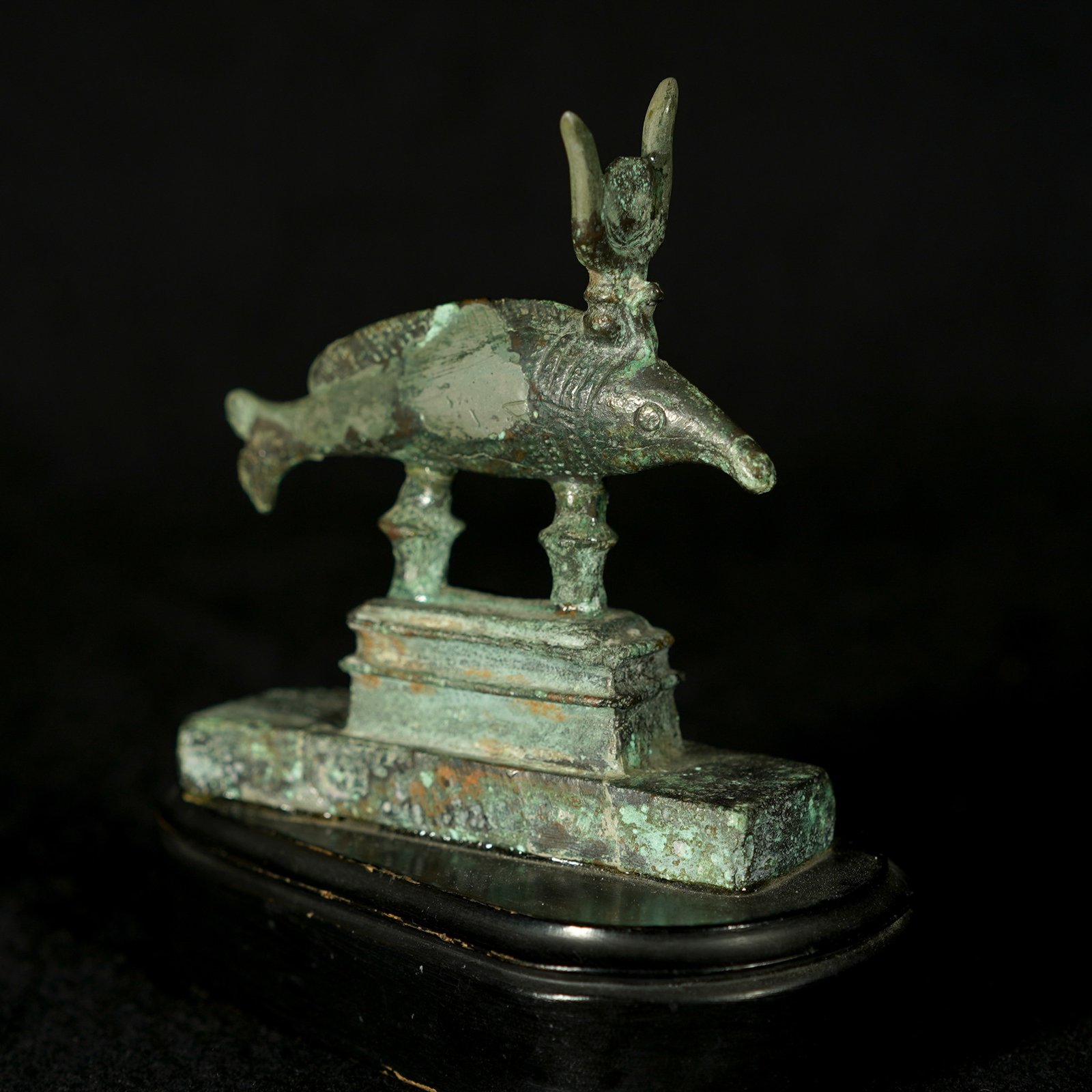
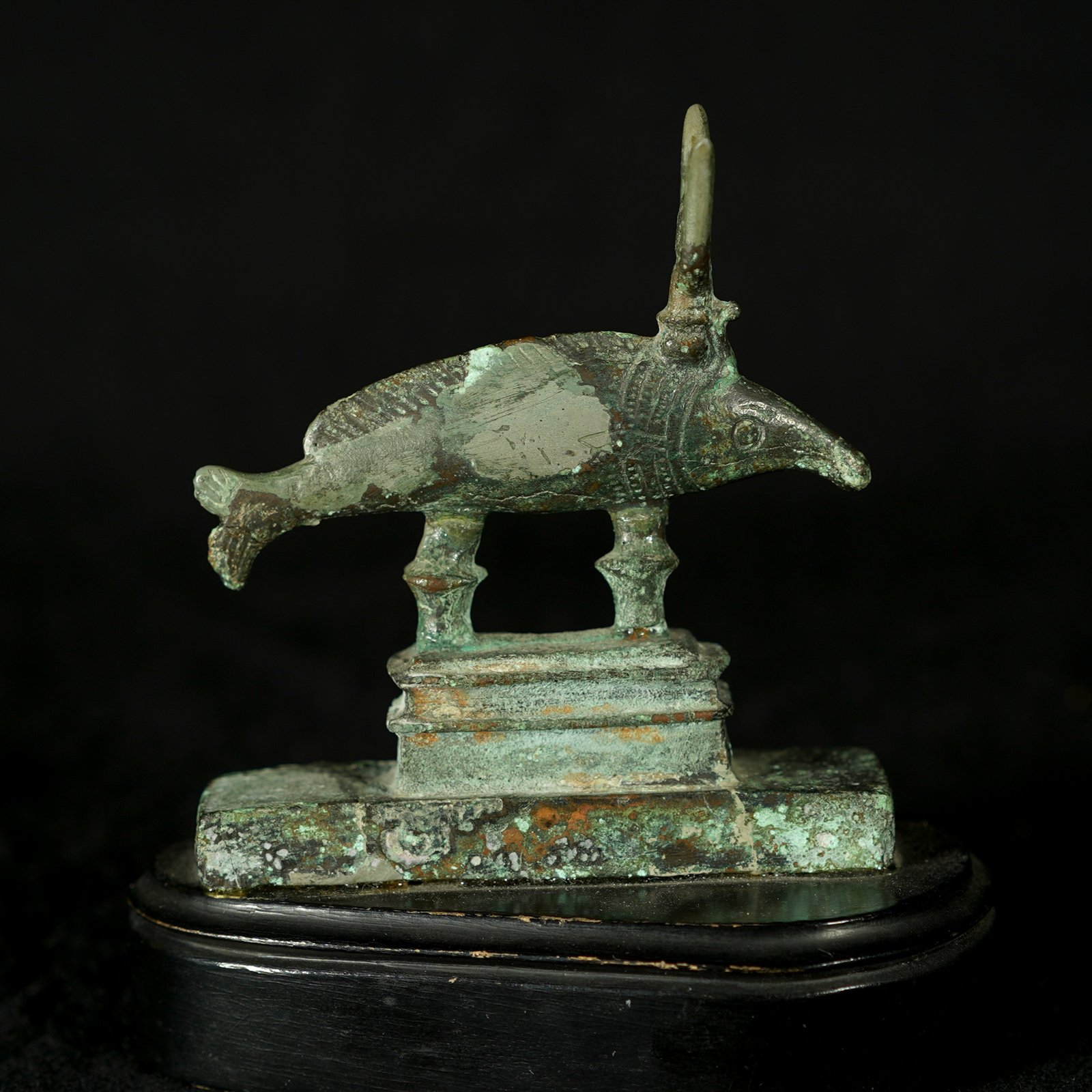
Depiction of an oxyrhynchus, the sacred fish of the Nile known to the Egyptians as the medjed. It has a spindle-shaped body with a characteristic downward-curving snout. It features prominent dorsal and pectoral fins and a forked tail. On its head it wears a headdress of bovine horns with a solar disc, the symbol of the goddess Hathor or Isis. In some examples, the eyes were originally inlays of glass or precious metals. The fish rests on two small integrated supports or ‘legs’ which stand on a rectangular bronze pedestal.
This fish plays a central role in the myth of Osiris; according to legend, it was the fish that devoured the god’s phallus after his body had been dismembered by Seth. Because of this, it became a sacred animal and its consumption was forbidden in certain regions of Egypt. It is most likely a ritual object offered in temples as a votive offering to secure divine favours.
The Ptolemaic period (332–30 BC) represents one of the most dynamic phases of Ancient Egypt, beginning with the conquest by Alexander the Great and consolidated by his general Ptolemy I Soter, founder of a dynasty of Macedonian origin. Over these three centuries, Egypt became the epicentre of the Hellenistic world, with Alexandria as a cosmopolitan capital housing legendary institutions such as the Great Library and the Lighthouse. Historically, this period is characterised by a unique cultural syncretism: whilst the ruling elite introduced Greek models into administration, currency and art, it also adopted pharaonic titles and protected traditional cults to legitimise its power among the native population. This balance between the Greek and the Egyptian allowed for a flourishing of bronze votive offerings, such as the Oxyrhynchus fish, reflecting a religiosity that remained deeply rooted until the fall of the kingdom following Cleopatra VII’s defeat by Rome.