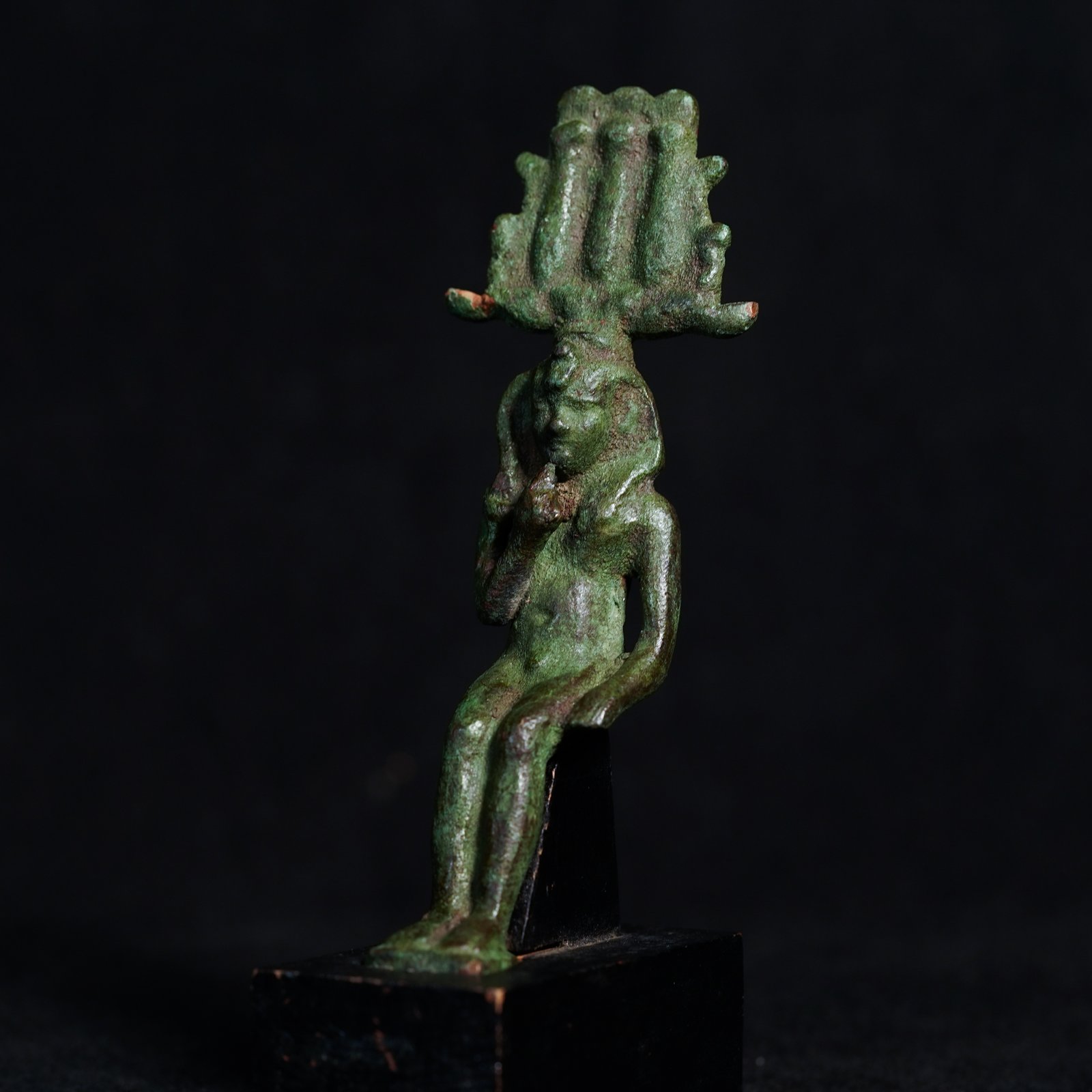
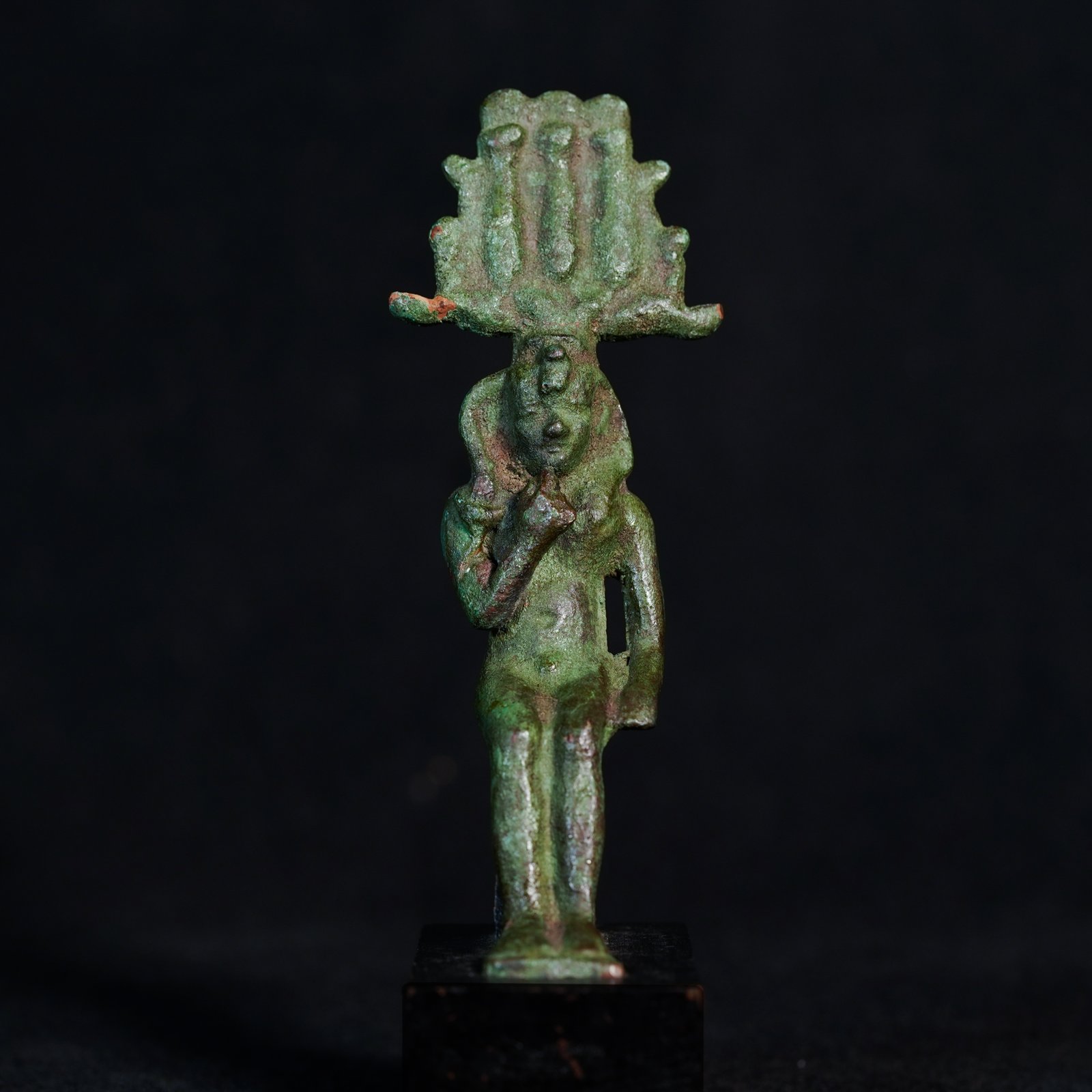
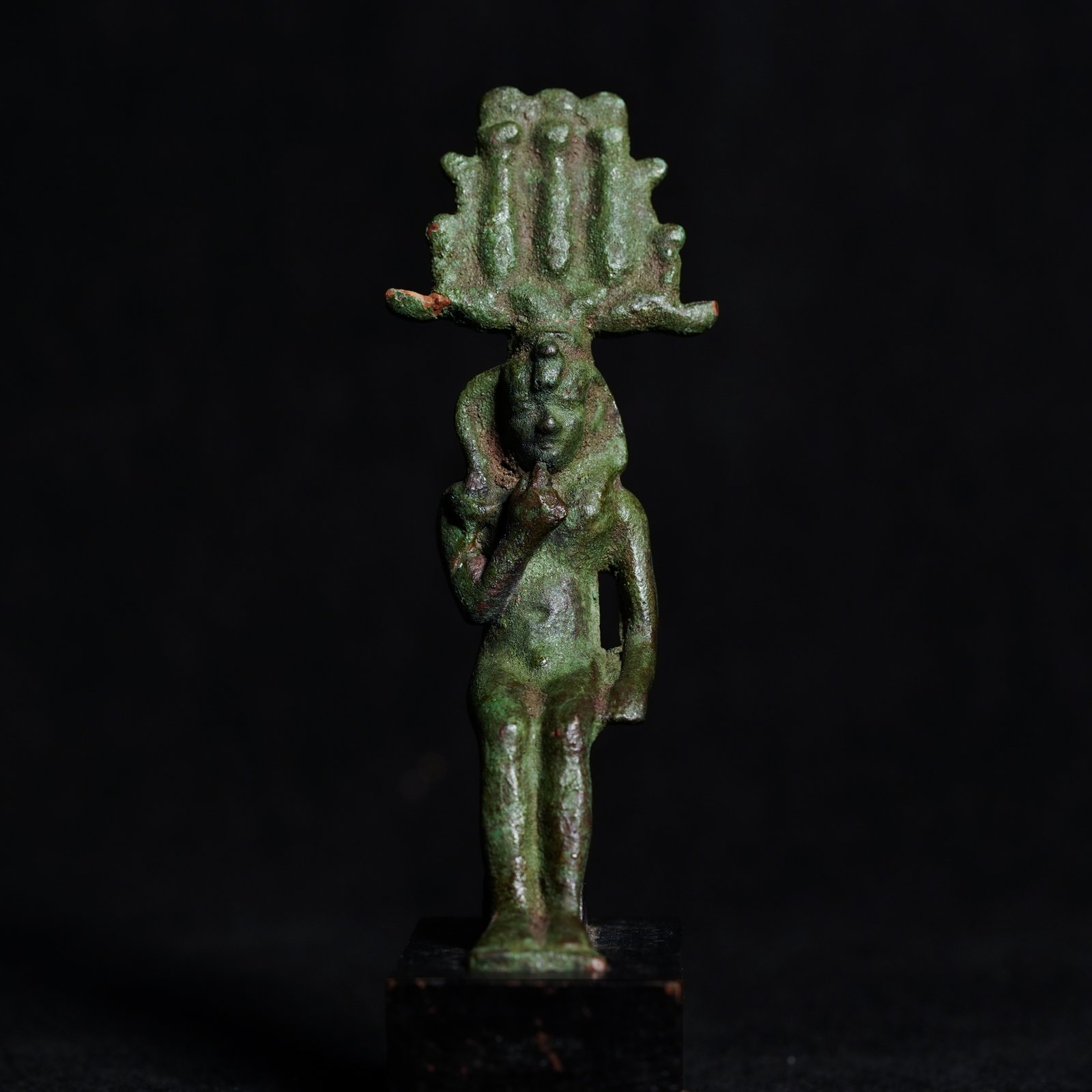
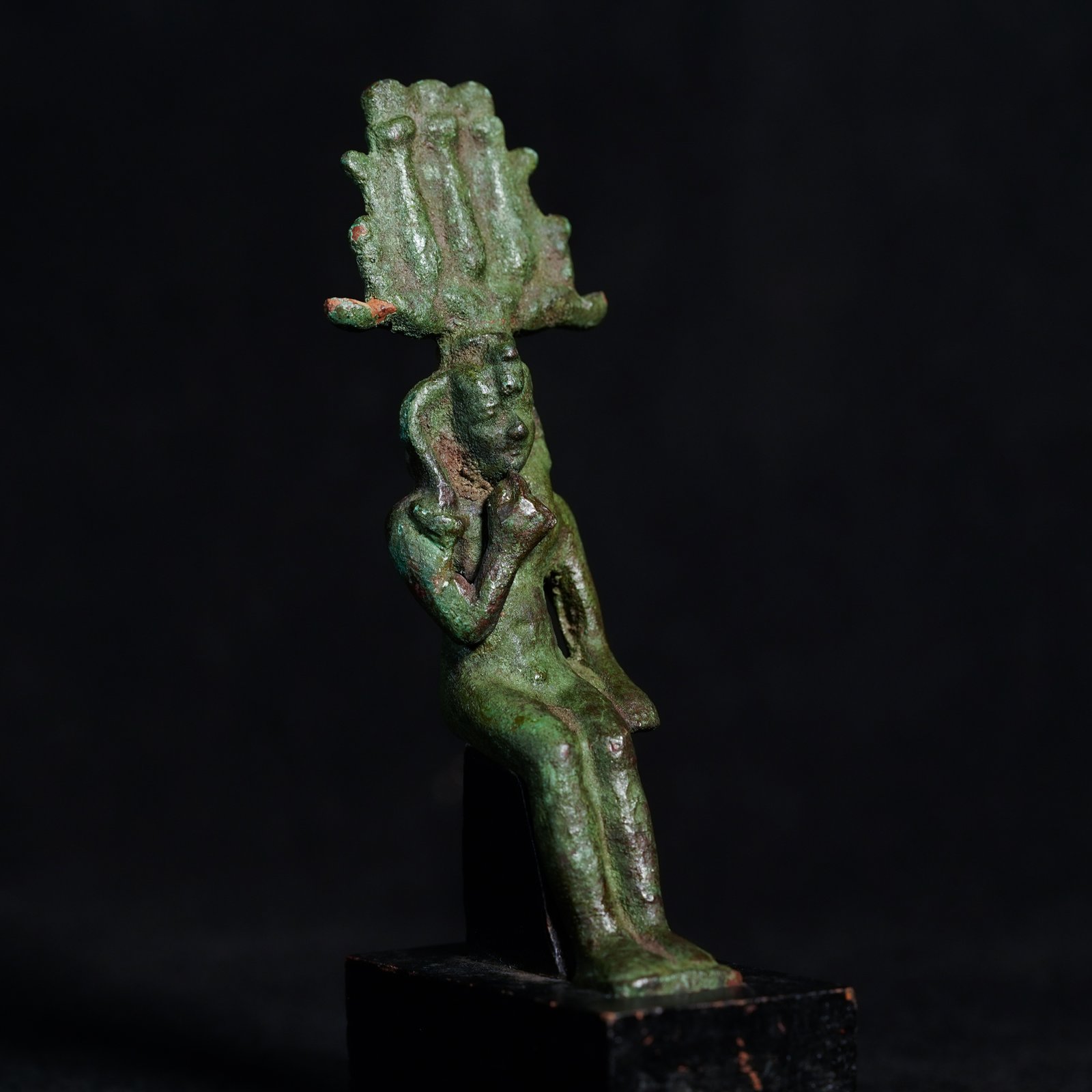
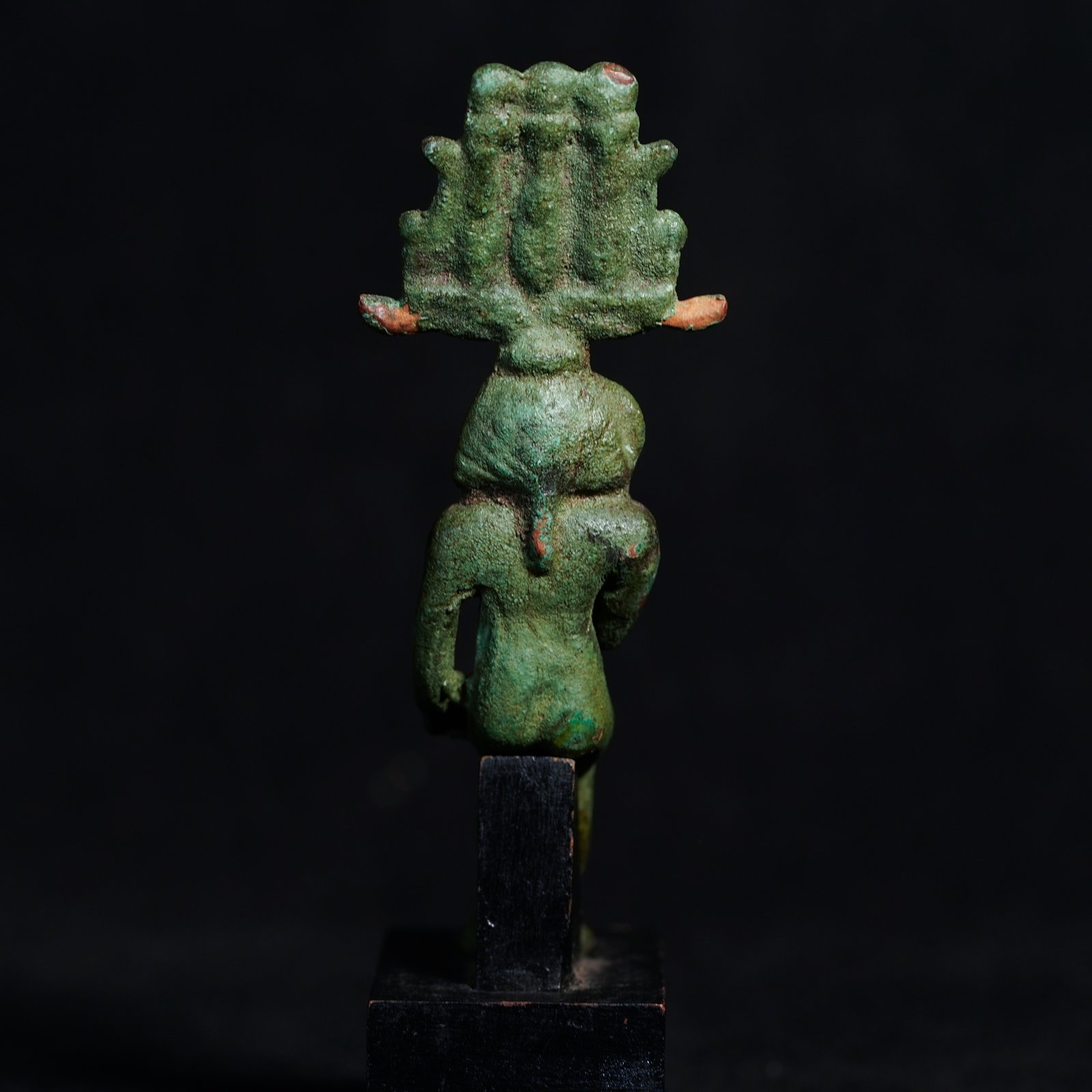
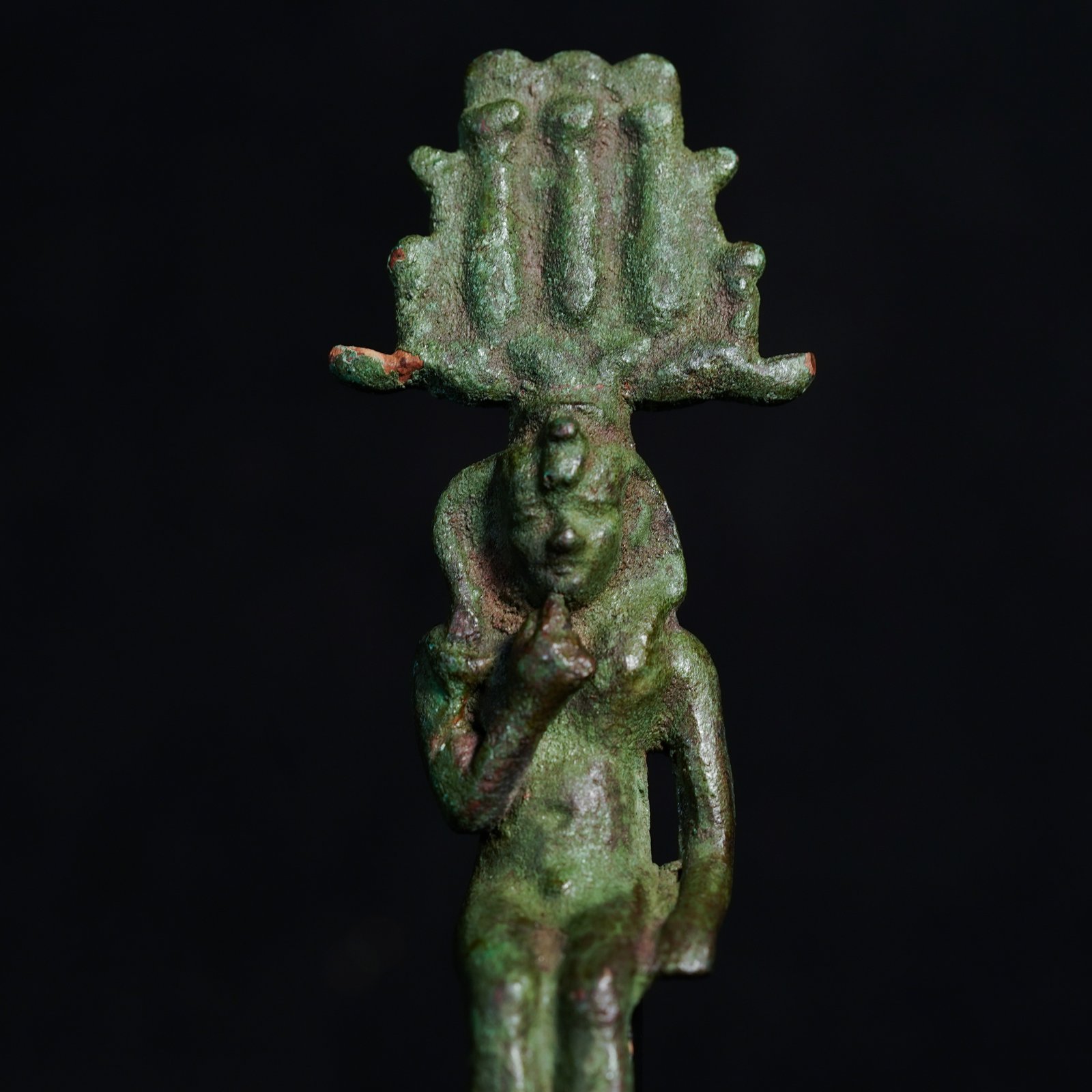
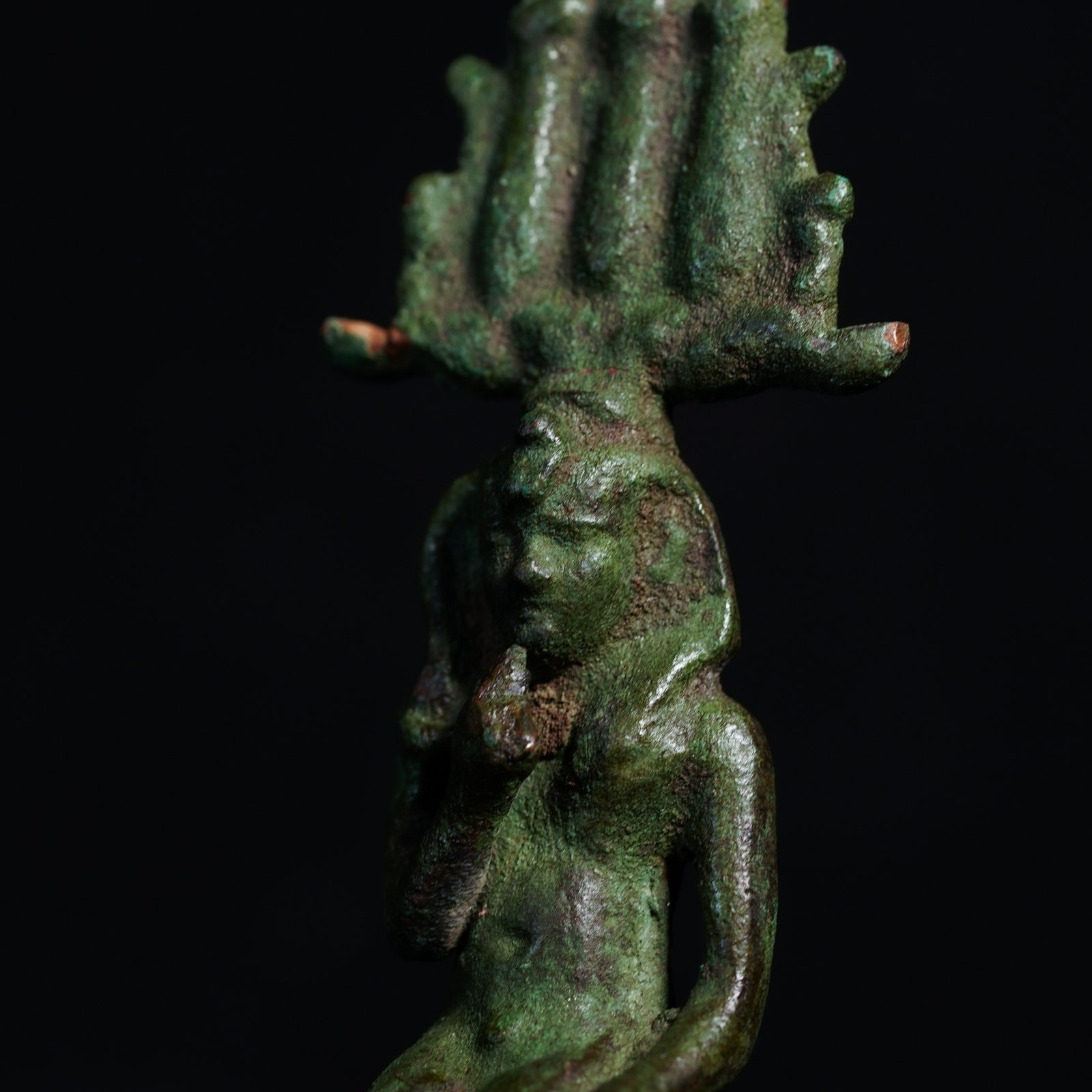
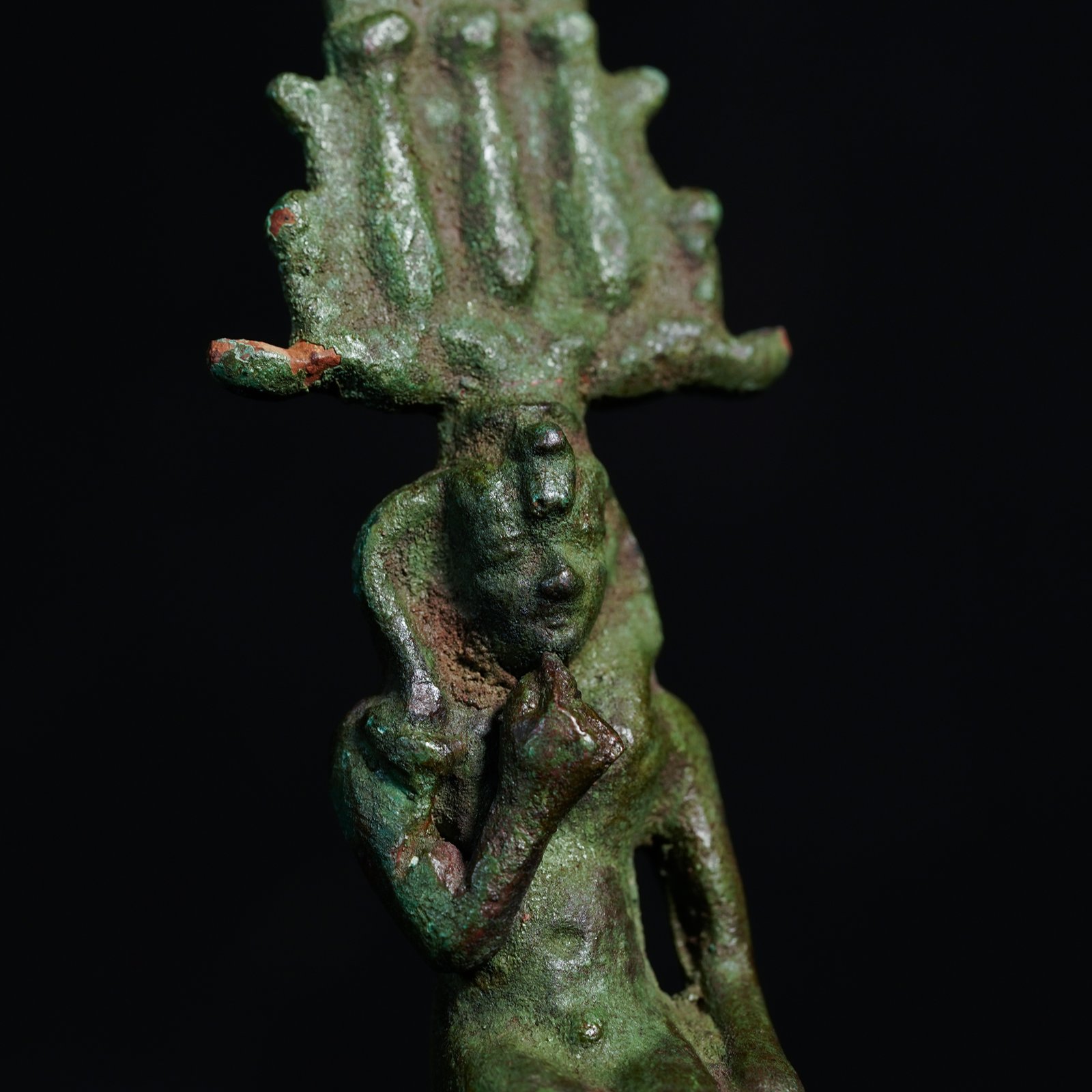
Harpocrates statuette, representing the god of the rising sun in his characteristic youthful iconography. He is depicted with his finger to his lips, an Egyptian symbol of childhood. He wears an intricate crown composed of three reed bundles set atop ram horns, flanked by cobras (uraei). This was a ritual crown associated with rebirth and divine power. As a “child god,” the Hemhem crown highlights his role as the legitimate heir to his father, Osiris, and his future dominion over the world.
Harpocrates is the Greek adaptation of the Egyptian term Hor-pa-khered (Horus the Child). Son of Isis and Osiris, he personifies the rising sun, the hope of renewal, and the victory of light over darkness.
The Hemhem crown is one of the most complex and symbolic pieces of royal and divine regalia in Ancient Egypt. Its name derives from the Egyptian word for “to shout” or “to roar,” hinting at its nature: it was a crown of active power and protection. It was believed that this crown could shield the wearer during moments of transition, such as dawn (when the sun is at its weakest) or birth. In bronze statuettes like this one, the crown acts as a power amulet, ensuring that order (Maat) prevails over chaos.
Often referred to as the “Triple Crown,” its grand scale and visual weight compared to the child’s body create a deliberate artistic contrast: the fragility of infancy protected by the weight of supreme divinity.
This is not merely a crown, but a triple structure loaded with meaning:
Triple Atef Crown: Composed of three reed bundles (Atef) set upon horizontal ram horns. The number three symbolized plenitude or multiplied power.
The Cobras (Uraei): Several cobras appear on the sides, sometimes bearing small solar disks, representing the protection of the god or pharaoh against enemies.
Significance: It represented the triumph of light over darkness and solar rebirth. Worn by Harpocrates, it symbolizes his latent power and divine sovereignty from birth.
The Late Period was the final era of indigenous sovereignty in Egypt, marked by an artistic “renaissance” that emulated the glory of the ancient pharaohs. During this time, metallurgy reached its technical zenith, leading to the popularity of votive bronzes in temples as a link between the people and the gods. It was an age of great cultural openness, where the millennial faith of the Nile began to merge with the sensibilities of the Mediterranean and Greek worlds.