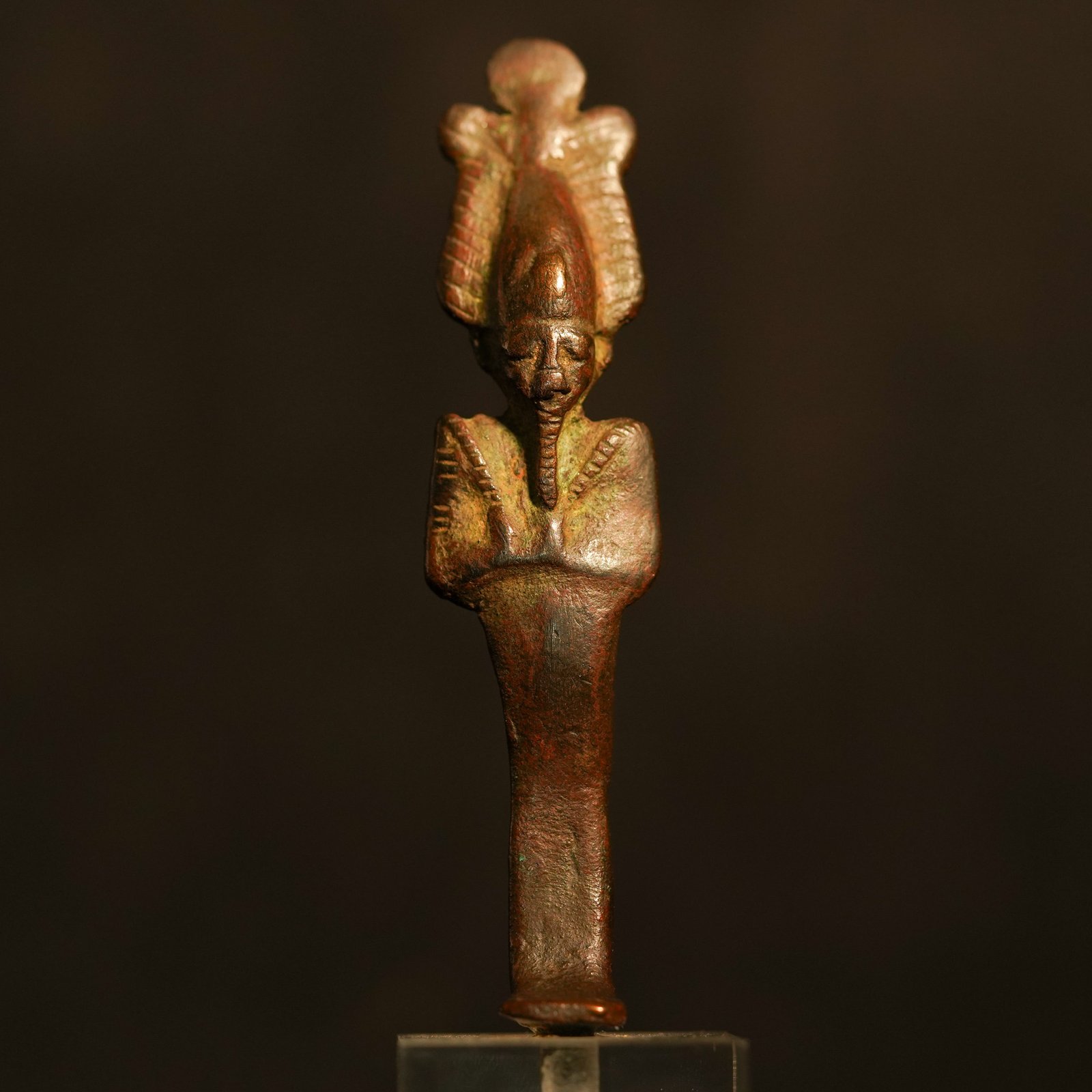
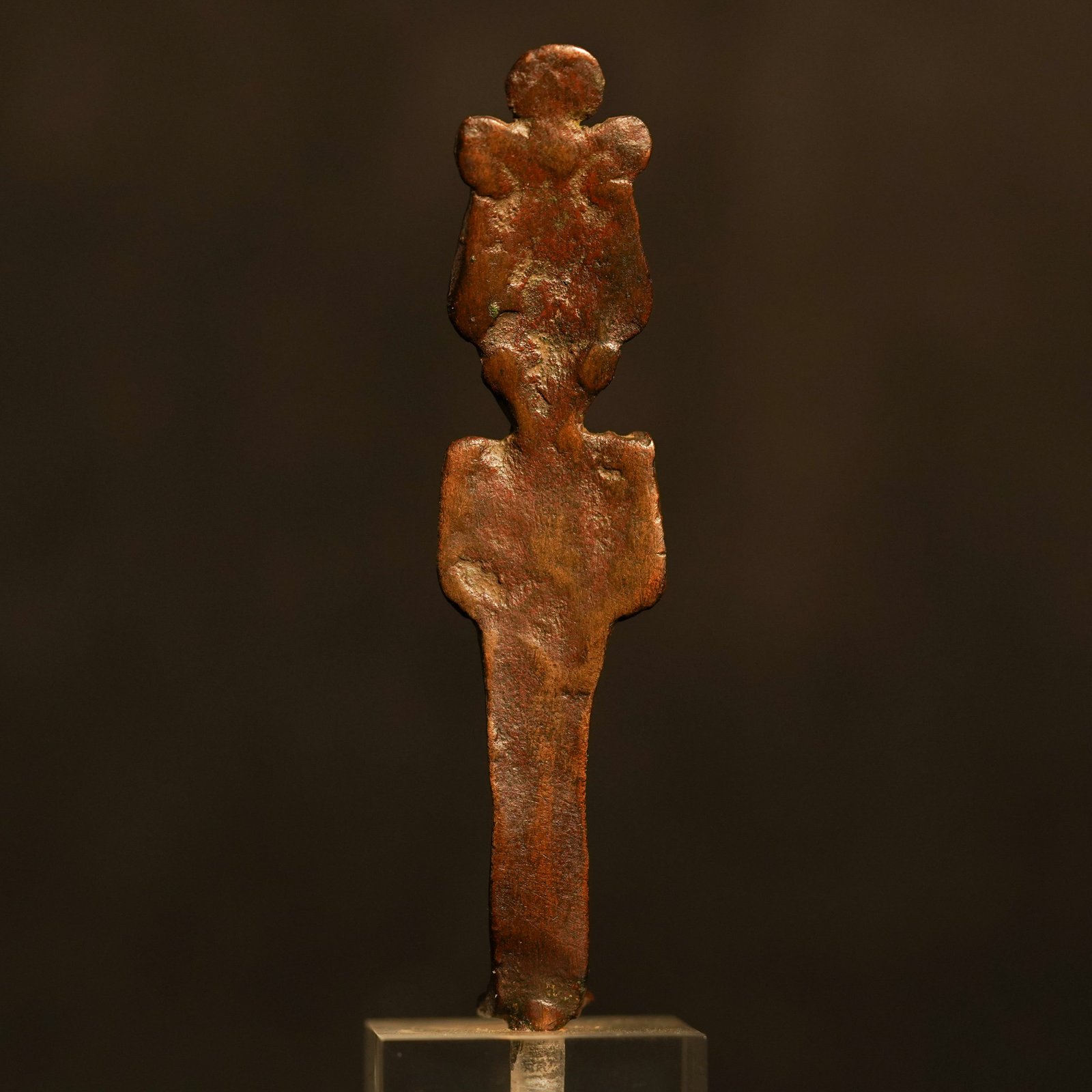
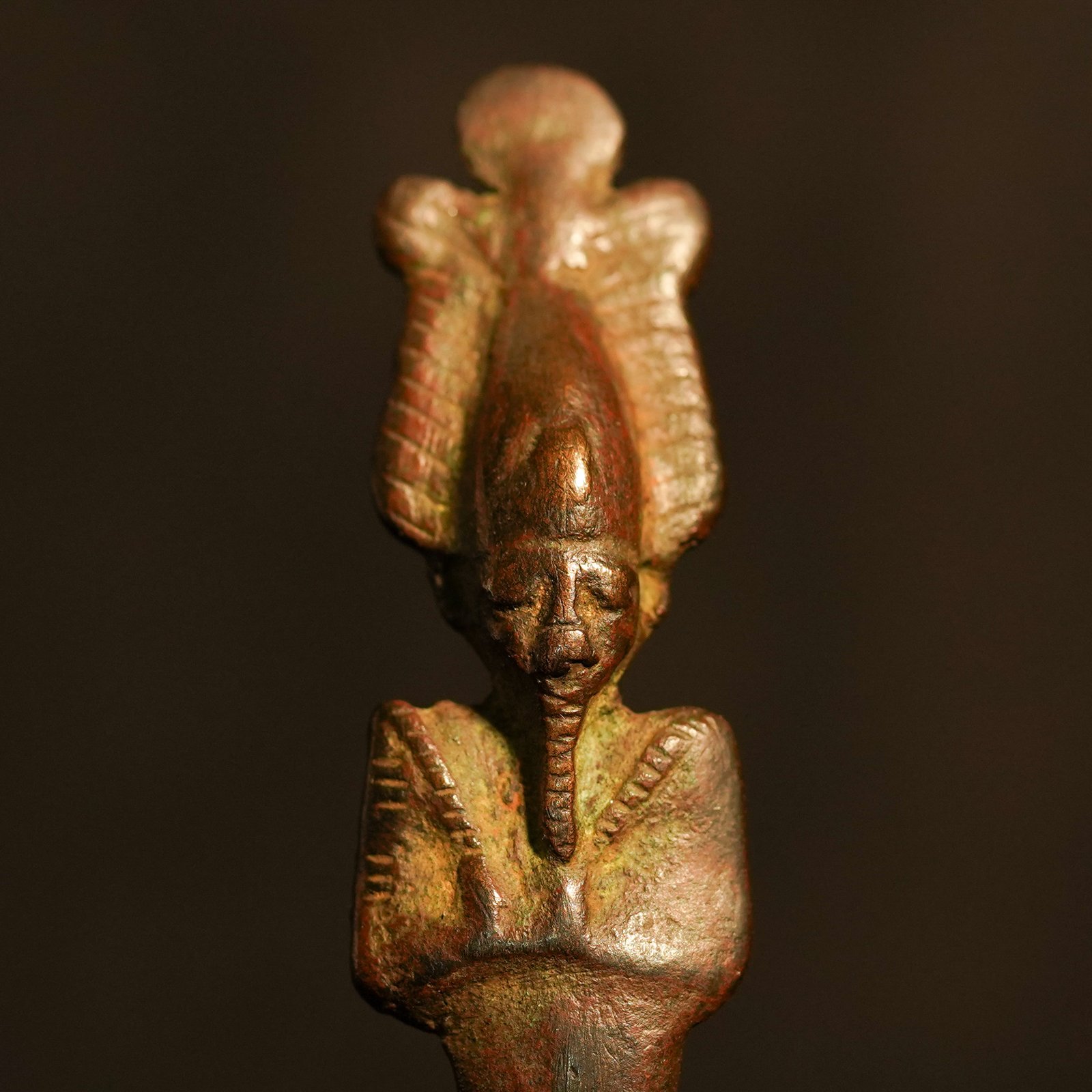
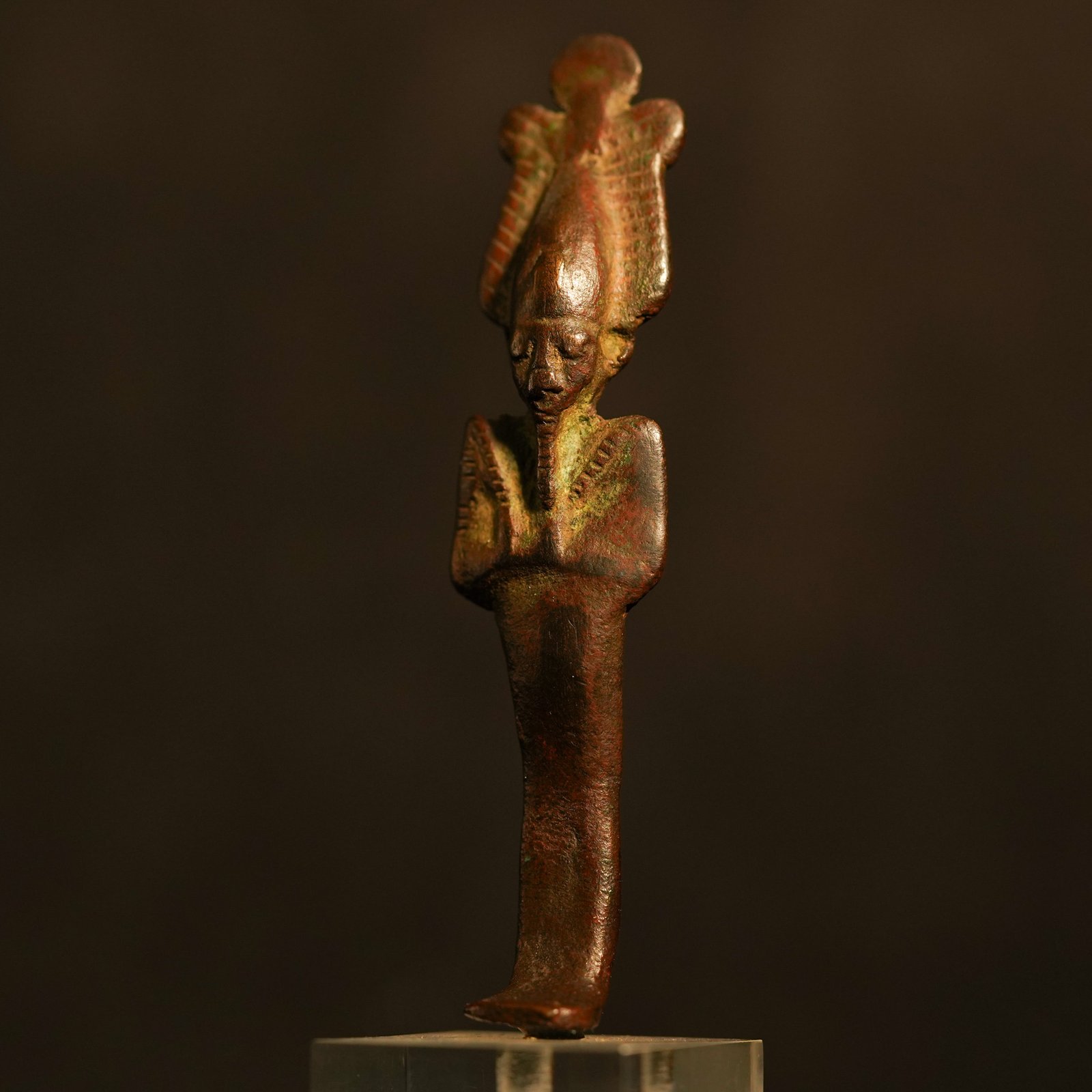
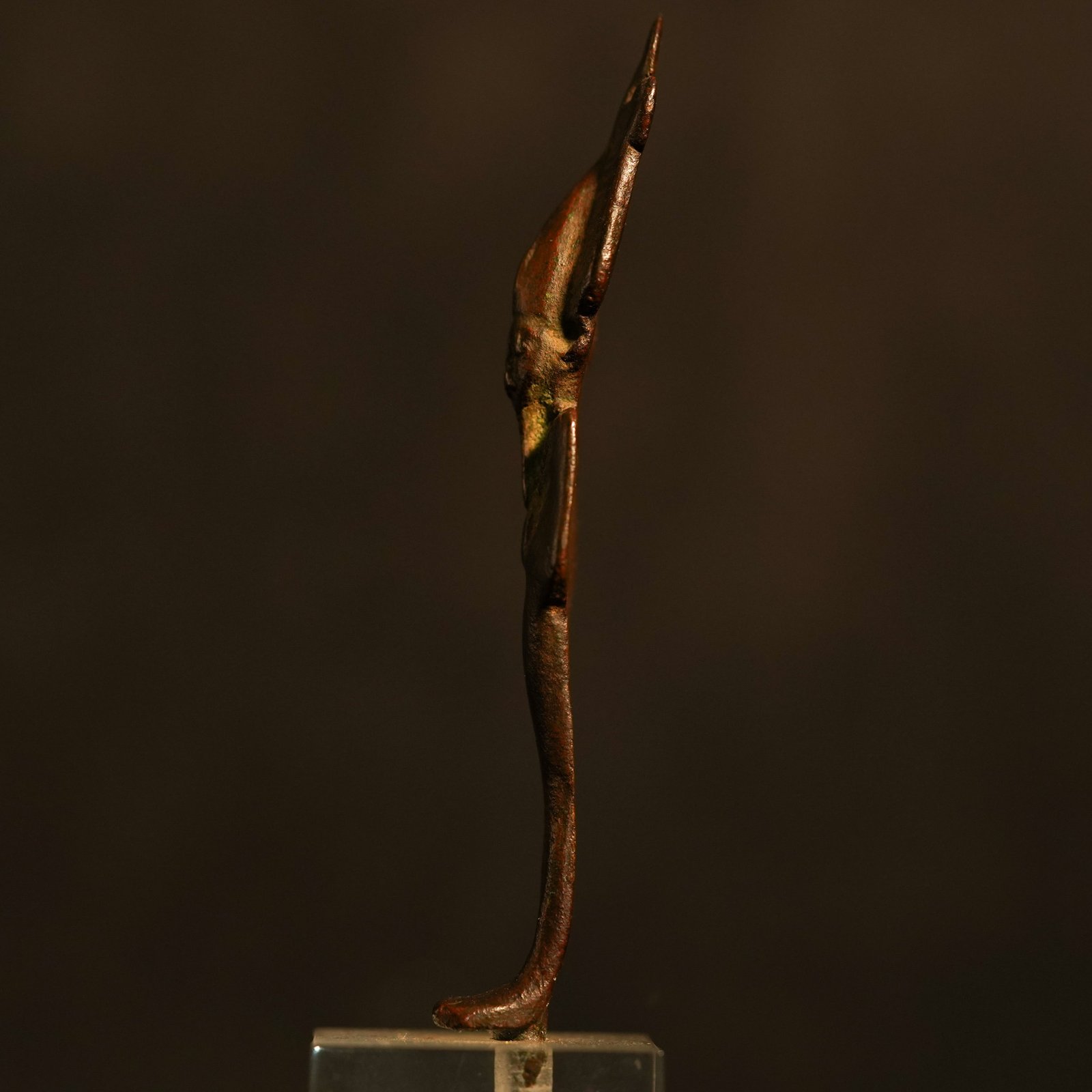
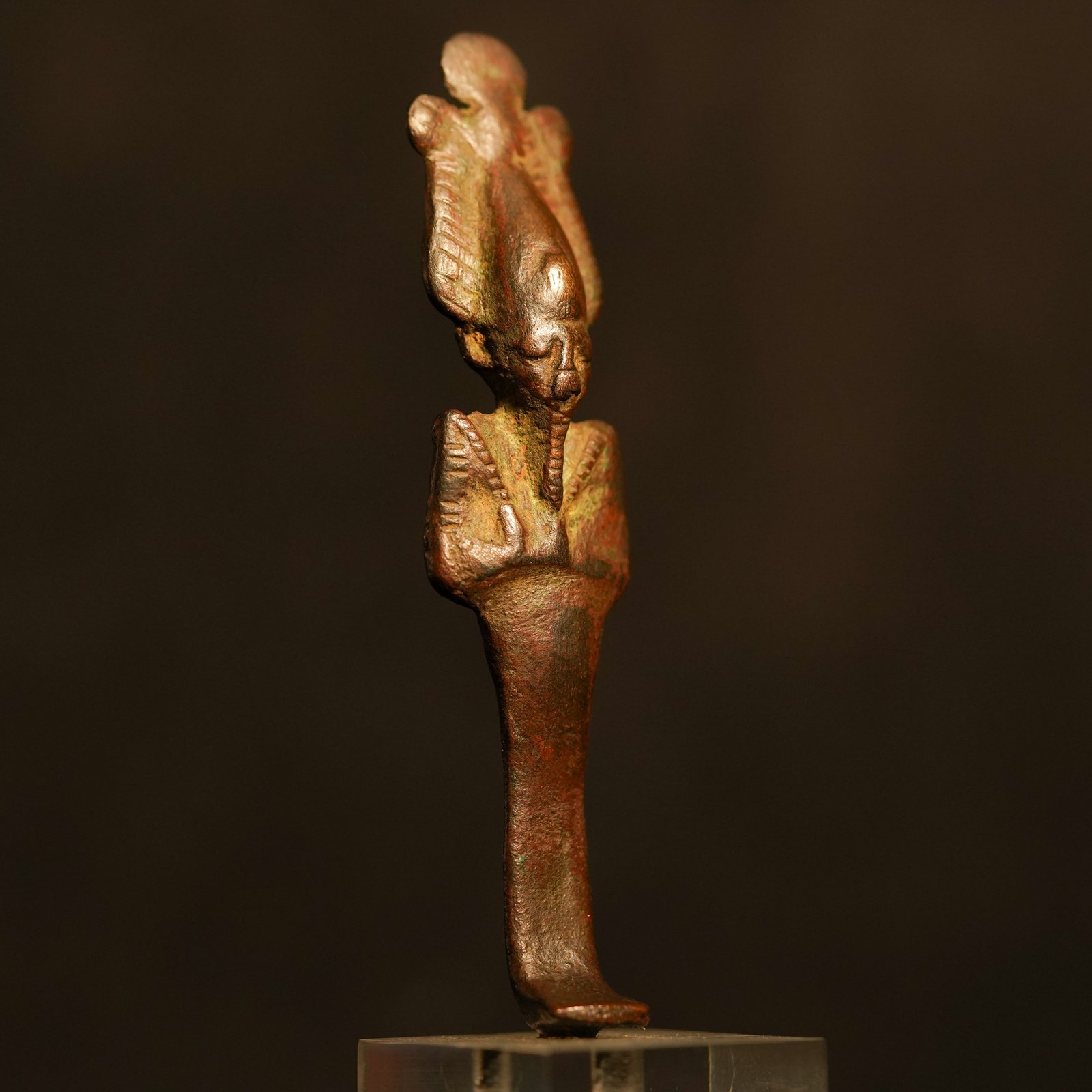
Egyptian Bronze Figure of Osiris, Late Period, Circa 664-332 BC
Conservation: Good condition
Material: Bronze
Dimensions: 9,3 cm
Provenance: Formerly in the collection of Jules Baillet (1834–1923), a renowned Egyptologist at the French Institute of Oriental Archaeology (IFAO) and a student of Gaston Maspero; Acquired at auction, France, 2026. The artefact has been examined and certified by Ms Brigitte Cordelle, an expert with the Union Française des Experts (UFE), a specialist in Egyptian archaeology and director of the Galerie Antinoë.
The piece depicts Osiris, lord of the Duat (underworld), with his canonical attributes. He wears the Atef crown (a combination of the white crown of Upper Egypt with ostrich feathers on either side). His face features a braided false beard, a symbol of divinity and royalty. His body is mummified (wrapped like a mummy), with only his arms crossed over his chest visible. In his clenched hands he holds the Heka (sceptre or staff) and the Nekhakha (scourge or whip), symbols of authority and fertility.
Osiris embodies resurrection and the cycle of regeneration. During the Late Period and the Ptolemaic period, his cult became widespread, which explains the large number of bronze figurines of this type found in hiding places or favissae within temples.
The Late Period (664–332 BC) marked the last great renaissance of art and national identity in the face of growing foreign influence. During this period, the cult of Osiris became the central focus of popular piety, triggering the production of technically sophisticated bronze works using the lost-wax technique. These figures were placed in temples as votive offerings, serving as an eternal link between the devotee and the god to ensure divine protection and triumph over death.
Jules Baillet (1864–1953). He was a highly respected professional Egyptologist and a leading figure in the French school of Egyptology of the late 19th and early 20th centuries. He was a student of Gaston Maspero, one of the founding fathers of modern Egyptology. He was a member of the prestigious French Institute of Oriental Archaeology (IFAO) in Cairo, one of the world’s leading institutions in the field. Baillet is renowned for his monumental work documenting ancient graffiti in the Valley of the Kings. His work ‘Inscriptions grecques et latines des tombeaux des rois ou Syringes’ (published in 1926) remains an essential reference for understanding how Greek and Roman tourists viewed ancient Egypt 2,000 years ago. He was a curator at the Museum of Vannes (France), where he organised and catalogued important collections of Egyptian antiquities.