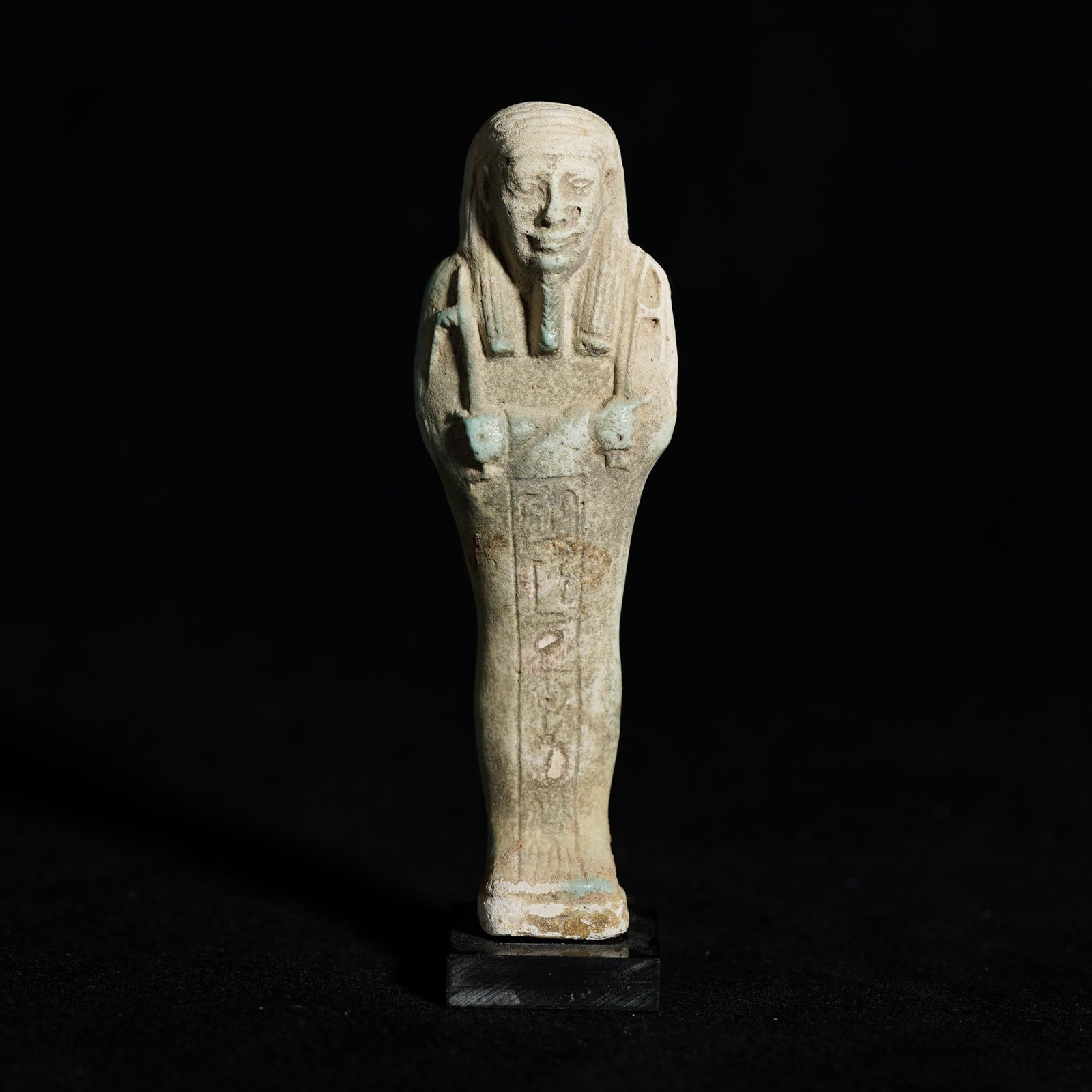
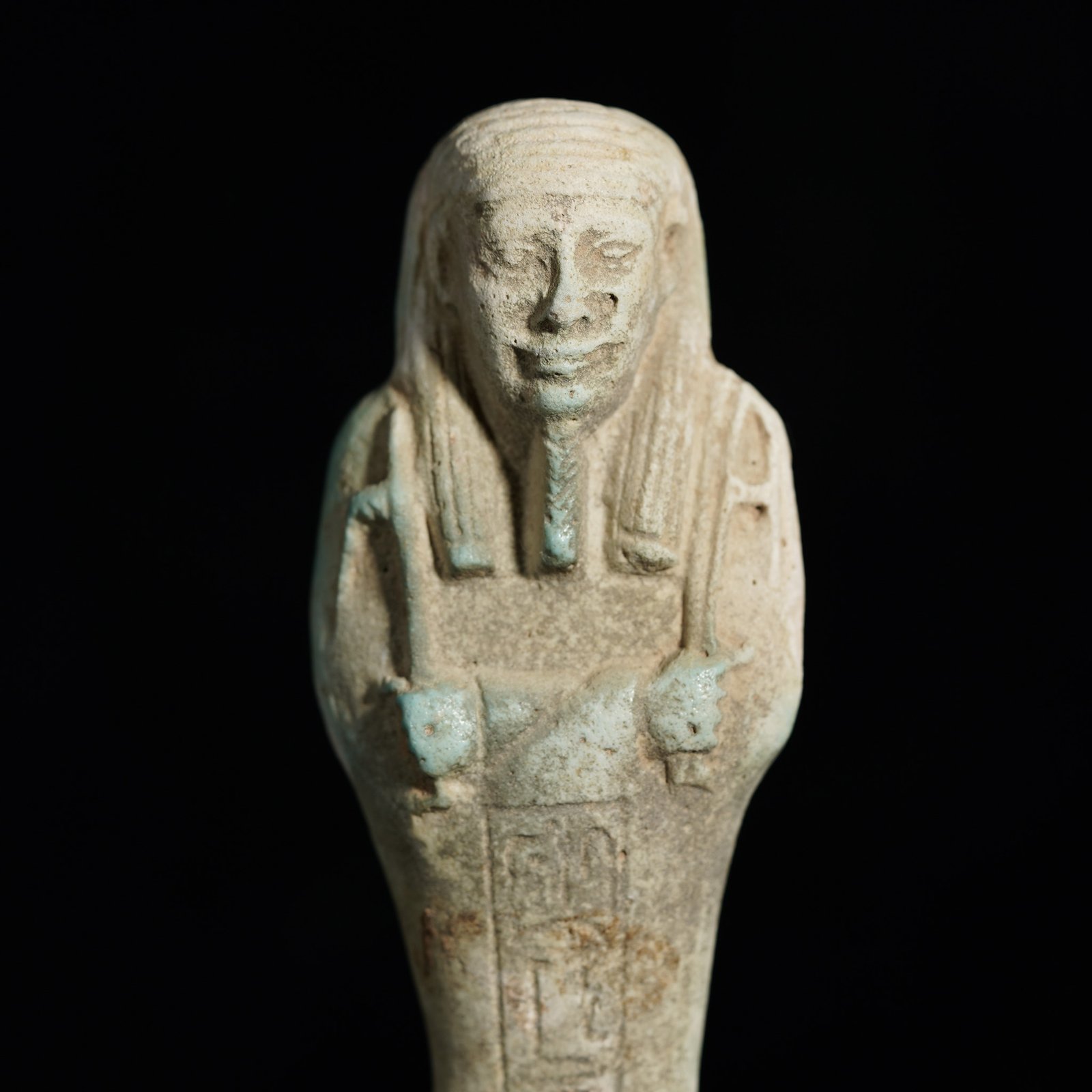
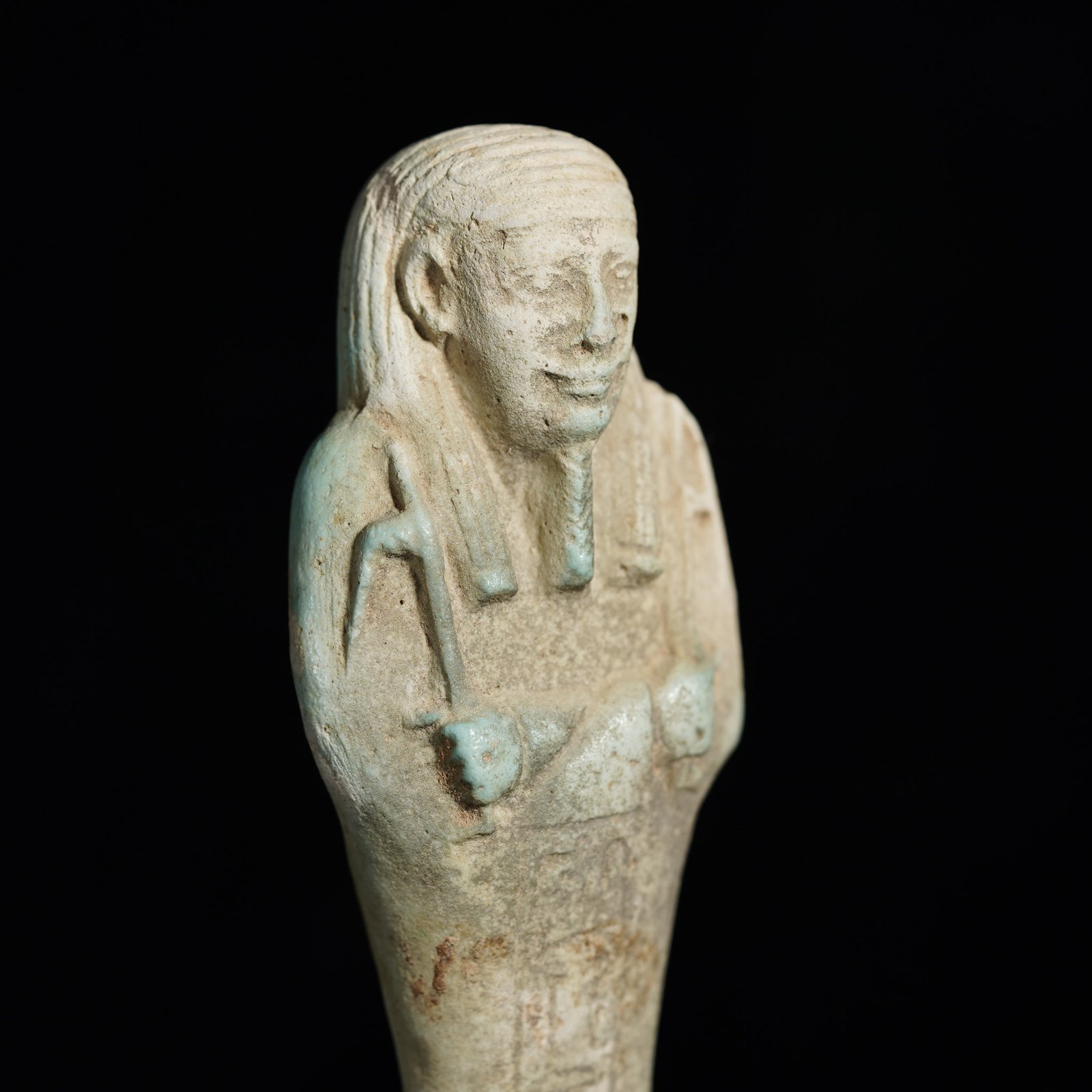
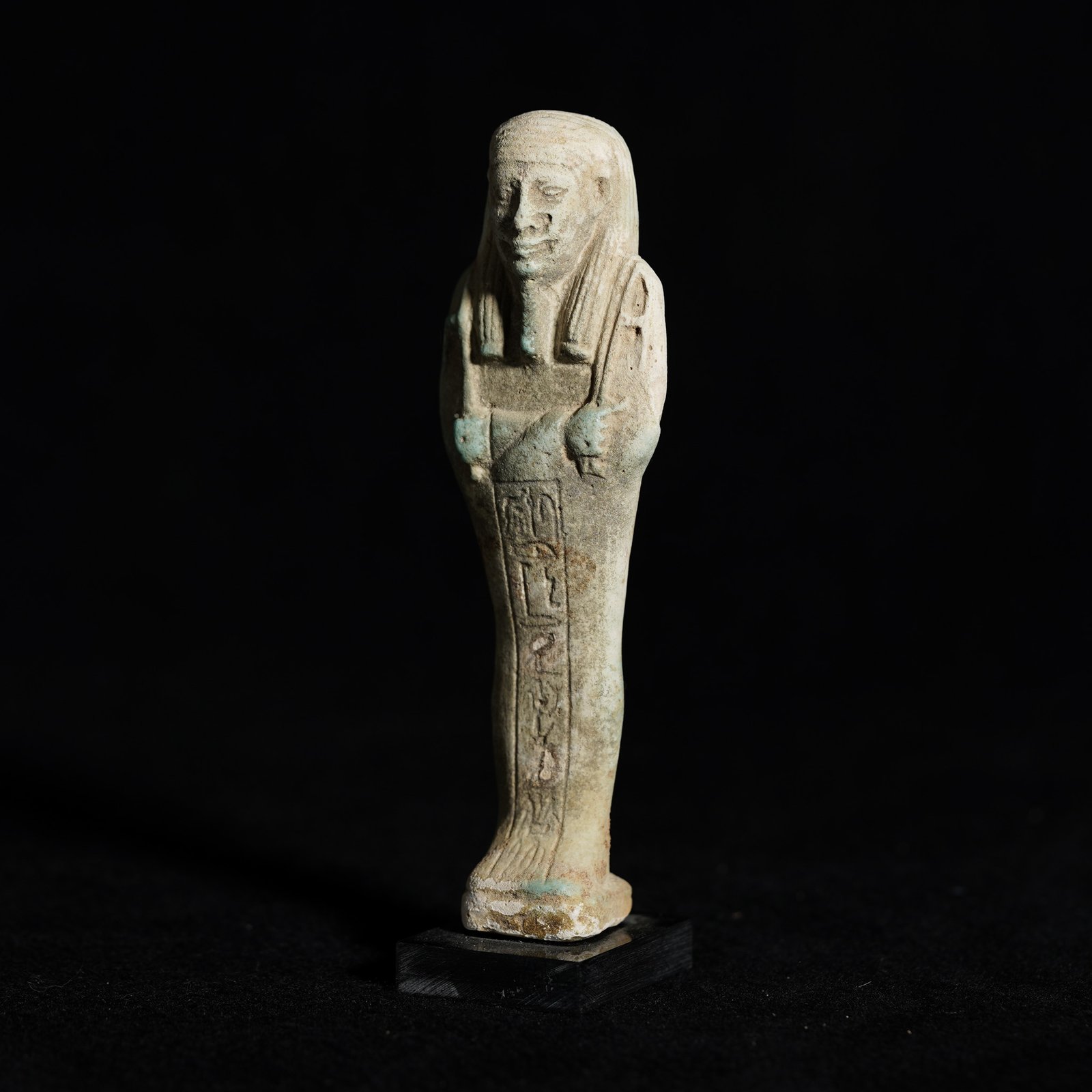
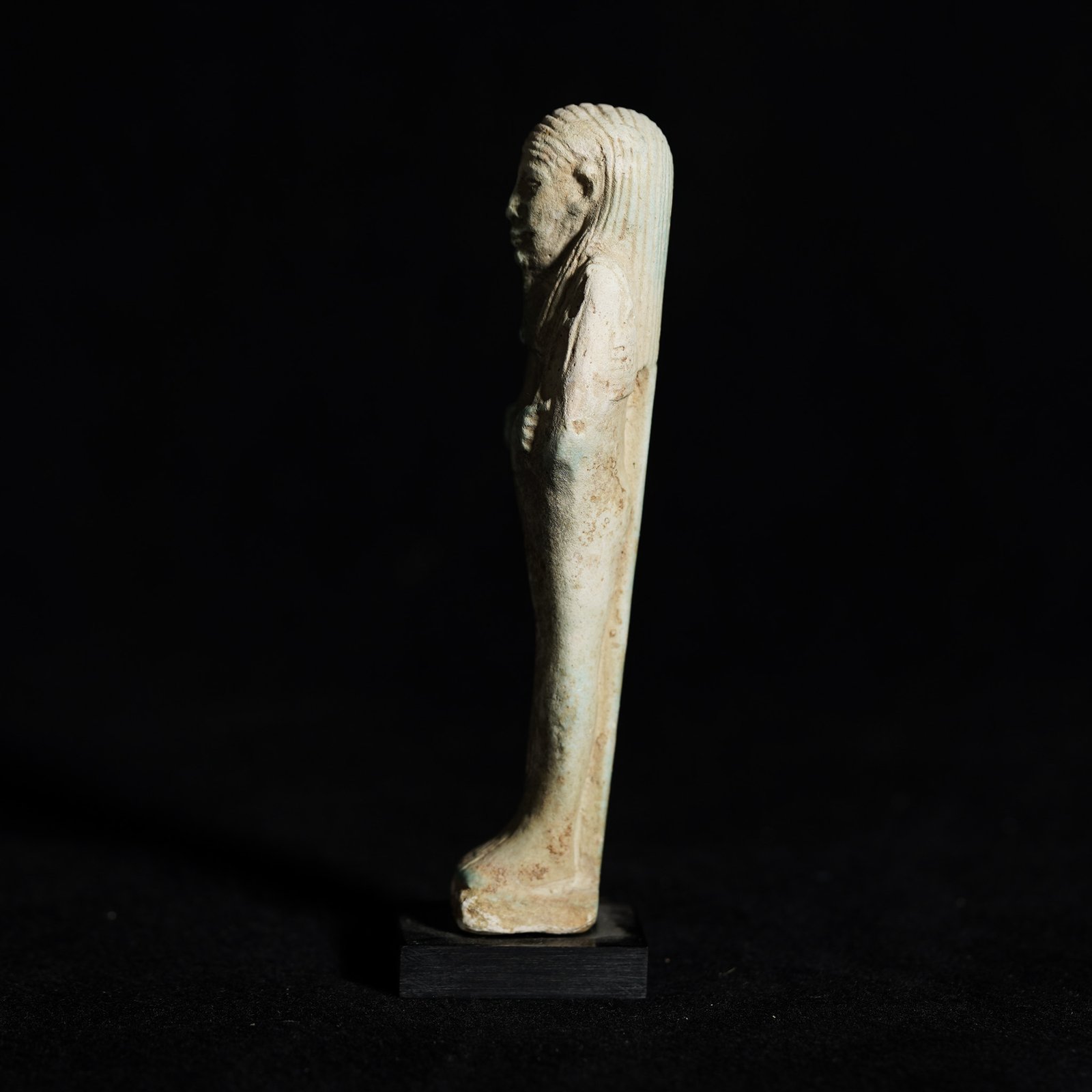
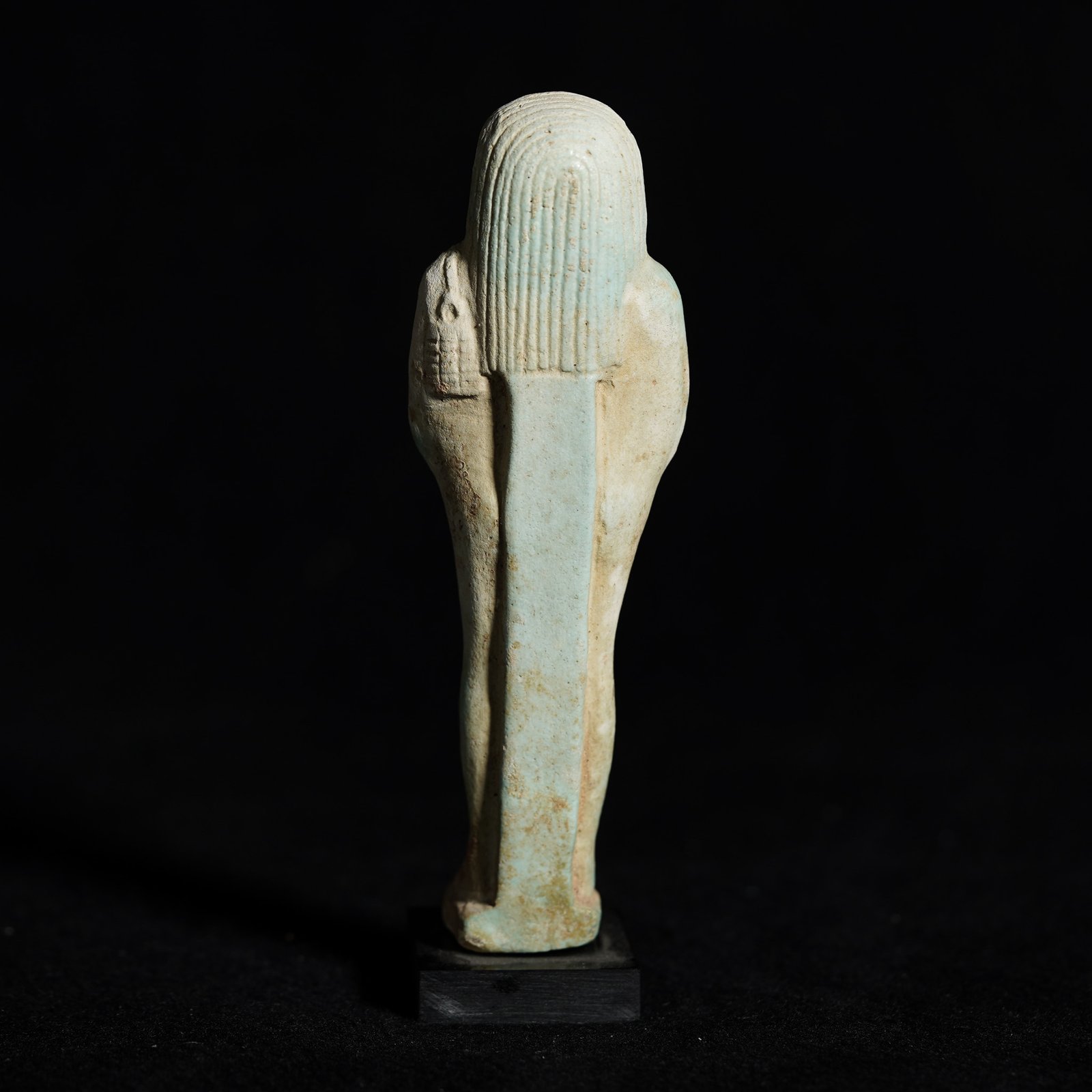
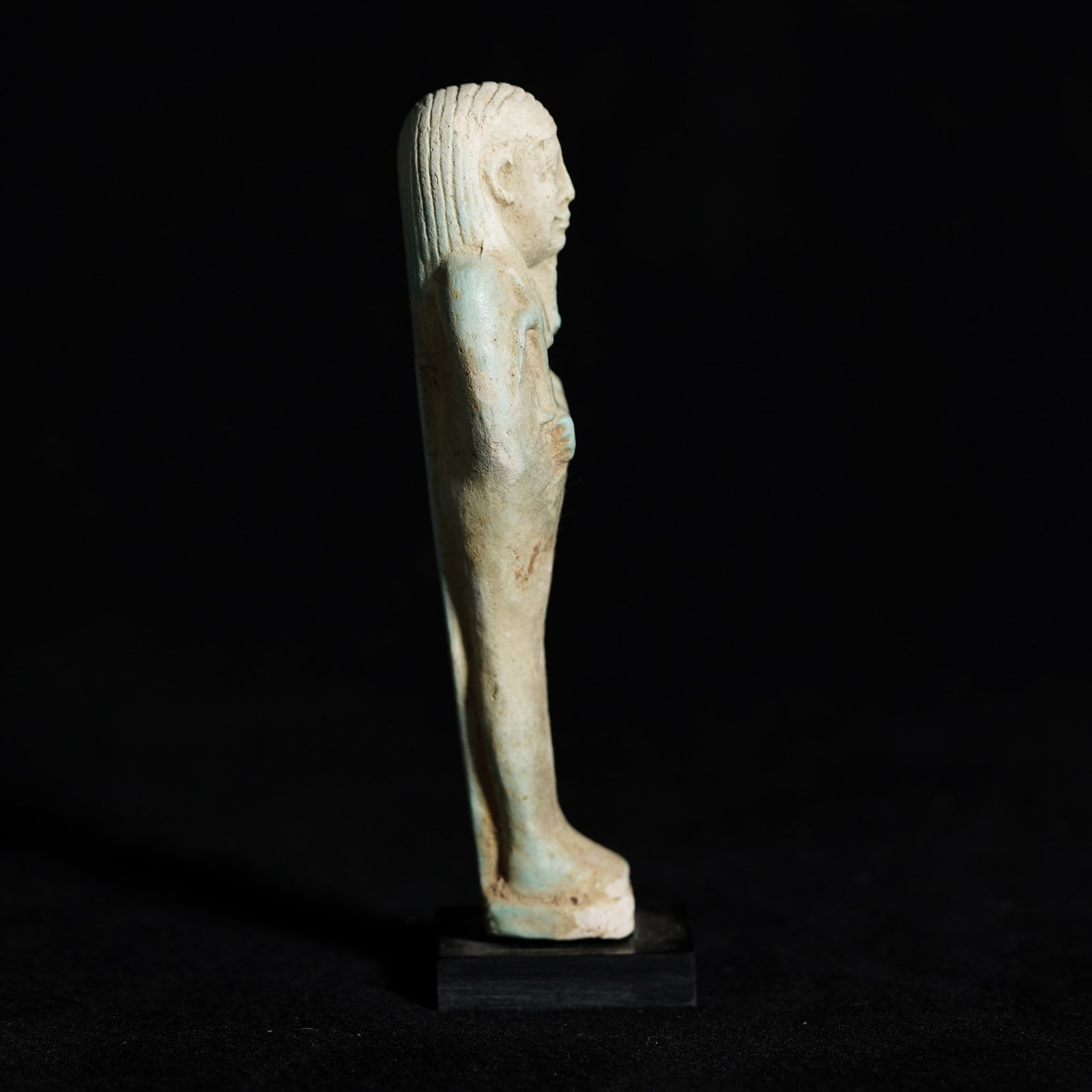
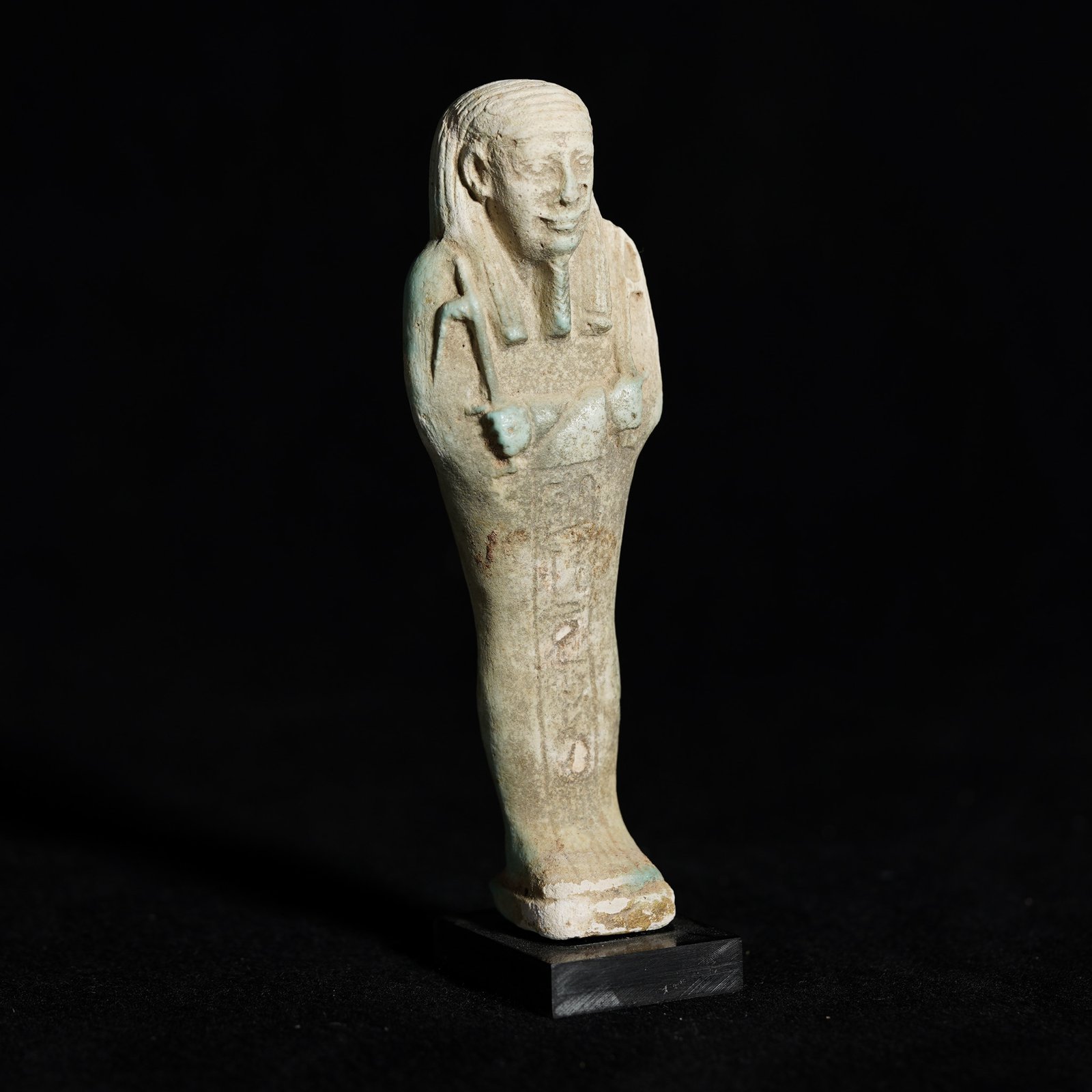
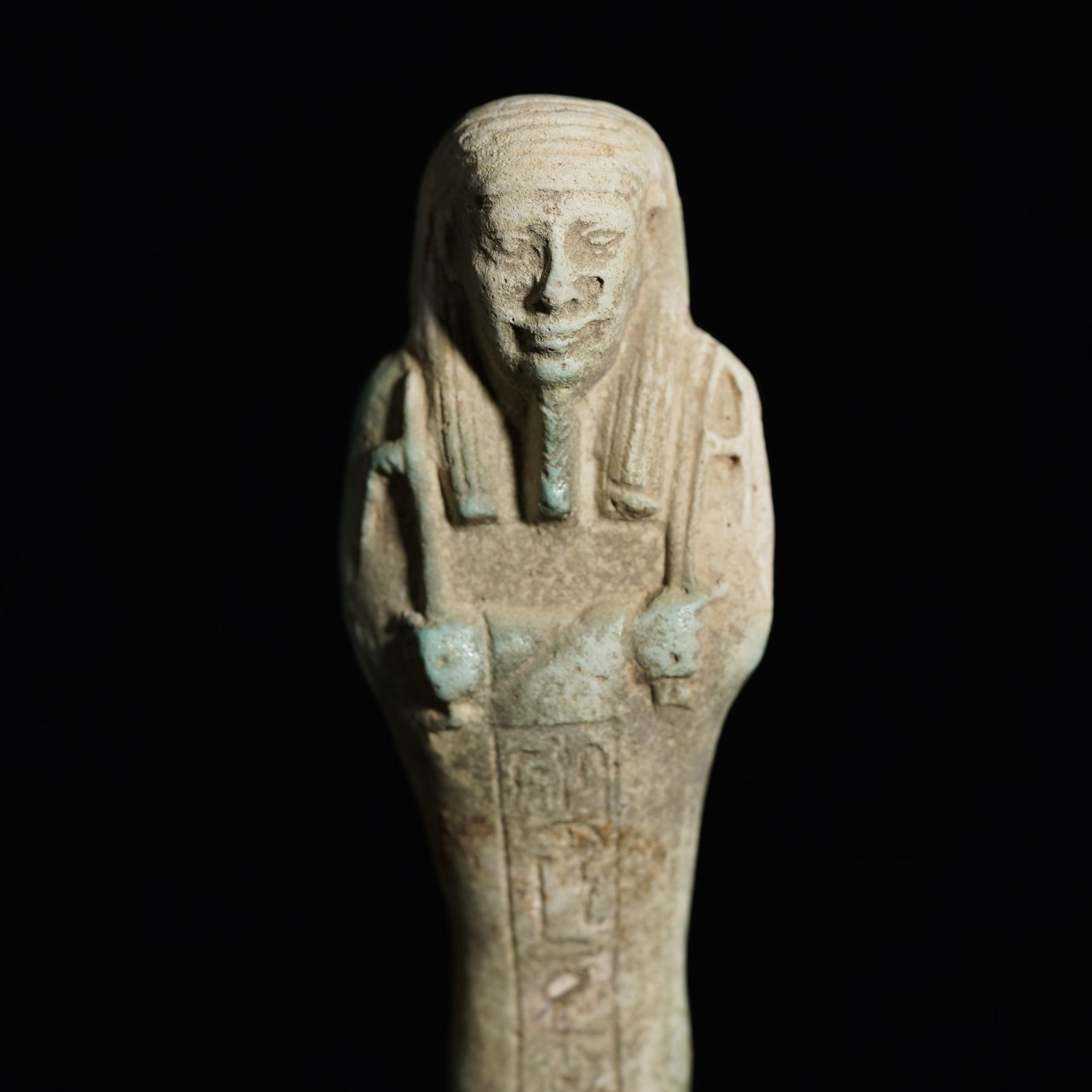
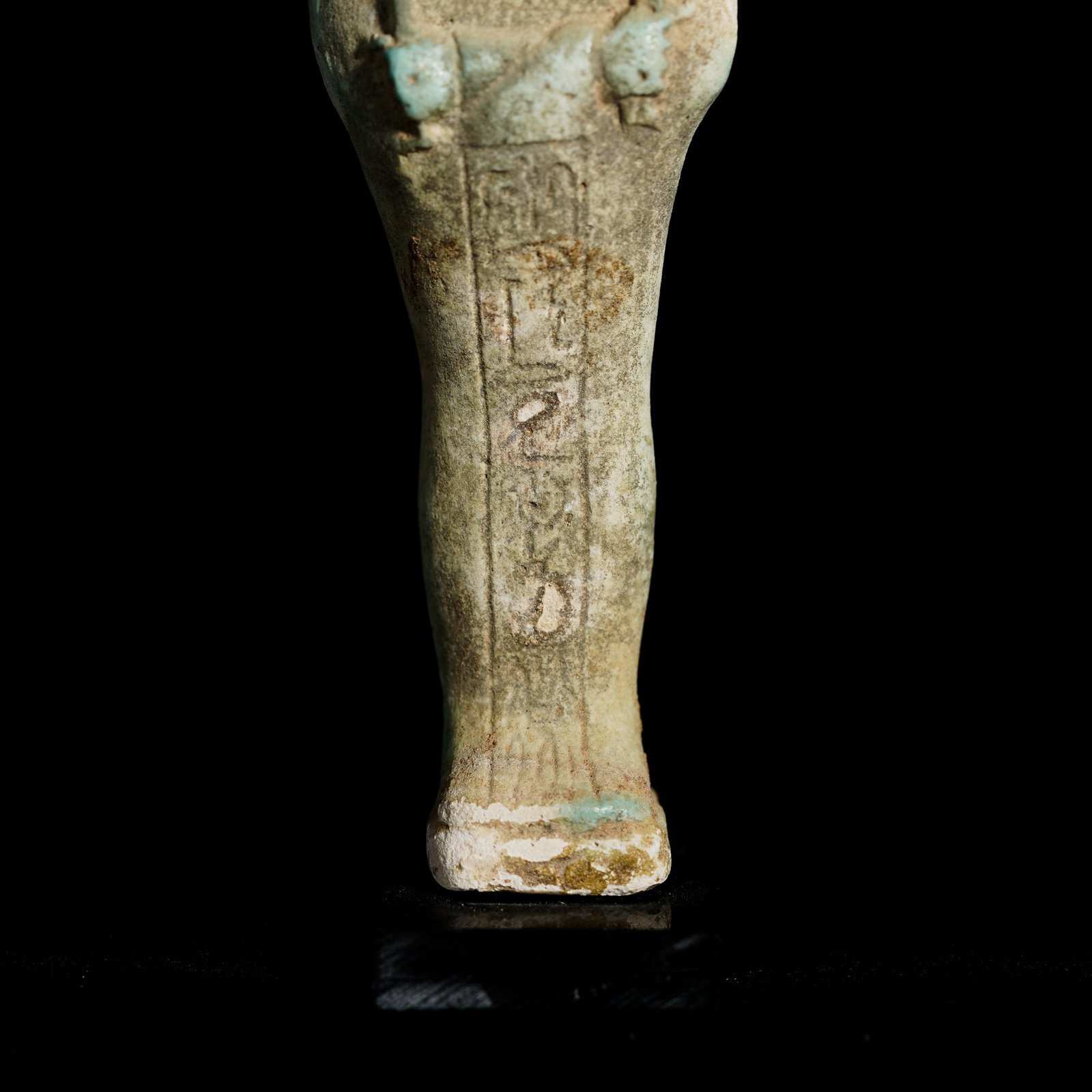
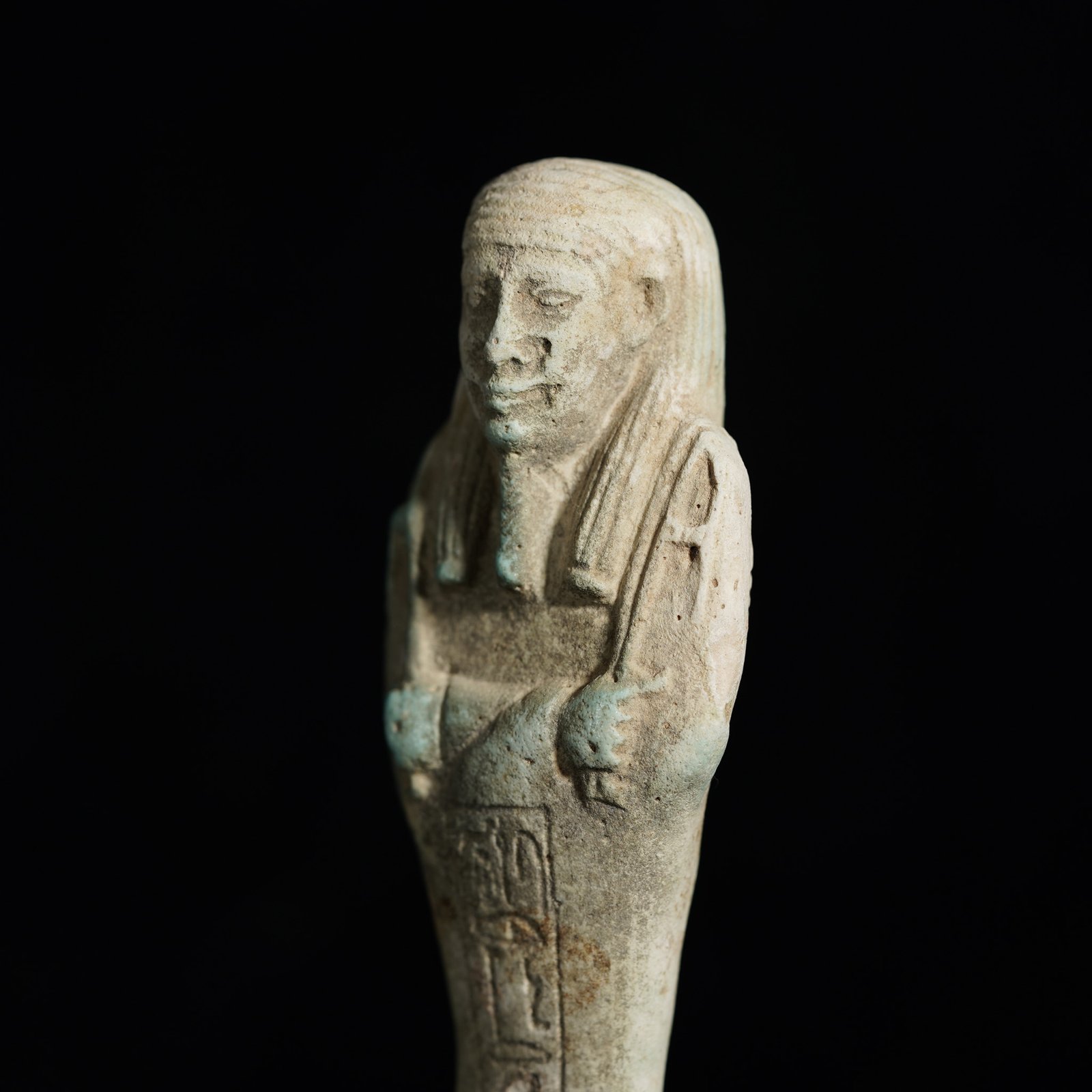
A mummy-shaped shabti, wrapped in a shroud that leaves only the head and hands exposed. With serene features, it wears a smooth three-part wig and a braided Osirian beard, identifying the deceased with the god Osiris. The hands protrude from the shroud, crossed over the chest, holding a pickaxe and a hoe in relief, traditional agricultural tools. It features a vertical column of hieroglyphic text engraved on the front of the legs. The turquoise-green glaze was a symbol of regeneration and fertility, evoking the colour of papyrus shoots and the rebirth of Osiris.
The term Ushabti means ‘the one who answers’. Its function was to act as a substitute for the deceased in the afterlife, answering the call to perform physical labour (especially agricultural work) in the fields of Iaru (the Egyptian paradise).
They were made using clay moulds, which allowed for mass production. During the Ptolemaic Period, the quality of detail on the face and the depth of the inscription were often indicators of the owner’s social status.
This ushabti dates from the Late Period of Egypt, an era marked by a revival of traditional arts and a quest for technical perfection, particularly during the 26th or Saite Dynasty. Against this backdrop of political instability in the face of foreign powers, the Egyptian elite reaffirmed their cultural identity through high-quality funerary objects.